
The four grades
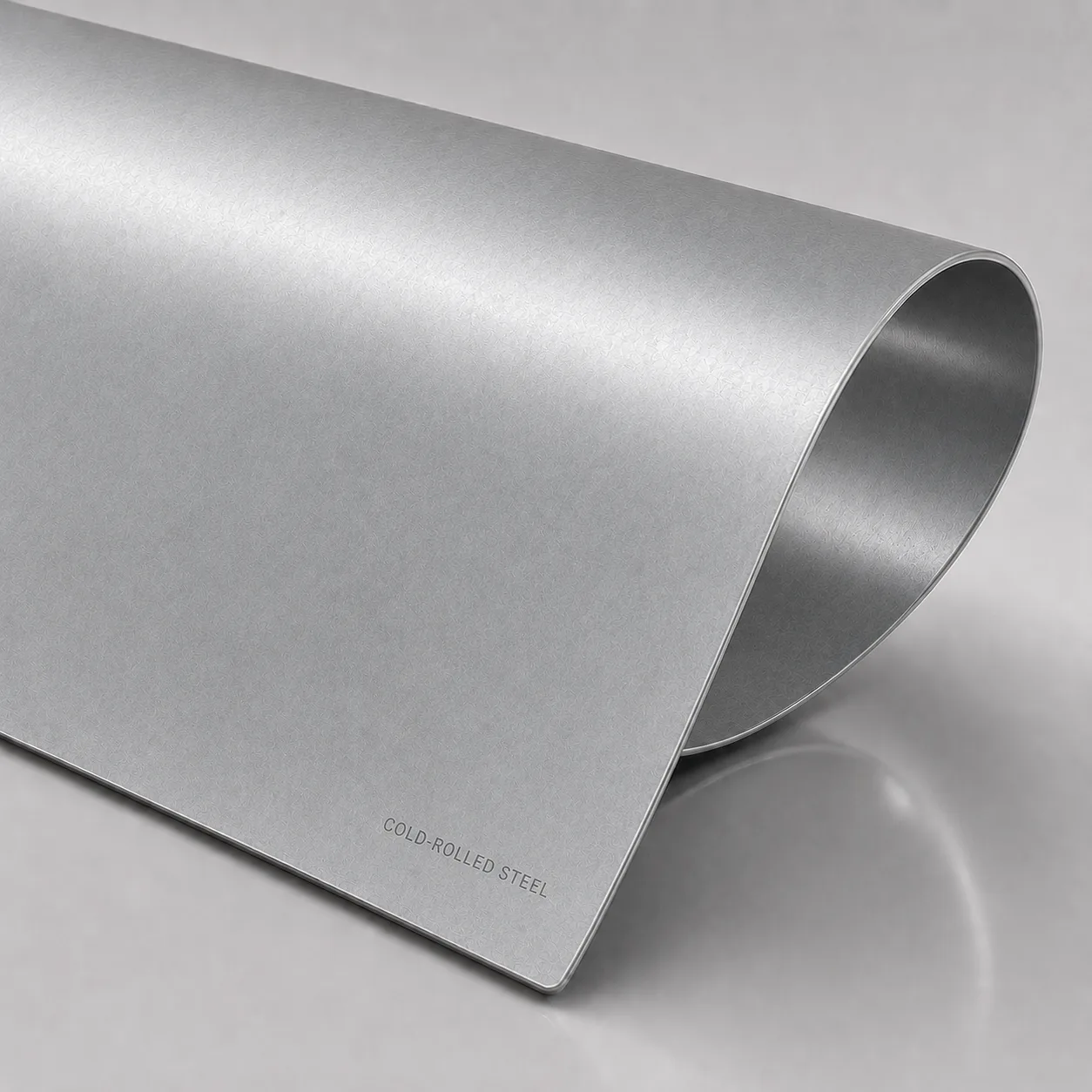
SPCC is cold-rolled commercial-quality sheet: tight thickness tolerance, a clean surface, and forming behaviour suited to bending and stamping. It carries no guaranteed structural strength and no corrosion protection, so it is always paired with a finish.
SECC is the same steel electro-galvanically coated with zinc. The coating is thin and even, which keeps the surface smooth for painting and for cosmetic parts, and it provides corrosion protection through the zinc itself — including at cut edges, where the zinc sacrifices itself to protect the exposed steel.
SGCC is hot-dip galvanised, with a substantially thicker zinc layer than SECC. That makes it the more durable choice for exposed outdoor work, at some cost in surface smoothness and formability: the coating can micro-crack at tight bends, and the spangle texture shows through paint on cosmetic parts.
Q235 is a structural steel rather than a sheet product, defined by a minimum yield strength of 235 MPa. It is what frames, bases, brackets and weldments are made from, and it has no corrosion resistance at all — a specified finish is mandatory rather than optional.
| Grade | Coating | Corrosion protection | Typical use |
|---|---|---|---|
| SPCC | None | Requires a finish | Formed parts, cosmetic brackets, stampings |
| SECC | Electro-galvanised zinc | Moderate, includes cut edges | Painted panels, indoor enclosures |
| SGCC | Hot-dip zinc | Good — thicker sacrificial layer | Outdoor housings, exposed brackets |
| Q235 | None | Requires a finish | Frames, weldments, load-bearing structures |
Choosing between them
Ask what the part will be exposed to and how it will be finished. A part that will be powder coated or painted anyway is usually best in SPCC, because the coating provides the appearance and the corrosion barrier in one step, and cold-rolled sheet gives the smoothest base for it. A part that will stay largely bare, or whose edges will be exposed, benefits from the built-in zinc of SECC or SGCC.
Where the requirement is strength, none of the sheet grades qualifies — the answer is Q235, sized on the loads it has to carry rather than on the thickness that happens to be in stock. Confusing a structural grade with a sheet grade is the most common specification error in this family.
Fabrication and finishing notes
All four cut, bend and weld with standard equipment. The coated grades need care at cut edges and bends: laser cutting vaporises the zinc locally, leaving a narrow unprotected band that may need touch-up in aggressive environments, and SECC and SGCC can micro-crack if bent to a radius tighter than the coating tolerates.
Electro-galvanised SECC welds less cleanly than bare steel because the zinc volatilises at welding temperature, producing porosity and fume. Where a coated part has to be welded, the coating is often removed along the joint for welding and restored afterwards, or the part is designed so that welding happens on bare SPCC and the coating is applied as a finish instead.