
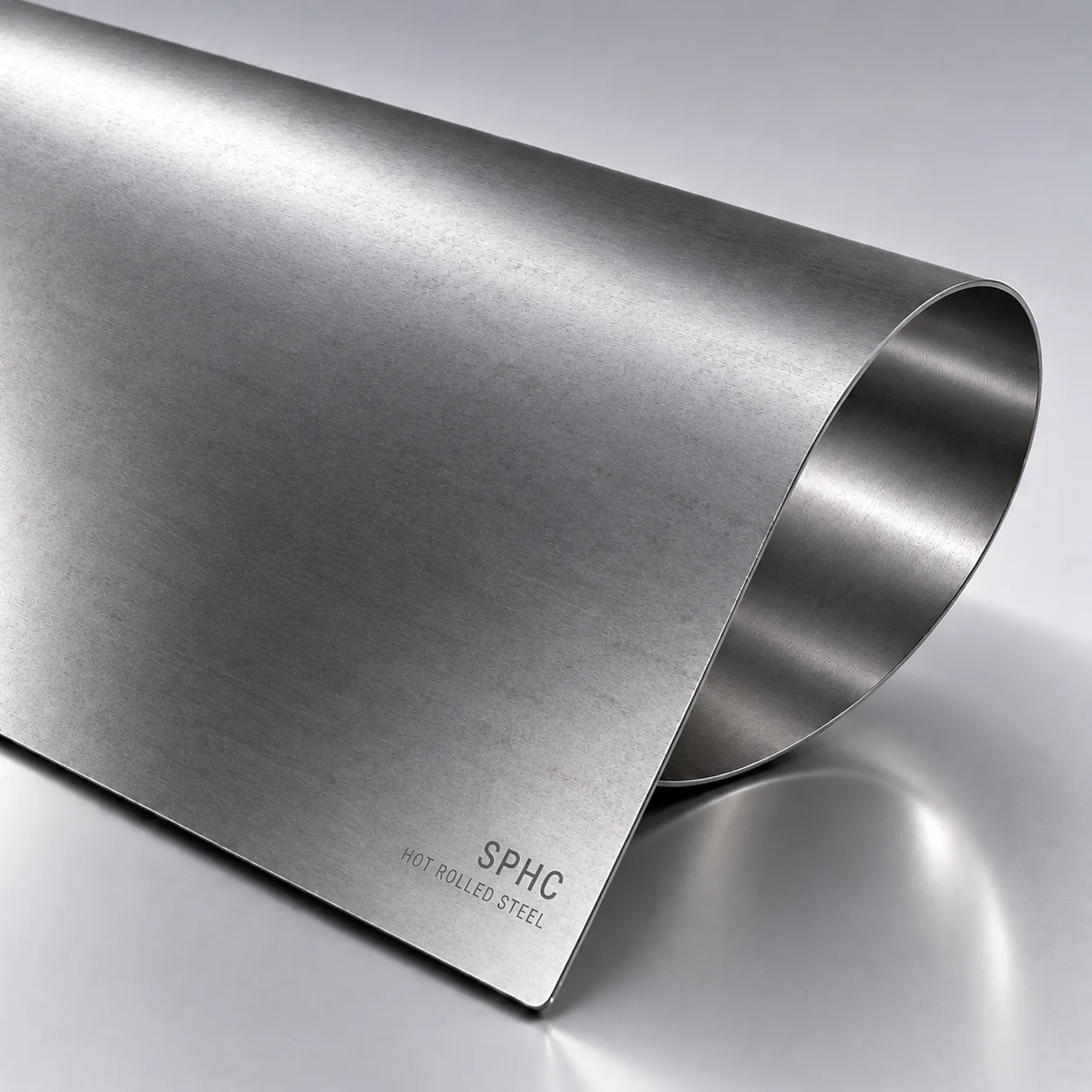
What SPHC is
SPHC is a hot-rolled commercial-quality steel sheet to JIS G3131. "Pickled" means the hot-rolling oxide scale is removed by acid, leaving a clean grey surface that takes paint and weld without the flaking that raw hot-rolled scale causes. It sits alongside SPCC in the same JIS family — SPCC is the cold-rolled grade, SPHC the hot-rolled one, and the trade-off between them is surface finish and thickness against price.
Two properties follow from hot rolling. The surface is not as flat or as clean as cold-rolled, so SPHC is not the grade for a visible panel or a tight cosmetic tolerance. And the thickness range runs higher: SPHC is routinely supplied from 1.5 mm to 8 mm, where cold-rolled stops well below that.
Typical properties for engineering reference
JIS G3131 specifies tensile strength and elongation for SPHC. It does not specify a yield strength for this grade, which is why the table below leaves that row blank rather than quoting a figure the standard does not support. Confirm everything against the mill certificate.
| Property | Typical value |
|---|---|
| Density | 7.85 g/cm³ |
| Tensile strength | ≥270 MPa (JIS G3131) |
| Yield strength | Not specified by JIS G3131 — no standard value exists |
| Elongation | 27–31% (varies with thickness) |
| Carbon / manganese | C ≤0.15%, Mn ≤0.60% |
| Corrosion resistance | Poor bare — requires paint, plating or coating |
| Weldability | Excellent — all common processes |
| Thickness range we fabricate | 1.5 mm – 8.0 mm |
SPHC or SPCC — where the line sits
The decision is thickness-led. Up to about 3 mm, cold-rolled SPCC wins: the surface is better, the thickness tolerance is tighter, and the price difference has not yet opened up. Above that, hot-rolled SPHC is cheaper per kilogram, and the parts that call for it — bases, brackets, gussets, thick plates — do not need a cosmetic surface anyway.
Formability is the second consideration. Pickled hot-rolled steel is perfectly weldable and bends well at generous radii, but its elongation is lower and less consistent than SPCC, so a part with a tight bend radius on thin material is still a cold-rolled job even if the thickness would allow either.
- Choose SPHC: bases, gussets, thick mounting plates, welded frames, parts above ~3 mm
- Choose SPCC: visible panels, tight thickness tolerance, tight bend radii, thin gauge
- Both need a finish — neither survives bare outdoors
How SPHC behaves through fabrication
Laser cutting and shearing both handle SPHC without special measures; the pickled surface cuts cleanly and does not carry the scale that makes raw hot-rolled unpleasant to work. Bending is straightforward at sensible radii, and welding is genuinely easy — SPHC is one of the most forgiving grades on the floor, which is a large part of why thick welded fabrications use it.
Finishing is the step that cannot be skipped. SPHC holds no meaningful corrosion resistance on its own, so powder coating, wet paint or plating is not optional outdoors and is still advisable indoors. Parts that will be welded and then coated should be cleaned of welding residue before coating; the pickle does not protect against process contamination.