
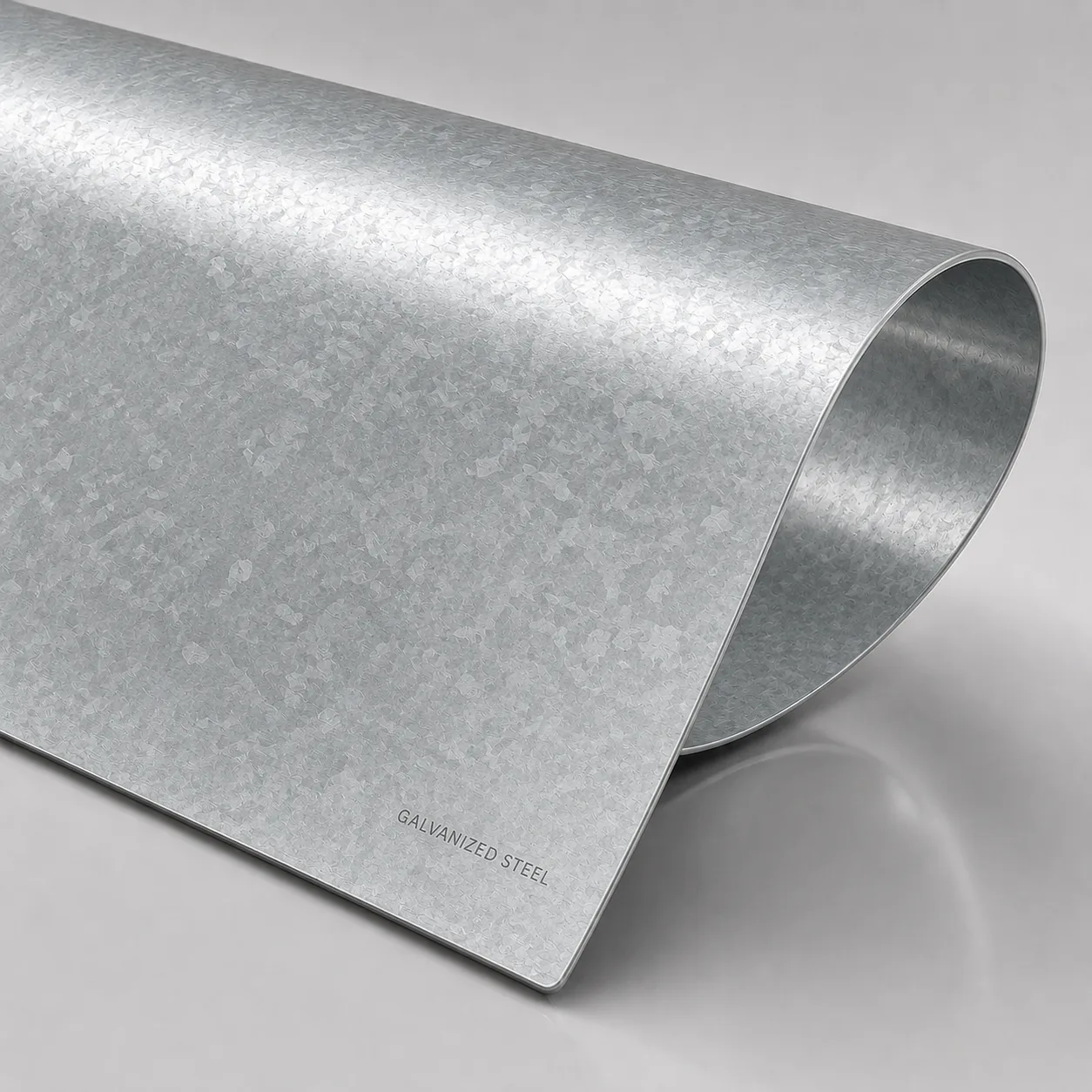
What SGCC steel is
SGCC is hot-dip galvanised steel sheet per JIS G 3302: the base sheet passes through molten zinc, emerging with a metallurgically bonded zinc layer measured in coating mass — Z80 means 80 g/m² total both faces, and heavier classes run further. The coating is not a paint film; it is zinc bonded to steel through an iron–zinc alloy layer, which is why it does not peel and why it survives bending.
The protective mechanism has two parts. As a barrier, zinc simply keeps weather off the steel. And sacrificially, zinc corrodes preferentially: a scratch through the coating exposes steel next to zinc, and the zinc corrodes first, protecting the exposed edge. That second mechanism is why galvanised parts tolerate the cut edges and scratches of real service far better than painted bare steel does.
The visible spangle — the crystalline pattern on the surface — is the grade's signature. It matters to finishing: paint covers it, but a bare galvanised part shows it, and two coils from different mills can show visibly different spangle. If appearance is specified on unpainted parts, that is a sample-panel conversation at quotation.
Typical properties for engineering reference
The base sheet is structural carbon steel; the coating is the specification layer. Typical values below, with the coating class as the number that matters for duty.
| Property | Typical value |
|---|---|
| Coating class | Z80 typical enclosure duty; heavier classes for severe exposure |
| Coating structure | Metallurgically bonded zinc + iron–zinc alloy layer |
| Corrosion mechanism | Barrier + sacrificial — protects at scratches and cut edges |
| Tensile strength | Base-sheet dependent, typically ≥270 MPa |
| Outdoor duty | The grade's purpose — years of weathering at Z80 |
| Bending behaviour | Good with slightly larger radii than bare steel |
| Welding | Standard with zinc-fume extraction; touch-up at welds |
How SGCC behaves through fabrication
Laser cutting runs in the standard mild-steel window and leaves cut edges with a bare-steel stripe — which sounds like a flaw and is actually fine: the surrounding zinc sacrificially protects the cut edge in service, though paint systems still want their pretreatment over the whole part. Bending is where SGCC asks slightly more care than SECC: the thicker coating tolerates standard radii well but can show micro-cracking at very tight bends, so enclosure bend radii in SGCC stay at or above one thickness as a house rule.
Welding is standard carbon-steel work with extraction; the weld zone is bare after welding, and for outdoor parts we specify zinc-rich touch-up paint on welds and cut-outs so the sacrificial network stays continuous. Powder coating over SGCC is the standard finished-appearance route — outdoor cabinets are almost always "galvanised substrate, powder-coated top coat", a two-layer system where each layer does its own job.
One grade-specific appearance note: painting over spangle can telegraph the pattern through thin paint coats. The standard answer is the pretreatment plus adequate film build — another reason outdoor parts quote film thickness as a specification line, not a guess.
- Laser cutting: standard window; cut edges sacrificially protected in service
- CNC bending: radii ≥ 1× thickness to respect the thicker coating
- Welding: standard with extraction; zinc-rich touch-up at welds for outdoor parts
- Powder coating: the standard top coat; outdoor film build specified per project
SGCC vs SECC vs painted bare steel
The outdoor decision in one table. Painted bare steel (SPCC + powder) can survive benign outdoor duty, but a scratch to bare steel stays bare — the coating system has no self-repair. SGCC's zinc keeps working after damage, which is the whole argument for the grade in weathering service.
| Criterion | SPCC + powder | SECC | SGCC |
|---|---|---|---|
| Outdoor duty, inland | Acceptable benign duty | No | Yes — the default |
| Outdoor duty, coastal | No | No | Yes, heavier class advised |
| Scratch tolerance | Rust starts at the scratch | Limited reserve | Zinc sacrifices itself at the scratch |
| Coating thickness at bends | Applied, can chip | Thin, no issue | Thick, respect radii |
| Relative sheet cost | Lowest | Moderate | Moderate |
Sourcing and how to specify it
SGCC is sourced through our supply chain against coating class and base-sheet spec — Z80 covers typical enclosure duty; severe or coastal projects quote heavier classes. On the drawing: "SGCC Z80", thickness, plus the finish line ("powder coat RAL 7035, outdoor film build") and the touch-up note at welds. Where the part is unpainted, expect a spangle-appearance conversation at quotation — it is a two-minute sample panel that prevents a container-load of disagreement.
If the duty is outdoor and the drawing currently says cold-rolled steel with a finish, ask us to price both routes. At enclosure volumes the galvanised sheet frequently wins on total cost because it deletes a plating step and buys years of corrosion reserve in the same line item.