Table of Contents
Overview
Quick answer: zinc plating is a thin (5-25 µm) sacrificial coating that keeps protecting steel even after a scratch, at roughly $0.30-0.80 per part — the default for fasteners. Nickel is harder (300-500 HV), brighter, and survives 1,000+ hours in salt spray, but costs 3-5× more. Choose zinc for function, nickel for looks and wear resistance.
How zinc plating works
Zinc plating is electrodeposited from a bath onto a conductive base — usually steel or cast iron. Zinc sits below iron in the galvanic series, so it becomes the anode: if the coating is scratched down to bare steel, the zinc still corrodes first and sacrifices itself to protect the steel underneath. That is why plated fasteners stay rust-free even with damaged threads.
Typical thickness is 5-25 µm. A chromate passivation layer (clear, blue, yellow or black) then multiplies corrosion resistance: a standard zinc plate gives 48-96 hours in salt spray, and thick zinc with a sealer reaches 200 hours. Zinc itself is soft (60-120 HV), so it will not take wear.
Reference: coating thickness classes and passivation types for electrodeposited zinc are set out in ASTM B633. State the class on your drawing (for example Fe/Zn 8) rather than just “zinc plated”.
How nickel plating works
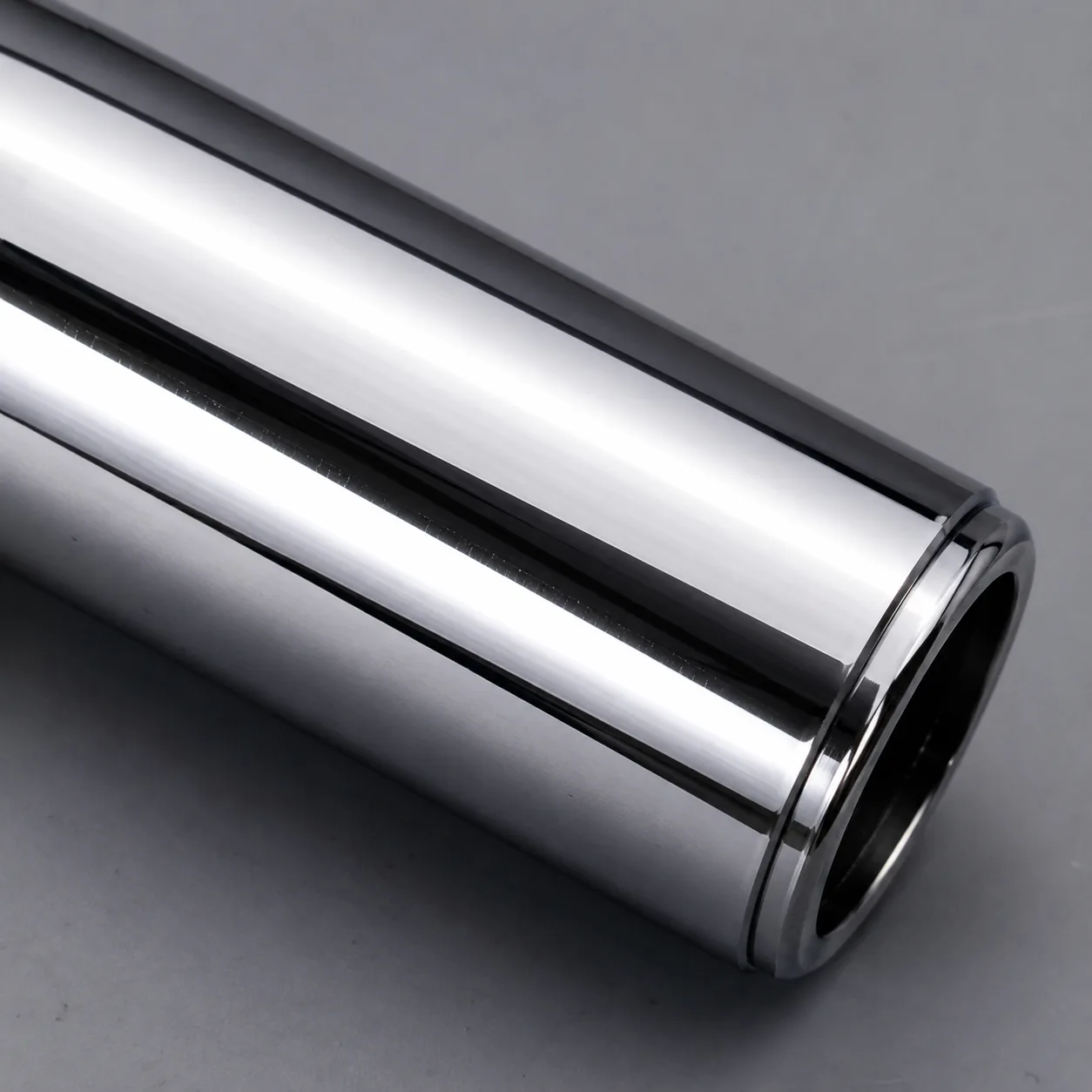
Nickel is deposited two ways: electroless (auto-catalytic, no current, excellent on complex shapes) or Watt's electrolytic (brighter, faster). The deposit is dense, non-porous and naturally bright — often a decorative mirror silver. Thickness runs 5-50 µm and hardness lands at 300-500 HV, far above zinc.
Because nickel is more noble than steel, it does not sacrifice itself: a scratch through nickel to steel exposes bare steel that then corrodes on its own. Nickel's strength is appearance and abrasion resistance, not sacrificial protection. Salt-spray life is 1,000+ hours, and it plates well on steel, aluminum (with zincate pre-treatment) and brass.
Cost and corrosion comparison
The table below is the decision shortcut — read it top to bottom and most parts pick themselves.
| Property | Zinc plating | Nickel plating |
|---|---|---|
| Typical thickness | 5-25 µm | 5-50 µm |
| Relative cost | 1× (lowest) | 3-5× |
| Salt-spray life | 48-200 h | 1,000+ h |
| Surface hardness | 60-120 HV | 300-500 HV |
| Appearance | matte to bright gray | bright, mirror silver |
| Best base metal | steel, cast iron | steel, aluminum, brass |
| Threaded parts | safe (soft) | risk of bridging |
| Food contact | avoid | generally OK (verify grade) |
Durability: where each fails
Zinc fails in acids, in temperatures above 200°C (it goes brittle), and wherever a thin coating is rubbed through by handling or assembly. A 5 µm layer is protection, not armor.
Nickel fails if the base steel shows through a scratch — with no sacrificial action the exposed steel rusts faster than if it had been left bare. It also needs a sound, pore-free deposit; on awkward geometries a thin or porous nickel lets corrosion start underneath. And it is the expensive option, so paying for it where zinc would do is wasted margin.
How to choose
Five rules cover almost every inquiry we receive:
- Unpainted outdoor steel or fasteners → zinc (or zinc-nickel alloy for 500+ h salt spray).
- Decorative plus wear-facing, usually indoor → nickel.
- Threaded parts → zinc; nickel can bridge and seize threads.
- Budget-sensitive high volume → zinc; it needs no post-machining.
- Food or medical appearance → bright nickel (verify the grade) or passivated zinc — confirm the spec before plating.
Still unsure? Upload the drawing and we will name the cheaper finish that still meets the environment.
FAQ
Written by

Industrial & Product Design Engineer
Julia takes a product from the first sketch to a sheet metal design that can actually be made. She sits between the customer’s concept and our press brakes — modelling enclosures and brackets in CAD, running early DFM passes, and choosing the material and finish that will still look right two years down the line.
View profileParts we make for this topic
Ready to Start Your Project?
Get DFM feedback and a quote within 24 hours. No minimum order quantity.