
Table of Contents
Overview
Quick answer: sheet metal gauge is a thickness scale where a higher number means a thinner sheet — 18 gauge steel is 1.2 mm (0.048 in), 16 gauge is 1.5 mm. The same gauge maps to different mm for steel, stainless and aluminum, so confirm the metal before quoting. Use the chart below to convert any gauge to mm.
How does gauge numbering work?
Gauge (often written ga or gauge number) is a thickness numbering system inherited from wire and sheet rolling. The counter-intuitive part is the direction: a larger gauge number means a thinner sheet. A 7 gauge plate is about 4.5 mm thick; a 24 gauge skin is about 0.6 mm. The scale dates to historical wire drawing, where more drawing passes produced thinner wire and a higher number.
Two consequences matter for buyers. First, never specify a part by gauge alone — always name the metal, because the mm behind a gauge changes with the alloy. Second, gauge is mostly a North American and UK convention; much of Europe and Asia specifies thickness directly in millimeters, which removes the ambiguity entirely.
Reference: the cold-rolled steel sheet behind the MSG gauge column is specified in ASTM A1008/A1008M.
Steel Gauge Thickness Chart
The table below converts the standard US manufacturers' standard gauge for carbon steel. Use it as the default unless your drawing names another metal.
| Gauge | Inches | Millimeters |
|---|---|---|
| 7 | 0.1793 | 4.55 |
| 8 | 0.1644 | 4.18 |
| 9 | 0.1495 | 3.80 |
| 10 | 0.1345 | 3.42 |
| 11 | 0.1196 | 3.04 |
| 12 | 0.1046 | 2.66 |
| 13 | 0.0897 | 2.28 |
| 14 | 0.0747 | 1.90 |
| 15 | 0.0673 | 1.71 |
| 16 | 0.0598 | 1.52 |
| 17 | 0.0538 | 1.37 |
| 18 | 0.0478 | 1.21 |
| 19 | 0.0418 | 1.06 |
| 20 | 0.0359 | 0.91 |
| 21 | 0.0329 | 0.84 |
| 22 | 0.0299 | 0.76 |
| 23 | 0.0269 | 0.68 |
| 24 | 0.0239 | 0.61 |
| 25 | 0.0209 | 0.53 |
| 26 | 0.0179 | 0.46 |
| 27 | 0.0164 | 0.42 |
| 28 | 0.0149 | 0.38 |
| 29 | 0.0135 | 0.34 |
| 30 | 0.0120 | 0.30 |
Why Aluminum and Stainless Differ
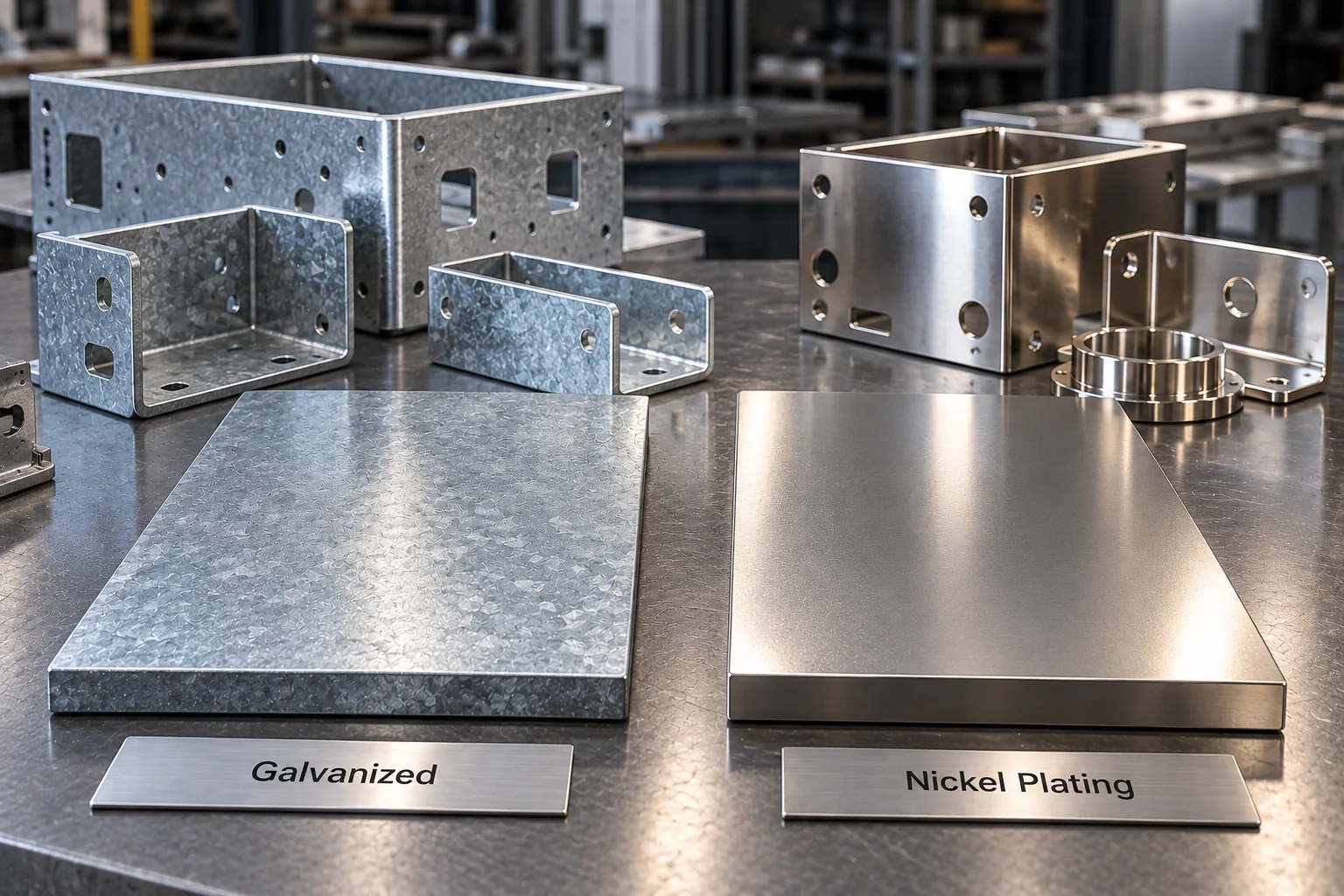
Gauge is metal-specific, and this is the single biggest source of misquotes. In the US system, aluminum uses the Aluminum Association gauge, where 18 gauge is about 1.0 mm (0.040 in) — thinner than the 1.2 mm carbon-steel 18 gauge. Galvanized steel reads thicker than bare steel at the same number because the zinc coating adds roughly 0.05–0.10 mm. Stainless (300 series) sits close to carbon steel but is not identical.
The practical rule: on every drawing, write the metal and the gauge, or better, the target mm with a tolerance. A shop quoting “18 gauge” without the metal will assume carbon steel and may miss your intent.
Common Gauges by Application
Typical choices by job: structural and heavy brackets 7–12 gauge (4.5–2.7 mm); general enclosures and cabinets 14–18 gauge (1.9–1.2 mm); lightweight indoor panels and covers 20–22 gauge (0.9–0.8 mm); decorative and very thin skins 24–26 gauge (0.6–0.45 mm). The right number is a trade-off: thicker adds stiffness and weld margin but raises weight, material cost and bending force.
How do you choose?
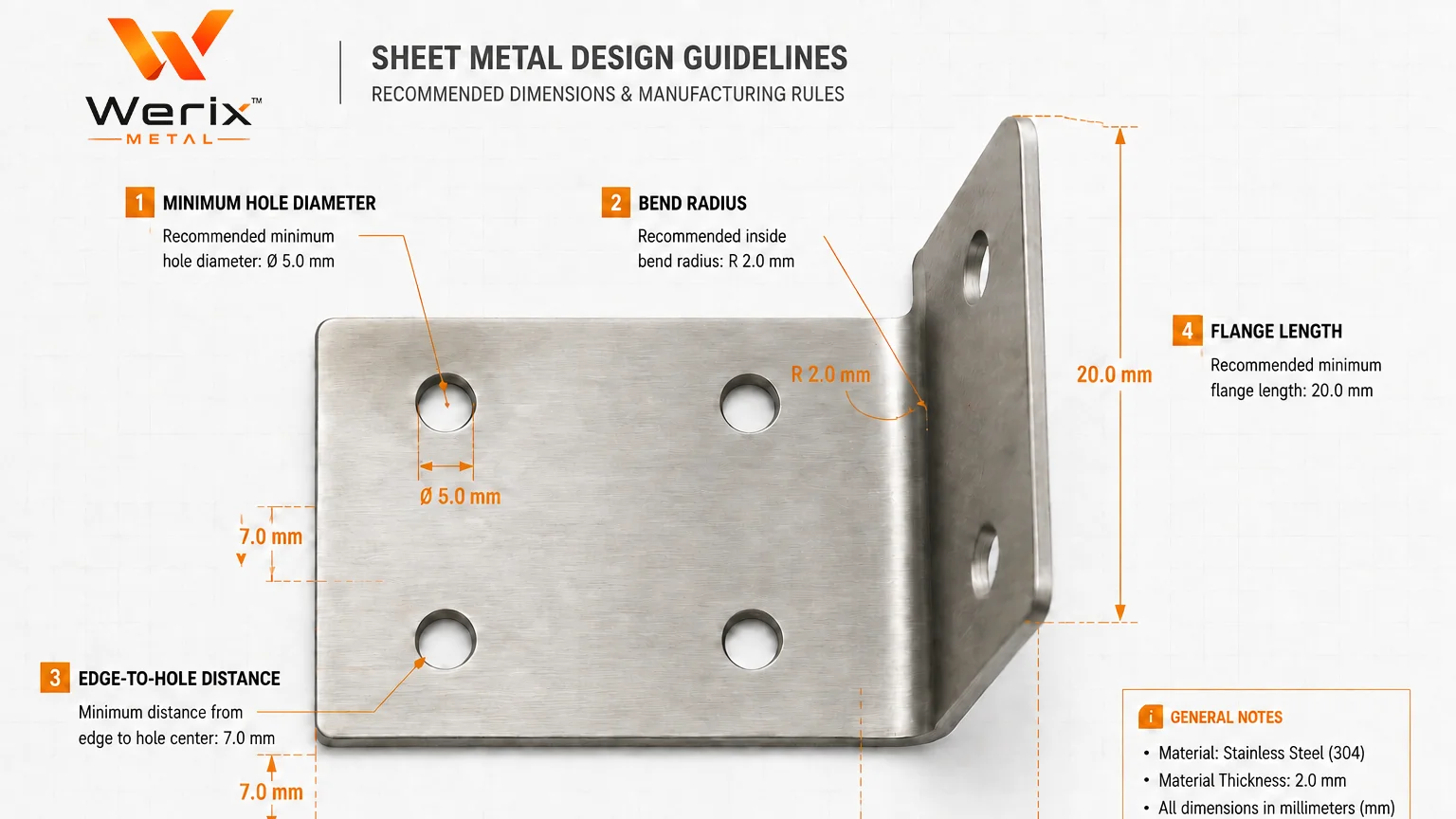
Pick the thinnest gauge that still meets stiffness, and tolerance after forming. Start from the function: a load-bearing bracket needs 11–12 gauge; a wall-mounted enclosure is fine at 16–18 gauge; a desktop bezel can be 20–22 gauge. Then check three limits — minimum bend radius grows with thickness, so very thin gauges form sharper corners; hole-to-edge distance scales with thickness; and plating or anodize adds to the final dimension, so oversize holes on thin stock. When unsure, send the drawing and we name the lightest gauge that passes DFM.
FAQ
Written by

Industrial & Product Design Engineer
Julia takes a product from the first sketch to a sheet metal design that can actually be made. She sits between the customer’s concept and our press brakes — modelling enclosures and brackets in CAD, running early DFM passes, and choosing the material and finish that will still look right two years down the line.
View profileParts we make for this topic

Ready to Start Your Project?
Get DFM feedback and a quote within 24 hours. No minimum order quantity.