
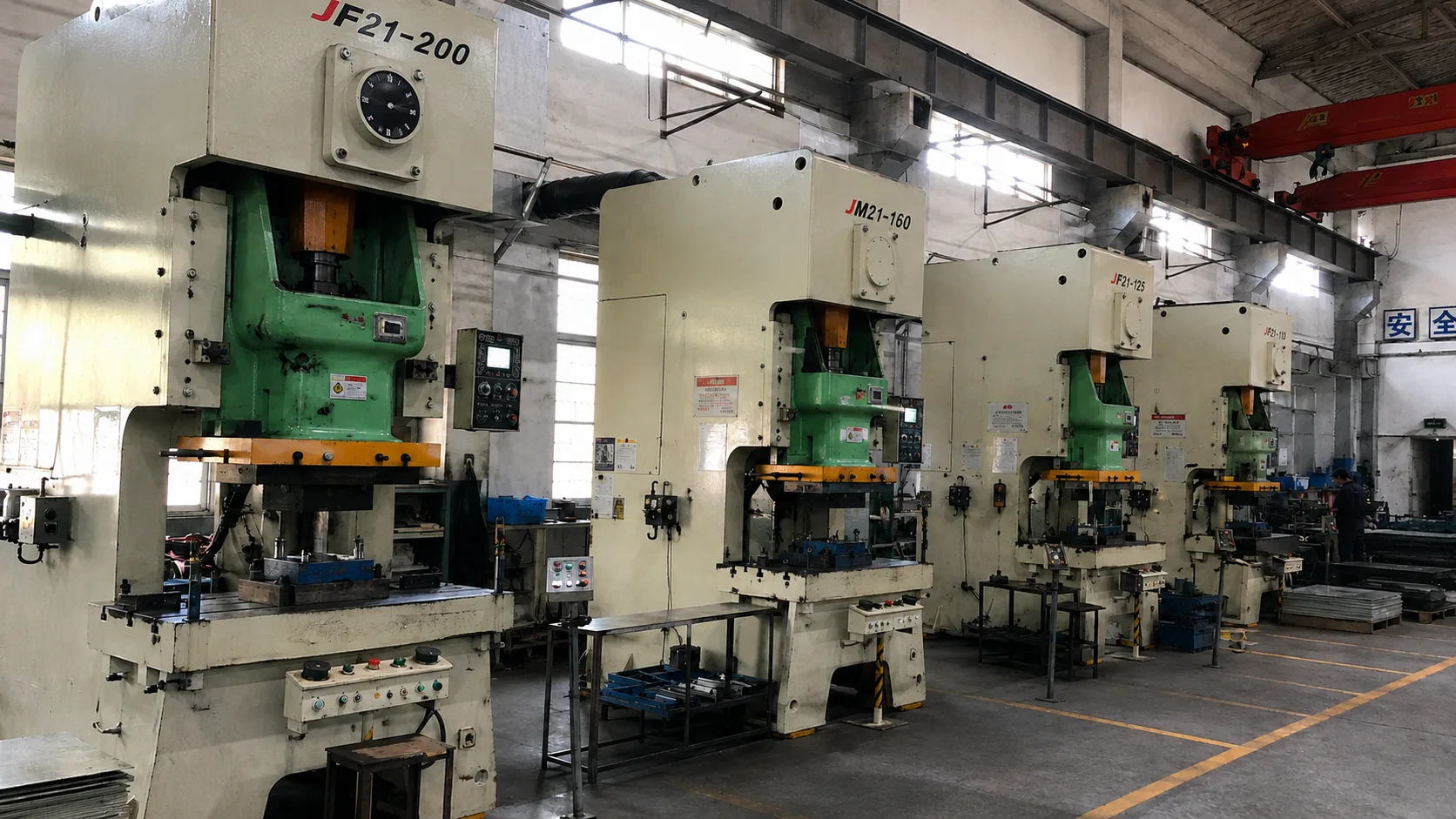
When stamping in China makes sense
- Annual volume is above the break-even against laser cutting and bending for that specific part.
- The design is frozen, or revisions are limited to features that can be added in later stations.
- The part is small to medium and suited to coil feed, or large enough to justify a transfer die.
- The programme will run for several years, so die cost amortises across a long life.
- You need tooling, not just parts — an in-house die shop can maintain and modify the die over its life.
Tooling: agreement before steel is cut
Tooling cost is a one-off and it is significant, so it deserves a written agreement covering five things: what is being built, what it will produce, who owns it, how it is stored, and what maintenance it receives. Raising these questions before the die is ordered is routine. Raising them afterwards turns into a negotiation.
A quote should itemise design, die materials, manufacture, try-out and first article. Where a supplier will not separate tooling from the per-part price, you cannot evaluate the deal — or the die.
| Question | Why it matters |
|---|---|
| Ownership | Determines what happens if the relationship ends or the supplier changes hands |
| Storage and location | A die on the wrong side of the world is not an asset you can use |
| Maintenance interval and scope | A die has a production life between services |
| Modification rights | Who may change the die, and who pays for a customer-driven revision |
| Change-parts and spare stations | Decides how long a die can stay in service |
| Handover terms | Cost and conditions of moving the die elsewhere |
Strip layout is the irreversible decision
The strip layout fixes station sequence, progression pitch, material width, the bridges holding the part and the pilot arrangement. Once the die is cut, none of it can be changed economically, because it is built into the die blocks, the feed and the press.
That makes strip layout sign-off the single most valuable engineering checkpoint in a stamping programme. Approving it means confirming material utilisation, that every feature is formed in the right sequence, that the part is still attached when it needs to be, and that the scrap can clear. It is worth a deliberate review rather than a formality.
Proving the process: FAI on the die
The first article is run on the production die, not on a soft tool or a prototype, and it is measured against every dimensioned feature on the drawing. The report tells you which features hold comfortably and which sit near the limit, so the process can be adjusted before volume — not after.
A typical package we issue contains the dimensional report against the ballooned drawing, the material certificate, the surface finish or coating record where relevant, and any deviation raised as a concession and agreed with the customer. For regulated programmes the format is customer-specified; the discipline is the same.
Running costs once the die is in service
Per-part cost is driven by material utilisation, press cycle time, secondary operations and inspection. Material utilisation is locked in by the strip, so it is decided at layout stage. Cycle time is set by the press and the number of stations. The variables you still control are quantity scheduling, secondary operation batching and the inspection plan.
Die maintenance is a running cost that is easy to overlook. Building a maintenance interval into the commercial model, rather than treating a die service as an unplanned event, keeps a production programme predictable across years.