
The three branches
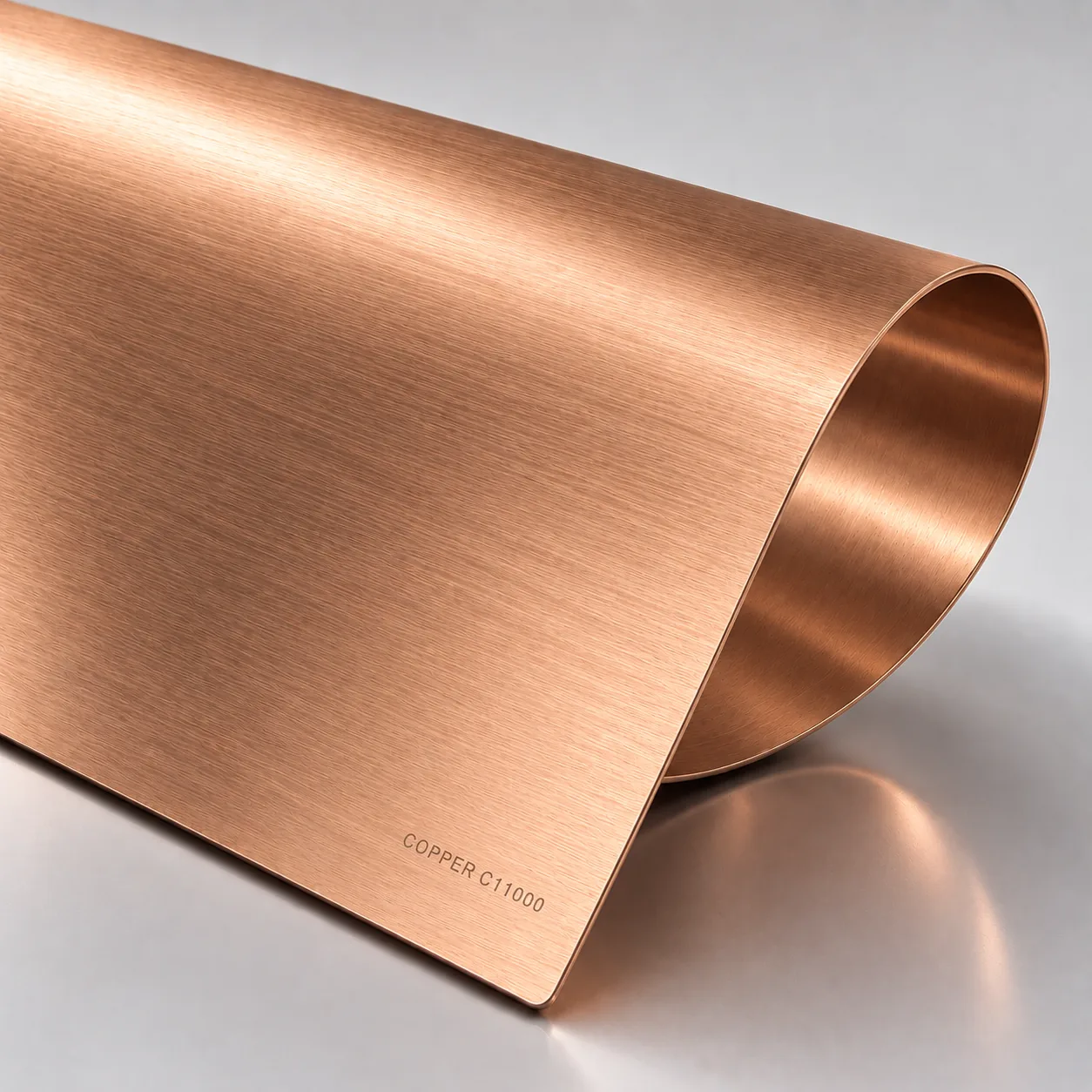
Pure copper — C110, C11000, electrolytic tough pitch — is at least 99.9% copper and is the reference for electrical and thermal conductivity: 100% IACS is not a figure C110 approximately reaches, it is the standard C110 defines. It appears as busbars, shielding, grounding parts and where heat has to move.
Brass is copper alloyed with zinc. Adding zinc raises strength and hardness and lowers cost, and the copper-to-zinc ratio sets where a particular brass lands: the 70/30 grades such as C26000 are the most ductile and the best for deep drawing, while the 62/38 group such as H62 is stronger and better for terminals and fittings.
Bronze is copper alloyed with something other than zinc — tin in the classic tin bronzes, or combinations including phosphorus. C5191 phosphor bronze is the one most often seen in sheet metal, chosen for its combination of strength, fatigue resistance and corrosion behaviour in springs and contacts.
| Family | Alloying element | Character | Typical use |
|---|---|---|---|
| Pure copper (C110) | None — 99.9% Cu | Best conductivity, softest | Busbars, shielding, grounding |
| Brass — 70/30 (C26000) | Zinc | Deep-drawing ductility | Drawn shells, cosmetic parts |
| Brass — 62/38 (H62) | Zinc | Stronger, less ductile | Terminals, fittings, hardware |
| Phosphor bronze (C5191) | Tin plus phosphorus | Strength and fatigue resistance | Springs, contacts, flexible parts |
How to choose
Start from the primary duty. If it is electrical or thermal, pure copper is the answer and the conductivity figure is the specification. If it is a formed or drawn part where cost and appearance matter together, brass is the family, and the copper content picks the ductility. If it is a spring or a contact that flexes repeatedly, phosphor bronze is the only one of the three designed for that.
Two properties need to be watched in all three. Copper alloys work-harden quickly, so forming operations may need an intermediate anneal, and they are among the more expensive sheet materials, so a specification that reaches for copper where aluminium or steel would serve is a cost decision rather than a technical one.
Fabrication and finishing notes
All three cut cleanly and form well within their respective limits, and all three take plating and coating readily. The practical limitation is welding: zinc and tin volatilise at welding temperatures, so brazing and soldering are the standard joining routes for brass and bronze, with mechanical fastening preferred where the joint carries current.
Finishing interacts with the application. Copper and its alloys tarnish in handling and in atmosphere — faster as the zinc content rises — so parts where appearance matters should be lacquered, plated or coated. Where conductivity is the point, be careful that the chosen finish does not insulate a contact surface that was supposed to conduct.