What 5052 aluminium is
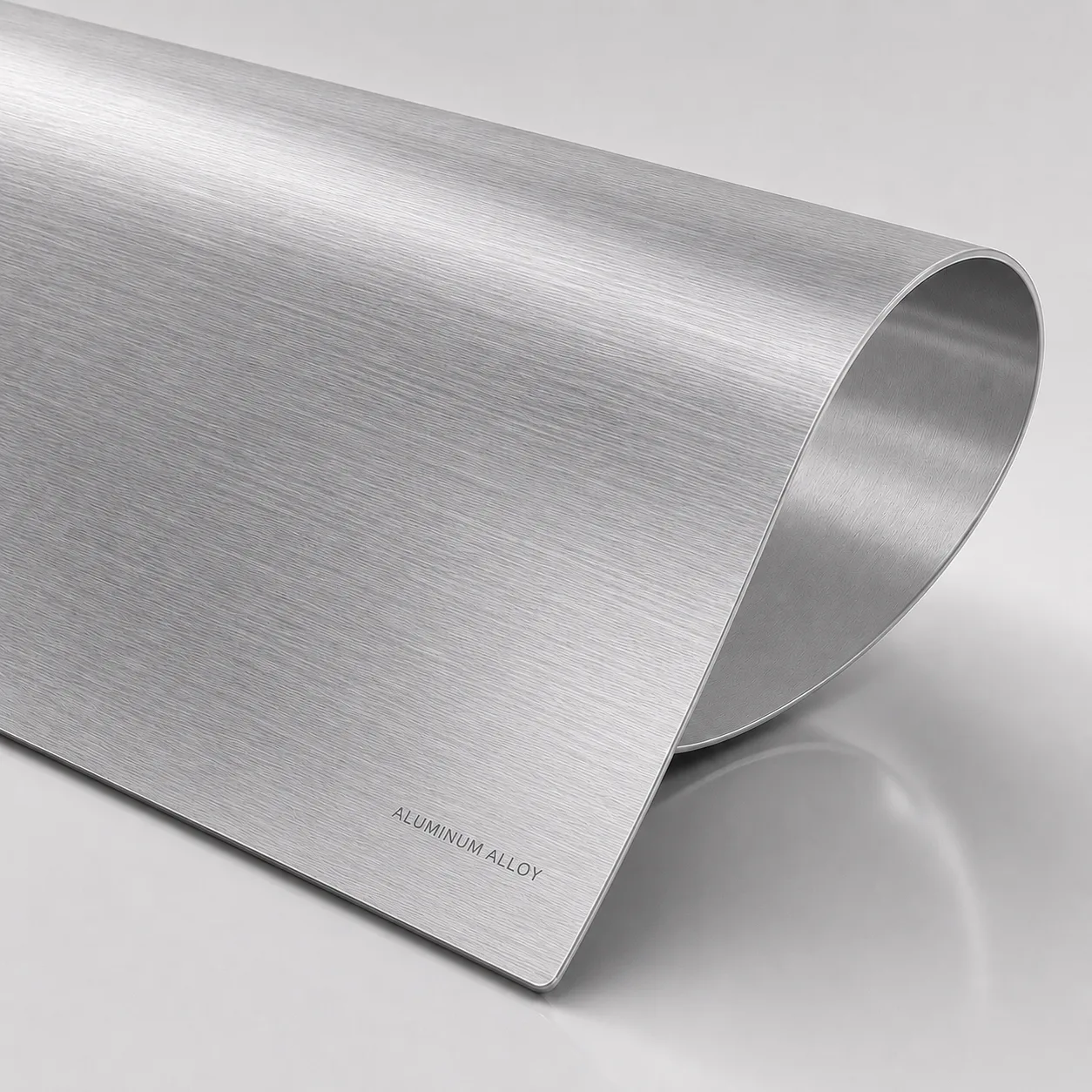
5052 is an aluminium–magnesium alloy (roughly 2.5% Mg) that is strengthened by cold work rather than heat treatment. In sheet form it is normally supplied in the H32 temper — strain-hardened and then stabilised by low-temperature annealing — which is the temper that gives the alloy its well-known combination of decent strength and forgiving bending behaviour.
Because it is not heat-treatable, 5052 keeps its properties after welding far better than the 6xxx series does. A welded 6061 joint loses a large share of its strength in the heat-affected zone; a welded 5052 joint does not. For enclosure bodies and housings that get TIG or MIG welded, this is often the deciding argument.
Typical properties for engineering reference
The figures below are typical values for the H32 temper as used for sheet metal selection. Actual properties vary with supplier, specification, thickness and applicable standard, so project-critical requirements should be confirmed against the material certificate.
| Property | Typical value (H32 temper) |
|---|---|
| Density | 2.68 g/cm³ — about one third of steel |
| Tensile strength | ~230 MPa |
| Yield strength | ~195 MPa |
| Elongation | ~12% |
| Corrosion resistance | Excellent — magnesium gives good atmospheric and marine behaviour |
| Weldability | Excellent (TIG/MIG), strength largely retained in the HAZ |
| Bending behaviour | Best of the common sheet grades — tight radii and zero-radius hems feasible in thin gauges |
How 5052 behaves through fabrication
On the fibre laser, 5052 cuts cleanly in the normal sheet window — our laser line cuts aluminium up to around 5 mm — with a clean kerf and minimal dross at typical enclosure gauges of 1.0–3.0 mm. On the press brake it is the alloy that designers can be ambitious with: inside flanges, hems and tight inside radii that would crack 6061-T6 are routine in 5052.
Bend radii still follow the grain-direction rule: bends across the grain tolerate smaller radii than bends along it, and 90° bends in thicker gauges should still get an inside radius of roughly one material thickness. The difference is that when a design genuinely needs a tighter bend — a zero-radius hem, a close return flange — 5052 is the grade that says yes. Our minimum bend radius data by alloy is in the DFM guide.
- Laser cutting: clean edges, 1.0–3.0 mm typical enclosure gauges
- CNC bending: tightest radii and hems of the common grades
- TIG/MIG welding: retained strength, minor distortion control on long seams
- Deep drawing and forming: good draw ratios for housings and covers
Surface finishes that suit 5052
5052 is the standard substrate for anodising: the magnesium-bearing alloy anodises to an even, hard oxide layer and takes dye well, which is why anodised aluminium front panels and heatsink faces are usually 5052. Where the part is painted instead, powder coating adheres well after the standard pretreatment and hides handling marks on enclosure bodies.
For a raw-metal look, bead blasting before clear anodising gives the uniform matte finish common on consumer-electronics housings. The finish compatibility table on the surface finishes hub shows which pairings we run regularly.
- Anodising (Type II): the standard pairing for panels and visible faces
- Powder coating: durable colour for enclosure bodies and outdoor parts
- Bead blasting: matte cosmetic finish, usually pre-anodising
5052 vs 6061: the decision that matters
The question we get most often is why a quote moved a customer from 6061 to 5052 or the reverse. The short version: if the part has bends, start with 5052; if the part is essentially flat with machined features or structural duties, 6061 earns its place. The comparison page covers the full decision table.
| Decision | Choose 5052-H32 | Choose 6061-T6 |
|---|---|---|
| Bends in the part | Yes — formability is the strongest suit | Caution — larger radii, crack risk on tight bends |
| Welded assembly | Retains strength in the HAZ | Loses strength locally after welding |
| Maximum stiffness per gram | Good | Better — higher yield strength |
| Machined features after forming | Acceptable | Better machinability |
| Typical uses | Enclosures, brackets, panels, housings | Structural brackets, frames, machined-and-formed parts |
Sourcing and how to specify it
WERIX sources 5052 sheet through our manufacturing supply chain against the grade, temper and thickness your drawing calls out; availability for a specific gauge is confirmed during quotation. On the drawing, specify the alloy and temper together — "Al 5052-H32" — plus the thickness and the finish, and leave tight tolerances off features the process holds naturally.
If you are unsure which side of the 5052/6061 line your part falls on, send the model with the note "material open" and an engineer will review the bends, the welding and the loads, then recommend one and price it.