
Choosing a Sheet Metal Finish: A Selection Matrix
Finishes are usually specified last, from a list, by appearance. That ordering is why so many projects reach the finishing stage with a masking problem, a colour that cannot be matched in a small batch, or a part whose threads no longer fit.
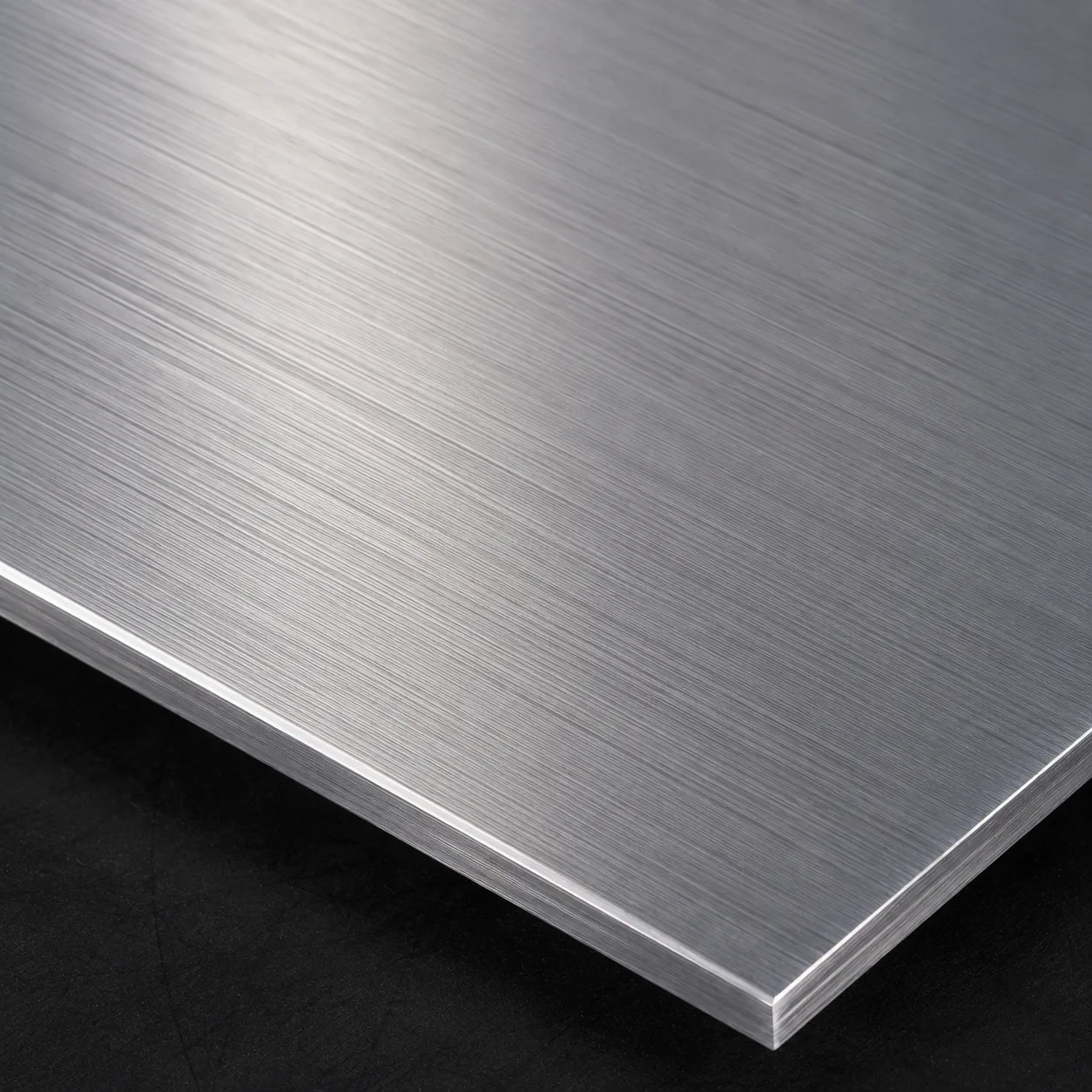
Pick a finish by asking what the environment does to the part first, then what the finish does to the part. Powder coating builds a layer and hides the substrate; anodising converts the substrate and hides nothing; plating protects steel and changes thread fits. Each leaves its own marks.
7 rows of reference data below — the summary above is the short answer, the tables are what you quote from.
Ask the environment question first
Indoor and dry rules out almost nothing. Indoor with condensation or a washdown needs a coating that does not lift at a cut edge, which is why galvanised-under-coat performs better than bare steel under the same powder. Outdoor needs UV stability and a film thick enough to survive a knock; a textured powder coat hides handling marks far better than a smooth one.
Coastal or chemical exposures change the question from which finish to whether any finish is enough. Coatings fail at edges and fixings, so where the environment will attack those, the substrate — not the coating — has to change.
| Finish | Substrate | What it changes |
|---|---|---|
| Powder coating | Steel, aluminium, galvanised | Adds 60–120 µm; insulating, so mask earth and sealing faces; rack marks at contact points |
| Anodising | Aluminium only | Conversion layer; dimension grows roughly half in, half out; visible scratches cannot be filled |
| Zinc plating | Steel | Thin sacrificial protection; keeps protecting at a scratch; changes thread fit on small fasteners |
| Nickel / chrome plating | Steel, brass | Harder, brighter, more expensive; fails differently in salt spray than zinc |
| Brushed | Stainless, aluminium | Directional grain must be consistent across the batch; bending across the grain cracks sooner |
| Sand / bead blasting | Most metals | Uniform matte; a good key for a coating; takes the shine off welds |
| Laser marking / engraving | Most metals | After finishing; permanent; contrast varies by substrate and coating |
Finish, substrate and what it costs you in process
Masking is part of the drawing
Anything that must stay conductive, sealing, threaded or dimensionally accurate after finishing has to be masked, and masking is done before the finish is applied. There is no recovering it afterwards short of stripping the part, which is usually worse than the original problem.
The surfaces to think about are the ones that are easy to forget: earth studs and their flange lands, gasket channels, quick-release mechanism contact points, threaded inserts, dowel holes, and jig or fixture locations. A short masking note on the drawing removes an entire class of assembly failures.
- List the surfaces to be masked, by name, not as "as required".
- State whether a tolerance applies to the bare or the coated part; powder and anodising both change dimensions.
- For a visible surface, say how it will be inspected — raking light finds far more defects than a casual look.
- Where a colour must match across parts coated in different batches, say so, and expect to need a colour reference rather than a name.
Rack marks, batching and the small-order problem
Parts are hung on a rack or laid on a jig for coating, so they touch something. A well-designed part has a place where a contact mark does not matter — an internal face, a hidden flange, the underside. Where there is no such place, someone has to make a judgement on the shop floor, and judgement is not reproducible.
Batching matters too. Finishing is priced per batch and per colour, so a small batch of parts pays a minimum charge that does not scale down. Consolidating a project into one colour and one finishing run is one of the few cost reductions that does not touch the design at all.
Frequently asked questions
Powder coating or anodising?
Powder coating hides the substrate and gives you any RAL colour, so it suits steel and any part where appearance matters more than a scratch-free life. Anodising only works on aluminium and converts the surface rather than covering it, so it never peels — but a scratch in service stays visible for the life of the part.
Why does my electrical enclosure fail an earth continuity check?
Almost always because the earth path was coated. Powder is an insulator, so any stud, flange land or bolted joint in the earth route has to be masked before the part goes in the oven. It has to be on the drawing; it cannot be recovered afterwards.
How much does coating change my dimensions?
Powder coating runs about 60–120 µm per side in practice, so a cut-out loses roughly 0.12–0.24 mm overall. Anodising grows about half into the material and half out of it. Where a feature has a real tolerance, say whether it is measured before or after finishing and we will allow for it.
Can you match a specific colour?
Yes, given a RAL or Pantone reference or a physical sample. Matching from a photograph is not reliable — screens and lighting both change it. Where several parts are coated in different batches and need to match, mention it, because the standard approach is to coat them together.
What about small parts and thread fits?
Plating adds to a thread, and on small fasteners that can stop the nut going on. Where a thread is finished, specify whether it must be masked or whether the fit is expected afterwards. It is a two-line note on the drawing and a rebuild if it is missed.
Send the drawing, get a real answer
An engineer reviews your model for manufacturability and returns a costed quotation — with the DFM observations that would change the price.