Table of Contents
Overview
Quick answer: Minimum bend radius is the smallest inside radius a sheet can bend without cracking. It scales with thickness — typically 1× the material thickness (1t) for mild steel and 1–2t for aluminum or stainless, more for hard tempers. The chart below lists the minimum radius in multiples of thickness for each common metal.
What is the minimum bend radius?
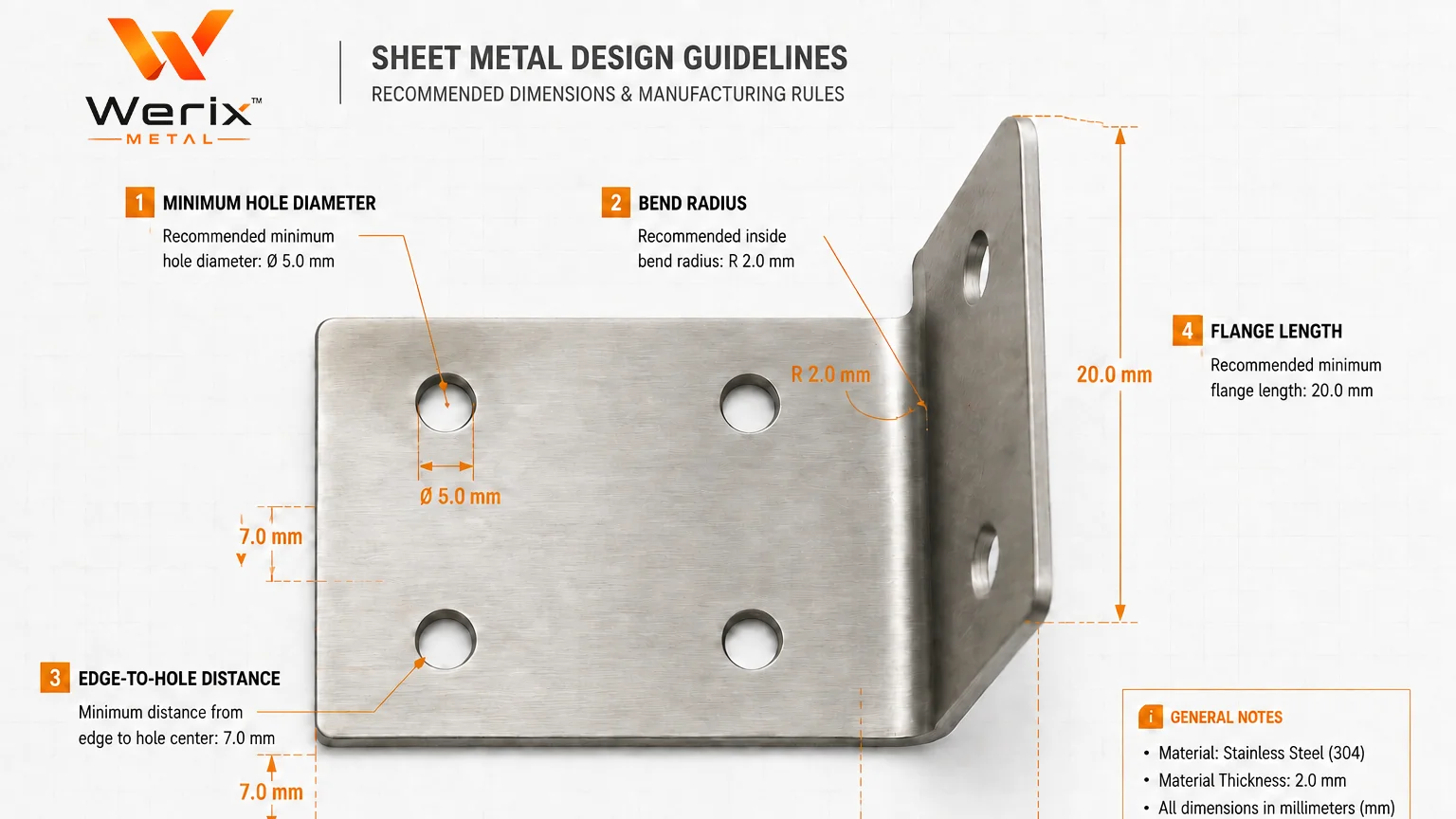
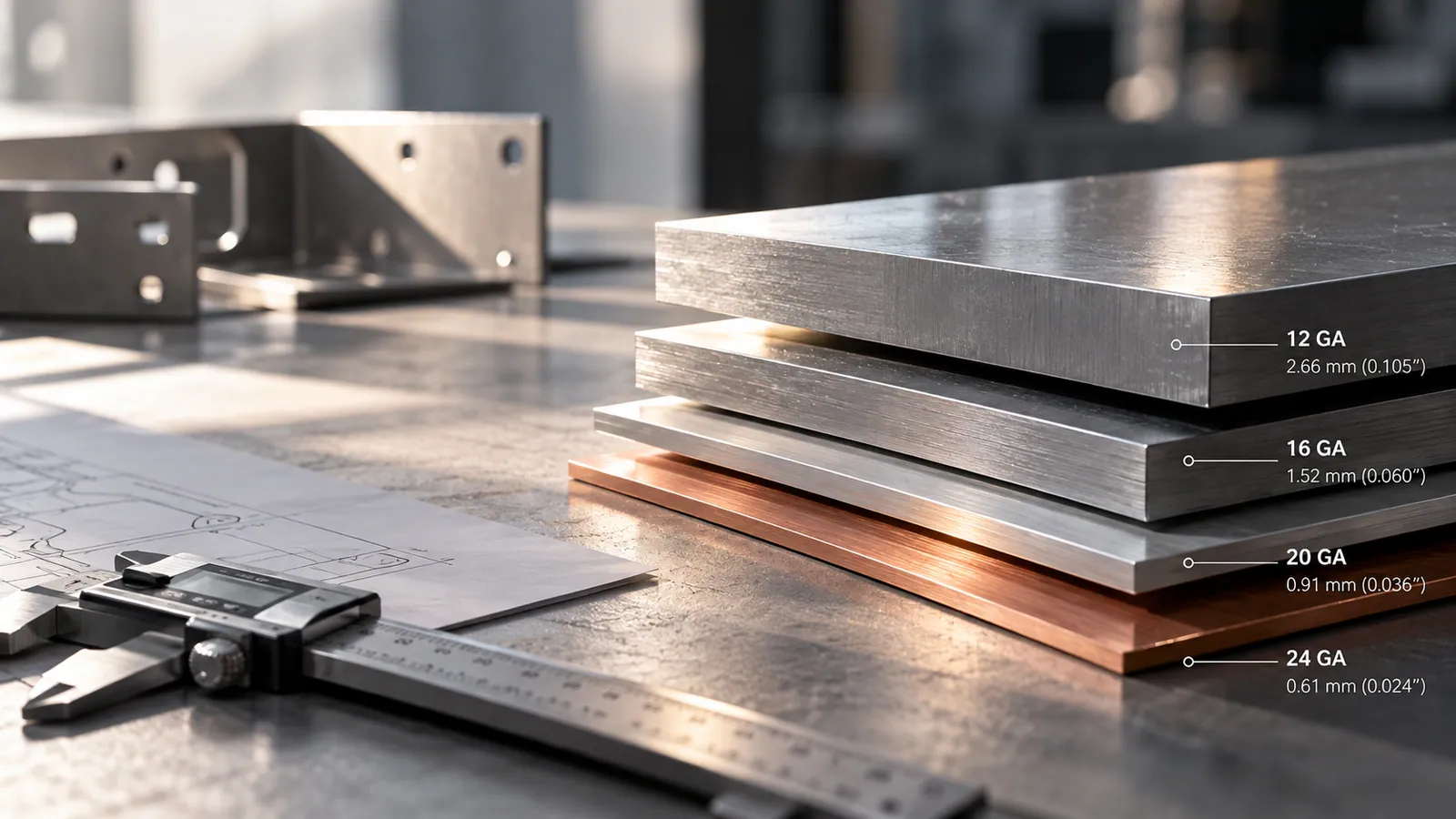
The minimum bend radius is the tightest inside curve a sheet can take before the outer fibers crack or the inner fibers buckle. It is measured on the inside of the bend. Designers usually express it as a multiple of the material thickness, written 1t, 2t or 0.5t, where “t” is the stock thickness. A 1t radius on 2 mm steel is a 2 mm inside radius; the same 1t rule on 3 mm stock gives a 3 mm radius.
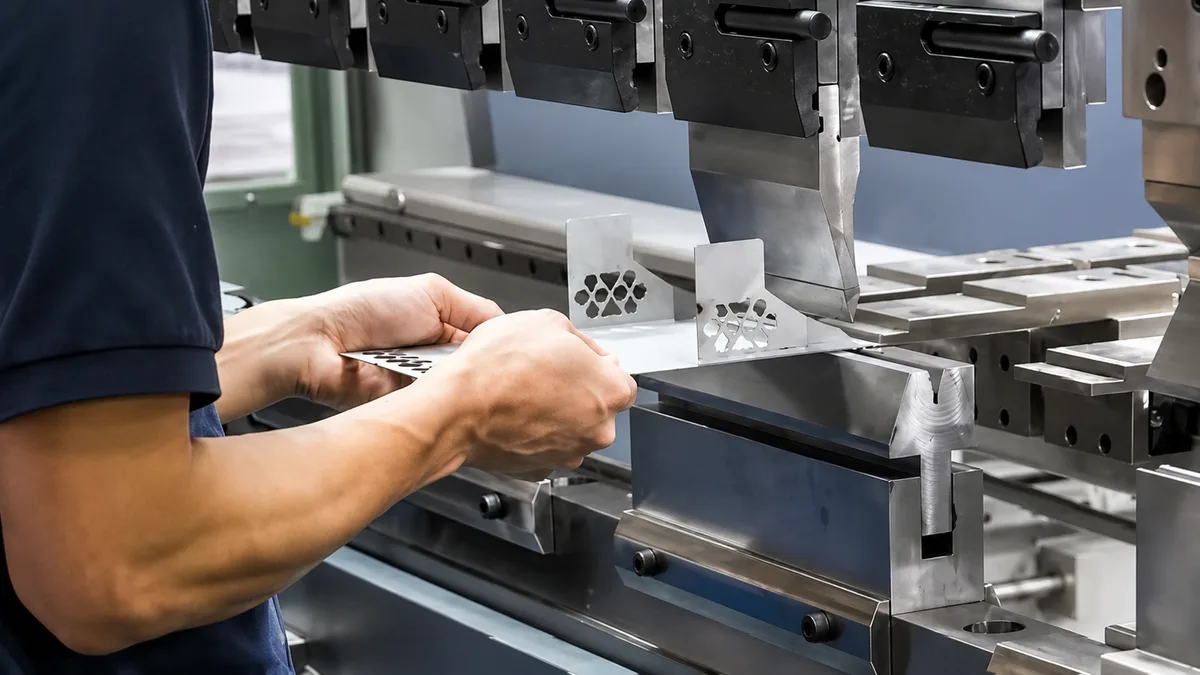
Why a minimum exists: as the sheet bends, the outside surface stretches and the inside surface compresses. Thin, soft, or ductile metals tolerate more stretch, so they bend tighter. Thick, hard, or brittle metals reach their yield limit sooner and crack if the radius is too small. The radius also sets how much flat length is “consumed” by the bend, which feeds directly into blank-size calculation.
Reference: for aluminium, cold-bend capability is a supply condition, not a suggestion — ASTM B209/B209M requires sheet and plate to bend cold through a specified angle without cracking, alloy by alloy and temper by temper.
Minimum Bend Radius Chart
The table lists the smallest practical inside radius for common fabrication metals, given as a multiple of thickness (×t). Treat it as a starting point and confirm against your temper and grain direction.
| Material | Temper | Min Radius (×t) | Notes |
|---|---|---|---|
| Low-carbon steel (SPCC) | Annealed / soft | 0.5–1t | Bends very tightly |
| Low-carbon steel (SPCC) | Full hard | 1.5–2t | Harder stock needs larger radius |
| Stainless 304 | Annealed | 1t | Common rule of thumb |
| Stainless 304 | 1/2 hard | 2–3t | |
| Stainless 316 | Annealed | 1–1.5t | |
| Aluminum 1100 | O (soft) | 0t | Pure Al, can fold flat |
| Aluminum 3003 | O | 0t | |
| Aluminum 5052 | O | 0t | Marine alloy, very formable |
| Aluminum 5052 | H32 | 1t | |
| Aluminum 6061 | O | 1t | |
| Aluminum 6061 | T6 | 2–3t | Hard temper, larger radius |
| Copper C11000 | Annealed | 0–0.5t | |
| Brass C26000 | Annealed | 0.5t | |
| Copper C11000 | Half hard | 1t |
What Changes the Minimum Radius
Four variables shift the number above. Material: pure aluminum and copper bend tighter than steel; stainless and high-strength steel need more room. Thickness: thicker stock has a larger absolute radius at the same ×t, and is less forgiving of a tight corner. Temper: soft tempers (O, annealed) form sharp bends; hard tempers (H32, T6, full hard) need a bigger radius or they crack. Grain direction: bending across the grain (perpendicular to the roll direction) tolerates a tighter radius than bending with the grain, so orient the bend line across the grain when the design allows.
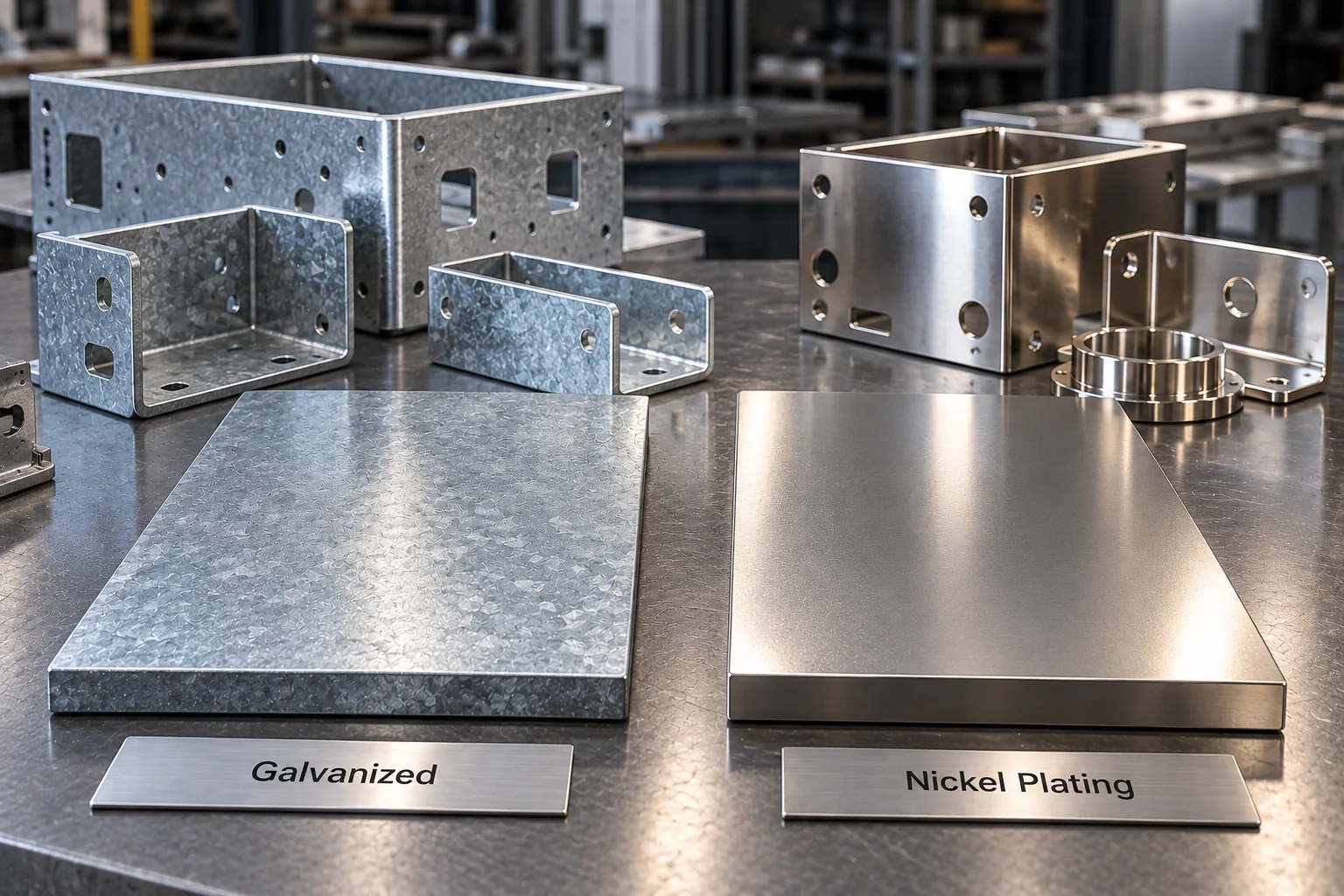
Surface condition matters too. A mill finish bends more freely than a hard coating; pre-painted or plated stock can flake at a tight radius, so add margin or bend before finishing.
Common Radii by Application
Typical inside radii seen in production: electronics enclosures and covers 0.5–1t (sharp, light look); brackets and frames 1–1.5t (balances strength and formability); structural and heavy parts 2–3t (avoids cracking under load); decorative trims sometimes a true 0t fold for a crisp edge. The goal is the smallest radius that still forms cleanly and meets the part’s function — going tighter than needed only raises scrap and tool wear.
How do you choose the right bend radius?
Start from the function, then the material. Pick the softest temper that meets strength, since it allows the tightest radius. Keep bends across the grain, and size the radius so the outside stretch stays under the metal’s limit — when in doubt, use 1t for mild steel, 1.5t for stainless, and 1t for aluminum 5052-O. Then check the knock-on effects: a larger radius needs more flat length (use our bend allowance calculator), hole-to-bend distance must clear the radius, and corner relief may be needed on tight notches. Send the drawing and we confirm the smallest radius that passes DFM.
FAQ
Written by

Industrial & Product Design Engineer
Julia takes a product from the first sketch to a sheet metal design that can actually be made. She sits between the customer’s concept and our press brakes — modelling enclosures and brackets in CAD, running early DFM passes, and choosing the material and finish that will still look right two years down the line.
View profileParts we make for this topic
Ready to Start Your Project?
Get DFM feedback and a quote within 24 hours. No minimum order quantity.