Table of Contents
Overview
Quick answer: 316 is 304 plus 2–3% molybdenum, and that molybdenum is what resists chloride attack. Indoors and away from salt, 304 does the job at lower cost. Marine air, de-icing salt, chemicals or medical washdowns justify 316's premium. Strength and formability are near-identical, so corrosion decides.
What are the grades made of?
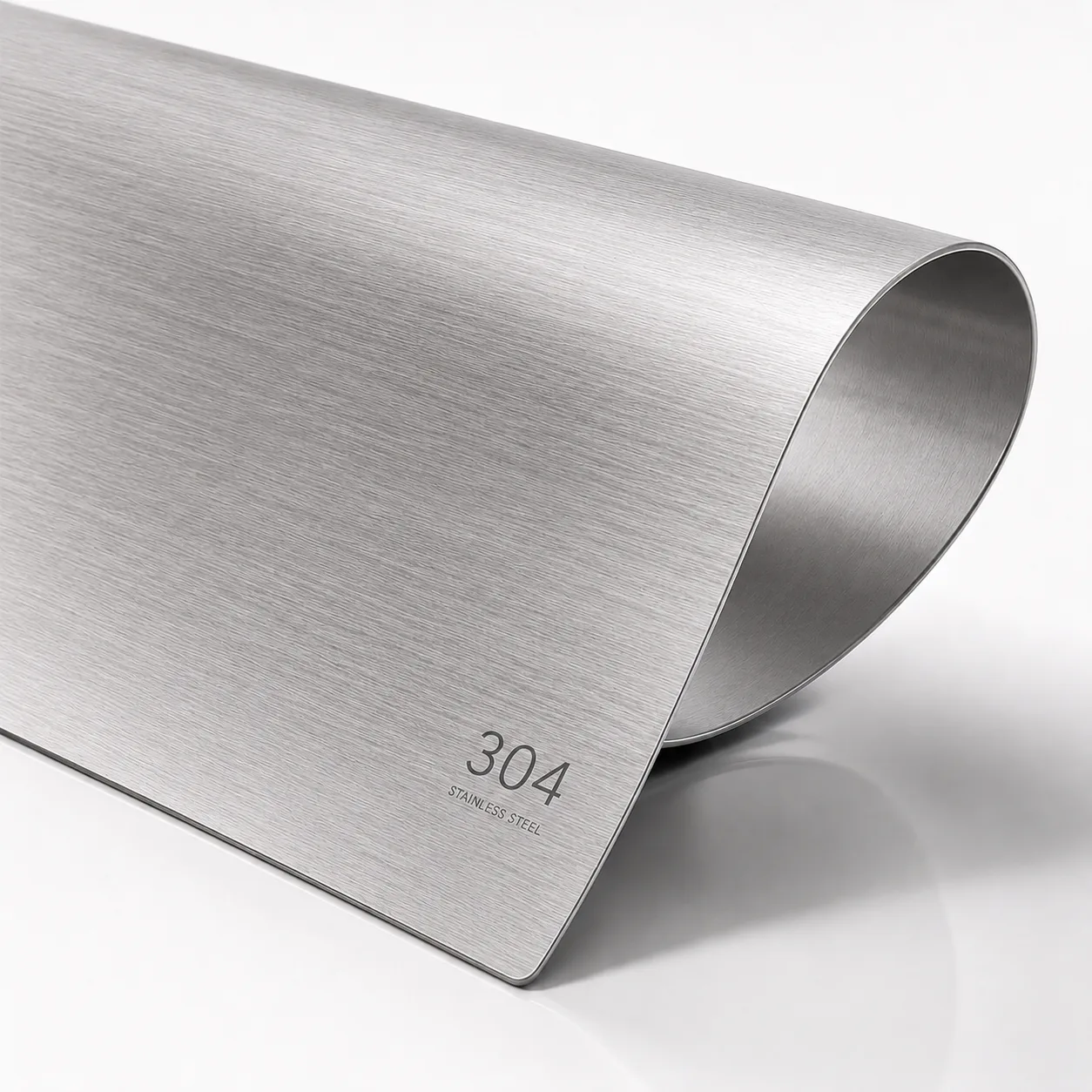
Both are austenitic chromium-nickel steels. 304 is the classic 18/8: roughly 18% chromium and 8% nickel, the balance iron. 316 keeps the austenitic family recipe but adds 2–3% molybdenum and a touch more nickel. That single element — molybdenum — is the entire commercial difference between the two grades, and nearly the entire price difference too.
Both also come in low-carbon "L" variants (304L, 316L) with at most 0.03% carbon instead of 0.08%. The L grades matter mainly for heavy-section welding, where slower cooling can otherwise sensitize the heat-affected zone. On typical sheet gauges, standard grades weld without difficulty.
Where does 316 earn its keep on corrosion?
Stainless resists corrosion through its chromium oxide film, but chlorides are the film's enemy: they pierce it locally and start pin-prick pits that grow under the surface. Molybdenum hardens the film against exactly this attack. In practice, 304 handles rain, humidity and most indoor environments well, but shows pitting over time in coastal salt air, under road de-icing salt, or in contact with many process chemicals. 316 tolerates the same exposures for far longer.
The failure is also unforgiving in appearance terms: a pitted enclosure cannot be polished back to uniform, because the pits go down, not across. Choosing 304 for a coastal installation to save on material often costs more in the replacement — and neither grade is a substitute for good design: crevices, trapped water and sediment are what kill stainless in the field.
How do the properties and cost compare?
Mechanically the two grades are close enough that they are often interchangeable on the drawing: same austenitic structure, similar strength, same excellent formability. The differences that matter are chemical and economic.
| Property (typical reference) | 304 | 316 |
|---|---|---|
| Chemistry | 18% Cr, 8% Ni, no Mo | 16.5% Cr, 10.5% Ni, 2–3% Mo |
| Yield strength (annealed) | ~215 MPa | ~240 MPa |
| Tensile strength | ~520 MPa | ~530 MPa |
| Chloride / pitting resistance | Good — indoor duty | Excellent — marine-grade duty |
| Forming / bending | Excellent — 1T radii routine | Excellent — 1T radii routine |
| Welding | Excellent, standard practice | Excellent, standard practice |
| Raw material cost | Baseline | Typically 30–50% higher |
| Typical uses | Indoor enclosures, kitchenware, panels | Coastal hardware, chemical, medical |
Values are typical annealed-condition reference figures; certified mill data governs. Note what the table says about fabrication: bending and welding are the same story for both grades. The premium buys corrosion life, not processability — which is why over-specifying 316 for a dry indoor cabinet is wasted money, and under-specifying 304 for outdoor hardware is a deferred failure.
Welding, Forming and Finishing
On the shop floor the two grades behave almost identically. Both bend across the full gauge range we run, taking inside radii at or near one material thickness. Both weld cleanly by TIG with standard austenitic fillers (308L for 304, 316L for 316 — and 316L filler is also the right answer when welding the two grades to each other). Austenitic sheet work-hardens, so heavy forming schedules plan for springback without any drama.
Finishing is where the grades converge on the same prescription: after welding, the heat-tinted zone loses its protective film locally, so both grades expect pickling and passivation to restore full corrosion resistance at the weld. Skip it and even a correctly chosen 316 will rust-blotch at the weld line — the classic "it's stainless, why is it rusting" service call, which is almost always a finishing gap, not a grade problem.
How do you choose?
The decision tree is short. Indoor, dry, no chemical exposure → 304, and spend nothing more. Outdoor but inland with occasional rain → 304 usually holds, especially with a passivated, crevice-free design. Coastal salt air, de-icing salt splash zone, chemical or pharmaceutical washdown, marine hardware → 316, without hesitation. Mixed assemblies → 316 fasteners into 304 structures avoid galvanic surprises at the fastener line, where corrosion always starts first.
When drawings arrive without a grade note, we quote 304 by default for indoor parts and flag anything that smells like outdoor or wet service. If your parts will live within sight of the sea or under winter road salt, say so at quotation — the alloy decision costs nothing on the drawing and everything after installation.
FAQ
Written by

Industrial & Product Design Engineer
Julia takes a product from the first sketch to a sheet metal design that can actually be made. She sits between the customer’s concept and our press brakes — modelling enclosures and brackets in CAD, running early DFM passes, and choosing the material and finish that will still look right two years down the line.
View profileParts we make for this topic
Ready to Start Your Project?
Get DFM feedback and a quote within 24 hours. No minimum order quantity.