What a brushed finish is
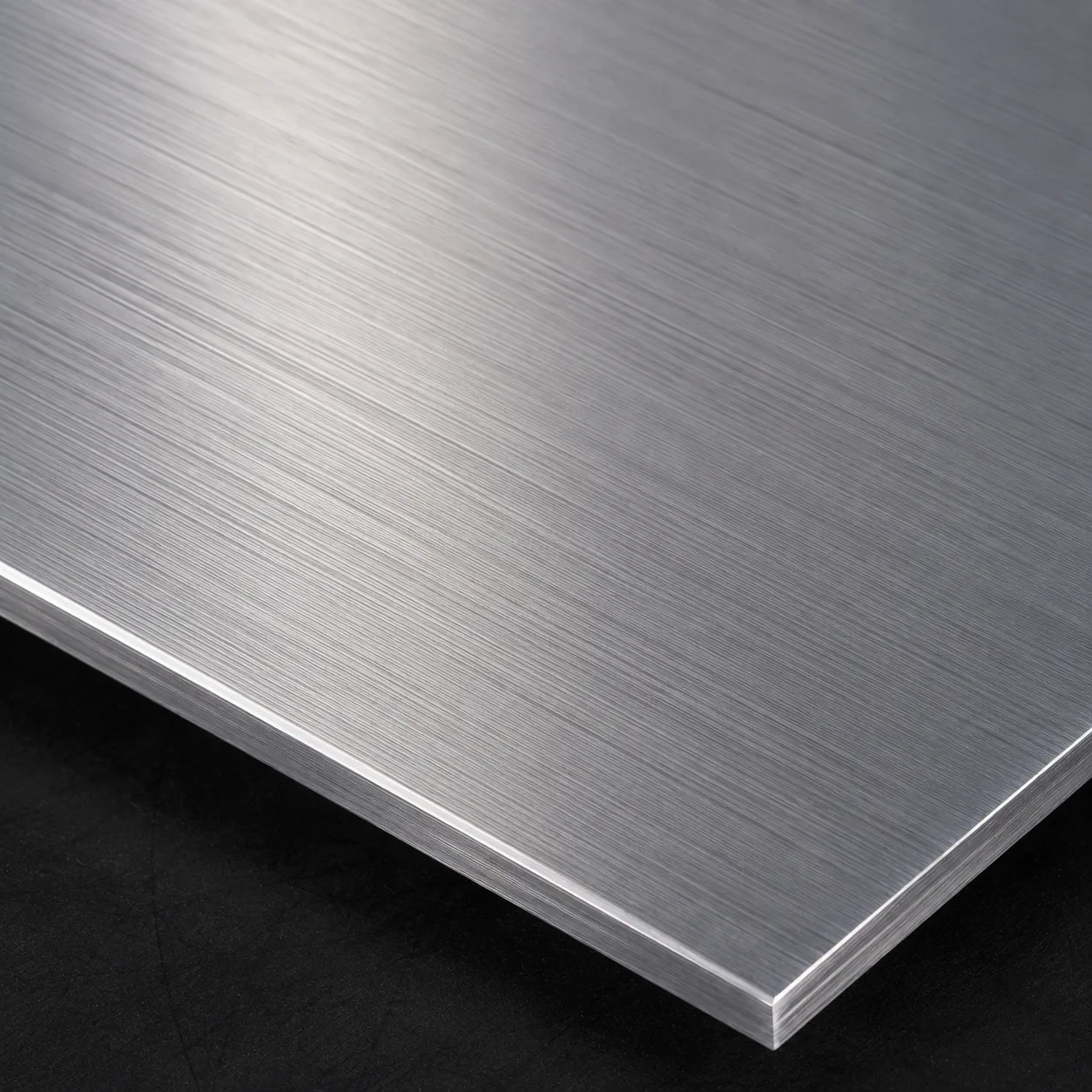
A brushed finish is produced by mechanically abrading the surface with a belt, brush or abrasive belt in one direction, which creates a fine, unidirectional grain. The grain scatters light rather than reflecting it evenly, which is what produces the satin, directional look that defines stainless appliance and elevator panels. It adds no layer: there is no film thickness, and the finish is specified by its designation and its direction.
The consequence is the one that gets missed. Because nothing is added, a brushed surface has exactly the corrosion resistance of the alloy underneath it. If the part is stainless, the corrosion performance is still 304 or 316 as specified; if it is aluminium, it is still the alloy. A brushed finish is not a protective treatment, and a drawing should not imply otherwise.
- Mechanical texture — no film, no build-up, no thickness allowance
- Adds no corrosion protection: the rating is the base metal's
- Commonly specified as No. 4 (stainless) or hairline
- Grain direction is visible, so it is a drawing instruction
- Common on stainless and aluminium
No. 4, hairline, and the difference that matters
The two common designations describe different grain coarseness. No. 4 is the coarser, more directional satin typically associated with appliance and elevator trim. Hairline describes a finer, tighter grain. Both are a texture rather than a colour, and both are conventionally written onto the drawing as a designation with a direction.
Where the finish is decorative and the part will be handled, the direction is not cosmetic: brushed faces scratch along the grain, and a scratch across the grain reads very differently from one along it. That is why the drawing states the grain direction and why a drawing saying only "brushed" is incomplete — it leaves the visible direction to whichever way the part happened to be held on the machine.
| Substrate | Typical use | Note |
|---|---|---|
| Stainless 304 / 316 | No. 4 appliance and elevator trim | The signature use; direction is visible |
| Stainless — hairline | Fine, tight grain, panel work | Finer than No. 4; state which |
| Aluminium | Decorative grain, extruded or folded panels | Adds no protection to the alloy |
| Carbon steel | Rarely — usually painted over | Texturing helps adhesion; not a finish |
Brushing adds no corrosion protection
This is the sentence to keep on the drawing, because "brushed" is routinely read as a finish that protects. It does not. On a stainless part the corrosion resistance is the grade's; on aluminium it is the alloy's. Where the appearance must be a brushed grain and the environment is aggressive, the answer is to specify the brushed texture and the corrosion protection separately — typically a passivation step for stainless, or the correct alloy in the first place.
Handling matters as much as the environment on a brushed cosmetic face. Brushed surfaces scratch, and they scratch visibly. Where a face is cosmetic, it is worth stating whether it must be protected with peel-coat film through laser, bending and welding — the process steps that would otherwise put a mark on it. That is a planning note, not an accident.
- Corrosion rating is the base metal's, not the finish's
- Specify the grain and the corrosion requirement separately
- Where appearance matters, state whether cosmetic faces need peel-coat through fabrication
How WERIX specifies and executes it
Brushing is executed as a mechanical operation and coordinated with the other finishing steps, under our specification and inspection. We specify the grain — No. 4 or hairline — and the direction, and we treat the corrosion protection as a separate decision about the alloy or a passivation step. ISO 9001 is the only management-system certification held; a brushed finish carries no certification of its own, and the page does not imply one.
The judgement that matters at DFM review is the direction. A brushed face with an unstated direction is a face that will be judged cosmetically against an expectation nobody wrote down, and the disagreement appears at inspection rather than at drawing.