
How Much Does a Sheet Metal Enclosure Cost?
Buyers ask what an enclosure costs and expect a number per unit of size. That number does not exist, because two enclosures of the same volume can differ threefold depending on sealing, internal hardware and whether the frame is structural. What can be built is a model that shows which element dominates a given design.
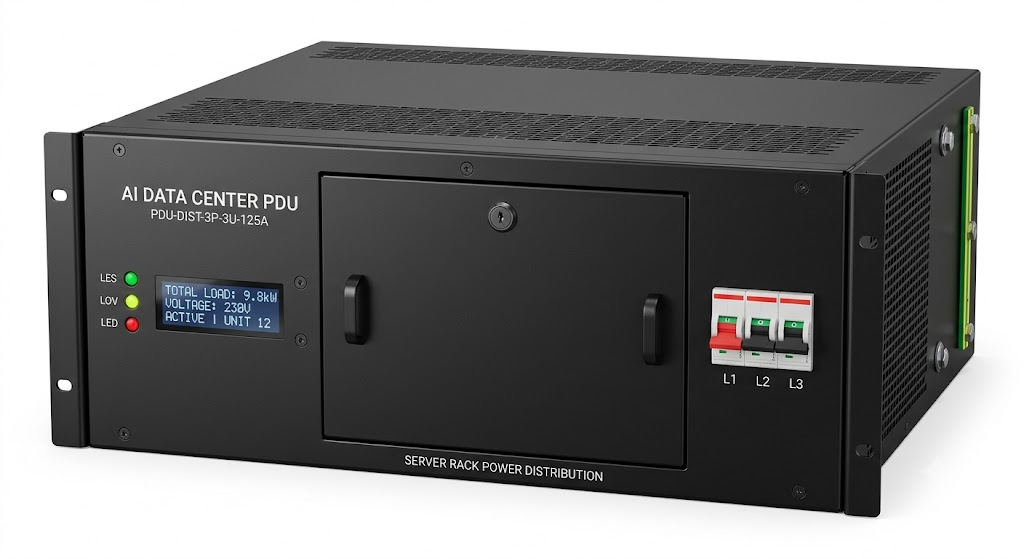
Enclosure cost is driven by size, because size multiplies through cut length, bends, welds, finishing area and handling. The model here splits an enclosure into its seven elements so a reader can see which one dominates their own part, using their own rates rather than a published one.
The seven elements
| Element | Scales with | Notes |
|---|---|---|
| Material | Panel area × gauge | Thickness is often set by stiffness, not strength |
| Cutting | Total contour length, including openings | Internal openings often exceed the outer profile |
| Forming | Bend count and bend length | Corners, door frames, returns, mounting plate |
| Joining | Weld or fastener length and access | Sealing requirement is the main multiplier |
| Finishing | External and internal coated area | Masking adds labour independent of area |
| Internal hardware | Item count and variety | PEM inserts, DIN rail, hinges, gland plates |
| Assembly labour | Part count and handling | Grows faster than size on complex cabinets |
Why size multiplies rather than adds
Doubling the width of a cabinet roughly doubles the material but more than doubles the cut length, because the number of openings, reliefs and mounting features does not stay constant — it grows with the space available. The same applies to bends and to finishing area.
The practical outcome is that enclosure cost tends to grow faster than surface area and slower than volume, which is why a size-based rule of thumb is unreliable in both directions. A shallow wide enclosure and a tall narrow one of the same volume behave differently, because one has more bends and the other more weld.
The indices are illustrative shapes, not measured data. They exist to show the direction: a doubling in linear size produces roughly a 4.7× cost movement in this model rather than the 4× a pure area calculation would predict, because the smaller elements grow slightly faster than area.
| Size index | Material | Cutting | Forming | Joining | Finishing | Combined index |
|---|---|---|---|---|---|---|
| 1.0 (baseline) | 1.00 | 1.00 | 1.00 | 1.00 | 1.00 | 1.00 |
| 1.5× linear | 2.25 | 2.6 | 2.4 | 2.5 | 2.3 | 2.4 |
| 2.0× linear | 4.00 | 5.1 | 4.5 | 5.0 | 4.4 | 4.7 |
The three decisions that move an enclosure most
Sealing. A folded and riveted joint and a continuously welded, dressed and tested joint can share every dimension on the drawing and sit in different cost brackets. This is usually the largest single decision and it is often left implicit.
Stiffness strategy. Forming stiffness in — returns, swages, embossed ribs — keeps gauge low. Buying stiffness with thickness adds material to every panel of the cabinet, permanently. The formed version costs a tool feature once.
Internal hardware variety. Cost scales with the number of distinct items and the number of operations, not only with the count. Three types of insert across twenty positions costs more in setup and error risk than one type across twenty positions.
Running the model on your enclosure
- Measure total cut length rather than bounding area; on an enclosure with doors and openings it is usually far larger than the outer profile suggests.
- Count bends including returns and door frames, not just the visible corners.
- Mark which joints must seal and which are structural only. The gap between them is often the biggest cost decision on the drawing.
- List internal hardware by type, not by quantity. Variety drives setup cost and assembly error.
- Substitute your own rates into the element table; the model ranks the elements, it does not price the box.
Frequently asked questions
Can you give a rough cost per square metre for an enclosure?
Not one that would survive contact with a real drawing. Sealing, stiffness strategy and internal hardware vary enough to move the number several-fold on the same footprint. What we will do is break the price into the seven elements so you can see which one dominates your design.
Why does cost grow faster than surface area?
Because the smaller features grow faster than the panels do. Openings, reliefs, mounting features and stiffening returns scale with available space, so a larger cabinet carries proportionally more of them. Surface area alone understates the increase.
What is the single biggest cost decision on an enclosure?
Usually the sealing requirement, because it determines whether joints are folded and riveted or welded, dressed and leak-tested. Specify the ingress protection the environment needs, and be explicit about it, because it is easy to upgrade silently during review.
Does an off-the-shelf enclosure ever win?
On small quantities of simple geometry, frequently — and we will say so. A standard enclosure is cheaper than a bespoke one until the size, the cut-outs or the internal layout stop matching, which on most industrial applications happens sooner than buyers expect.
Send the drawing, get a real answer
An engineer reviews your model for manufacturability and returns a costed quotation — with the DFM observations that would change the price.