
Sheet Metal Enclosure Cost: What Drives It
An enclosure looks like a box, which is why buyers expect it to cost like a box. In practice it is one of the more expensive sheet metal assemblies per kilogram, because a box is a set of edges to cut, corners to bend, joints to weld, a door to fit, a gasket to seat and a surface to finish — and the dimensions multiply through every one of those steps.
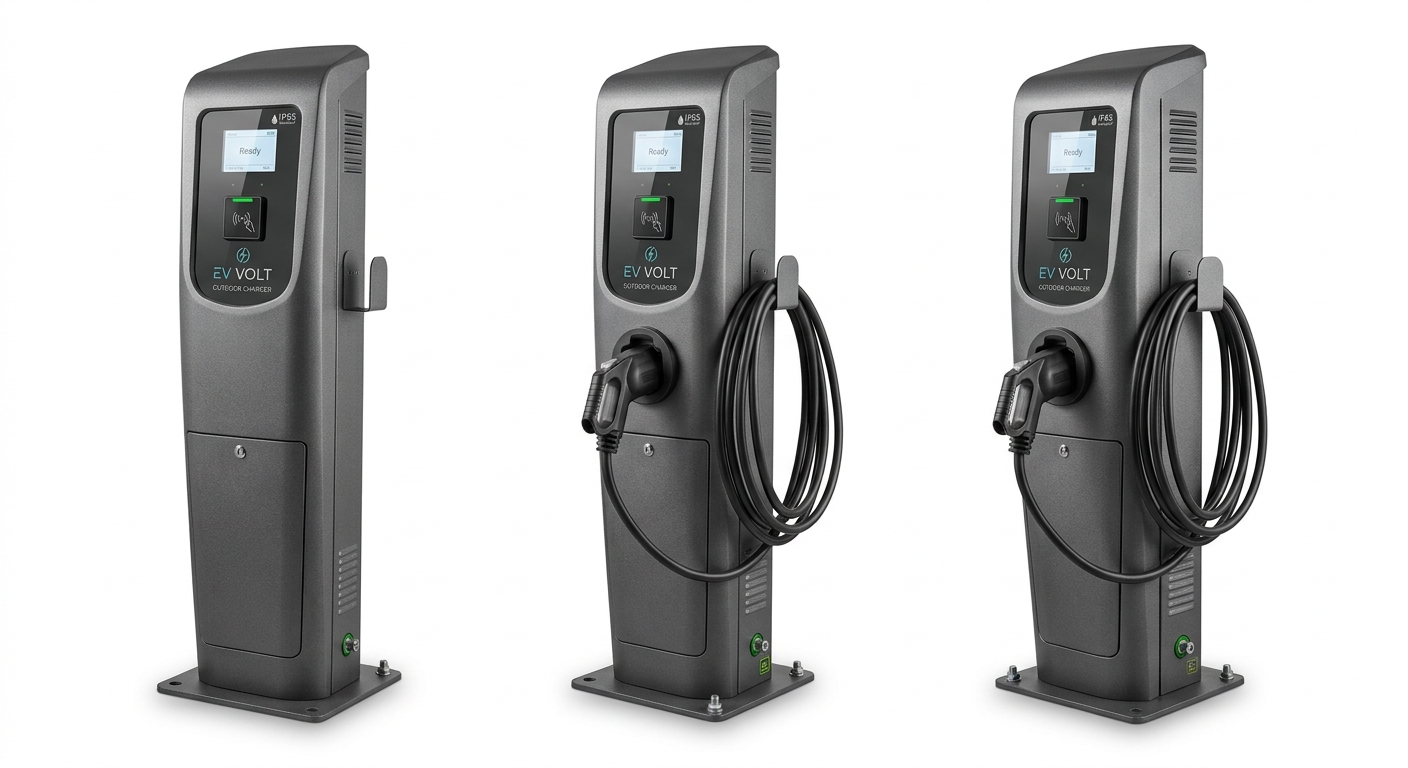
Enclosure cost is driven by size, material and gauge, total cut length, bend and weld count, the ingress protection the customer specifies, finishing area and any internal hardware. Size and sealing usually matter more than the alloy choice, because both multiply across every other operation.
Why an enclosure is not priced like a flat part
A flat bracket has one outline and a few holes. An enclosure has six faces, four corners, one or more doors, a mounting plate, cable entries and often a gasket groove. Every additional face adds cut length, every corner adds a bend, and every joint that has to be sealed adds welding, dressing and leak testing.
The multiplier is geometric rather than linear. Doubling the width of a cabinet roughly doubles the material but more than doubles the cut length once internal stiffening and the door are counted, which is why enclosure prices scale with the cube-ish behaviour of a box rather than with its flat area.
The enclosure cost stack
| Element | Driver | How to reduce it |
|---|---|---|
| Material and gauge | Panel area, thickness needed for stiffness and weight limits | Use formed flanges or swages for stiffness instead of a heavier gauge |
| Cutting | Total contour length across all faces and openings | Standardise opening sizes; avoid decorative cut-outs on internal panels |
| Bending | Corner count, door frame, return flanges, mounting plate | Design for the brake — check that every flange is reachable in sequence |
| Welding and dressing | Joint length, whether the weld is visible, sealing requirement | Use a folded or riveted joint where a sealed weld is not functionally required |
| Sealing / IP rating | Gasket groove, gland plates, filter position, door hardware | Specify the IP rating the environment needs, not the highest available |
| Finishing | External surface area, masking, colour changes | One colour per batch; mask threads and mating faces by design |
| Internal hardware | PEM inserts, DIN rail, hinges, locks, cable management | Reduce distinct fastener types; agree the hardware list early |
| Accessories | Fans, filters, heaters, thermostats, gland plates | Buy as an accessory list rather than fabricating each in-house |
What an enclosure price is made of, and what moves each line
Ingress protection is the most expensive unspecified requirement
IP rating is where enclosure budgets are lost. A seam that is folded and riveted behaves differently from one that is continuously welded, dressed and tested, and the difference runs through welding time, finishing time, inspection and rework risk. A well-ventilated indoor cabinet and a weatherproof outdoor one can share almost every dimension and differ substantially in price.
Venting makes the trade-off visible. A louvre, a fan filter and a membrane vent each change the achievable rating, and each introduces a consumable that has to be replaced. The honest question at enquiry stage is which of heat, dust or service access the installation can actually accept — because that answer, not the highest attainable number, sets the cost.
Design choices that reduce enclosure cost
- Stiffen with formed features — flanges, swages, embossed ribs — rather than by increasing gauge.Use one material and one gauge across the whole cabinet so every panel shares a nest and a setup.Keep the door geometry simple; complex door edges multiply welding and dressing.Specify the IP rating the environment demands and document why, so it is not silently upgraded during review.
- Standardise fastener types and hole sizes across the assembly to cut tool changes and hardware variety.Put cable entries where the customer will route them; a moved entry after tooling is a redesign.Agree the accessory list — fans, filters, thermostats — before quoting, so the quotation is the whole cabinet.
When sheet metal is the wrong answer
For very small quantities of very complex geometry, an off-the-shelf enclosure is usually cheaper than a bespoke one, and we will say so. For extremely high volumes of a simple box, injection moulding or die-cast may eventually win on unit cost once tooling is amortised.
Sheet metal wins in the middle, and it wins decisively when the requirement is large, structurally stiff, custom-sized or needed in moderate volume without tooling. That is the band where the geometry is genuinely yours and the volume does not yet justify a mould.
Frequently asked questions
What is the biggest single cost driver in an enclosure?
Size, because it multiplies through everything else — more material, more cut length, more bends, more weld, more finishing area. After size, the sealing requirement and the internal hardware list are the two lines that most often surprise buyers.
Does a higher IP rating cost much more?
It can change the price substantially, because a continuously welded and dressed seam is a different manufacturing route from a folded and riveted one, and it adds leak testing. Specify the rating the environment needs and we will tell you what the next level up would add.
Can you supply the enclosure with the equipment already fitted?
Yes. We fit DIN rail, terminal blocks, glands, hinges, locks, fans and filters, and we can integrate customer-supplied components. Fitting is quoted as a separate element so you can see what it costs rather than having it buried in a unit price.
How do I reduce cost without changing the size?
Three levers usually work: stiffen with formed features instead of a heavier gauge, reduce the number of distinct fastener types, and simplify the door edge so welding and dressing time falls. Each is a drawing change rather than a specification compromise.
Do you provide a dimensional report for enclosures?
Yes, and for a welded cabinet it matters more than for a bracket, because welding distortion accumulates. We check the door opening and the mounting interface after welding rather than only after cutting, and first-article reports are issued on production orders.
Send the drawing, get a real answer
An engineer reviews your model for manufacturability and returns a costed quotation — with the DFM observations that would change the price.