
How Bend Count Changes Sheet Metal Cost: A Model
This is a model with stated inputs, not a rate card. It breaks press brake time into its components so you can see which one dominates on your part — and it usually is not the stroke.
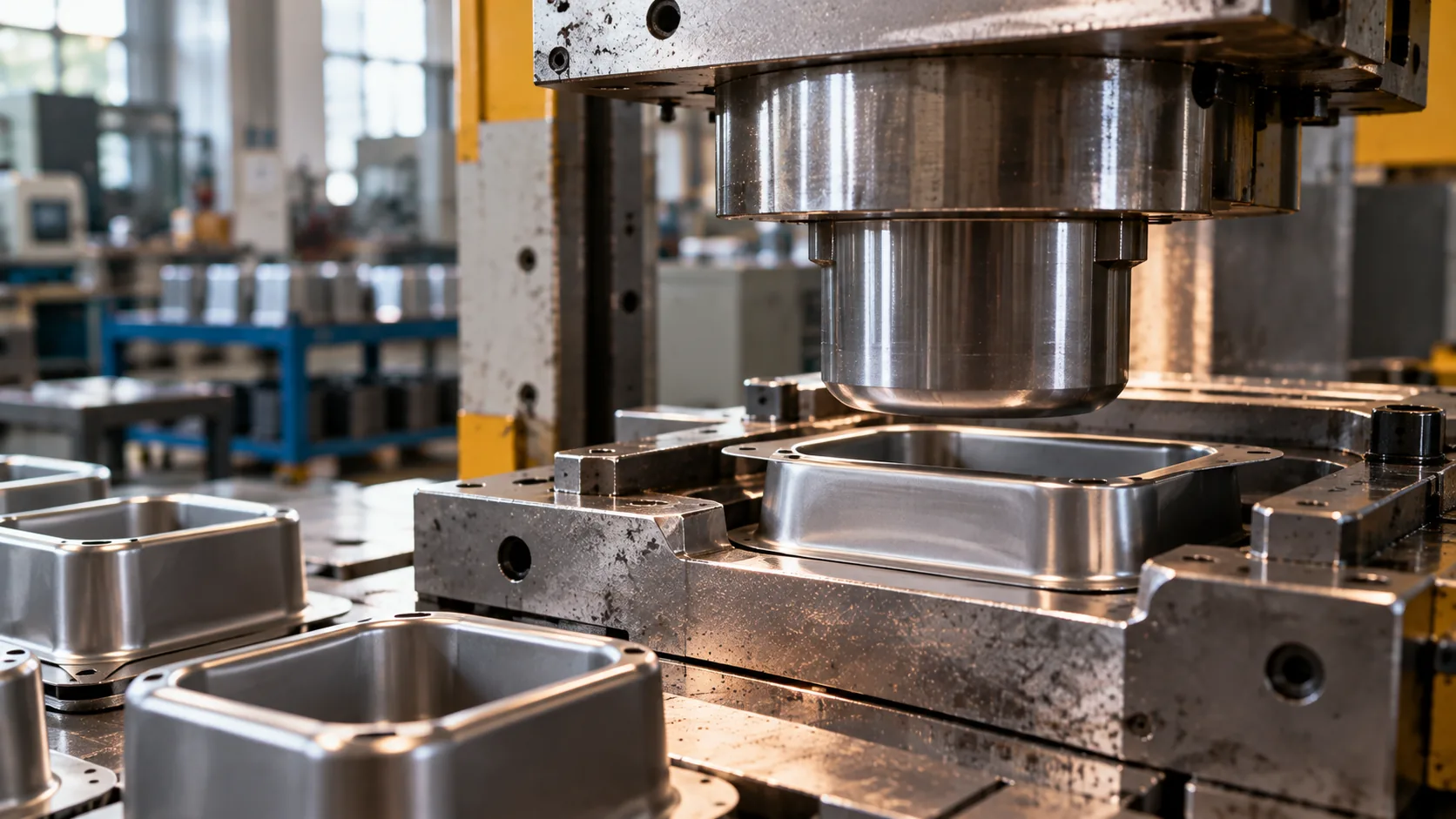
Bend cost is a sequence, not a multiplier. Each bend needs a back-gauge position, a stroke, a handling move and a check; the first bend on a part also carries the tooling setup. Removing one bend from a part removes all of that, which is why bend count is the most powerful DFM lever on a folded part.
Break the sequence into its parts
| Component | Scales with | Reduced by |
|---|---|---|
| Tooling setup | Number of distinct punch/die configurations on the part | One inside radius per part; standard tooling |
| Programme and first-off | Per part, once | Repeating a part instead of varying it |
| Back-gauge positioning | Per bend | Consistent flange lengths so the gauge moves less |
| Stroke time | Per bend, longer on long bends | Shorter bends; splitting a very long bend is usually worse |
| Handling | Per bend, and by part size and weight | Bend sequence that lets the operator hold the part comfortably |
| Verification | Per bend where angle matters | ISO 2768-m general tolerance on non-functional bends |
| Tooling change | Per change | Standardising radii and flange lengths across a part family |
The first bend is the expensive one
On a part with one bend, almost all the forming cost is setup and first-off. On a part with eight bends, the setup is amortised and the per-bend sequence dominates. That is why a per-bend rate is a reasonable shorthand on bend-heavy parts and a poor one on simple ones.
The practical consequence: on a part with many bends, shaving bends off the design pays back immediately at every quantity. On a part with two bends, it is not worth distorting the design to remove one — the setup dominates either way.
Where the time actually goes
On a formed bracket, the stroke is usually the shortest part of the cycle. Positioning the part against the back gauge, holding it through the stroke, rotating it to the next bend and checking it against the drawing together account for the majority of the time — and those are exactly the components a designer can influence.
A bend sequence that requires the operator to support a large panel while reaching for the back gauge costs more than one that lets the part rest on the die. That is a geometry and sequence decision, not a machine decision, and it is worth thinking about while the flat pattern is being drawn rather than after the first off.
- Consistent flange lengths reduce gauge movement and handling per bend.
- Bends that can be made in one continuous sequence beat bends that need the part turned over several times.
- One inside radius across the part avoids a tooling change, which is the largest single item on the list.
- Very long bends may need a tooling change or a second hit — check the bend length against the available tools before assuming one stroke.
Removing a bend without changing the function
The last row is the one worth checking first. A surprising number of bends exist to bridge a gap that a slightly different part length would remove entirely. That change costs nothing and removes a whole operation from every part made.
| Instead of | Use | Trade-off |
|---|---|---|
| A short return flange for stiffness | A hem, or a pressed rib | Changes the appearance slightly; no extra operation |
| A folded corner joint | A welded corner, or a corner gusset | Welding adds heat and dressing |
| A folded stiffener | A riveted doubler plate | Extra part and a fastening operation |
| A fold to create a mounting face | A separate bracket, bolted on | More parts, simpler forming |
| A fold used only to close a gap | A changed part length | No cost at all if the drawing allows it |
Frequently asked questions
Is there a simple cost per bend?
It is a usable shorthand on a bend-heavy part and misleading on a simple one, because the setup and first-off dominate when there are only one or two bends. What you can say is that cost rises with bend count, with tooling changes, and with handling difficulty — and those three are what a design review should target.
Why does a tooling change cost so much?
Because it is a setup, not a stroke. Changing the punch or die means removing and refitting tooling, reloading a programme, and re-verifying the first part. On a part with several distinct radii it can happen more than once, which is why one radius per part is such a strong default.
Does bend length matter as much as bend count?
Only up to a point. The stroke is longer on a long bend, but if the bend exceeds the available tooling it becomes a tooling change or a second hit, which is a different order of cost. Check the longest bend on the part against the tools available before assuming one stroke.
Can I remove a bend without changing the design intent?
Often. The cheapest removals are bends that exist only to bridge a gap or to close a joint — changing the part length or using a welded corner removes the operation without touching the function. Where the bend provides stiffness, a hem or a rib replaces it at no extra cost.
How does thickness change the model?
It changes the tooling rather than the sequence. Thicker material needs a wider V-die opening for the same tonnage, which raises the minimum flange length and can force a tooling change on a part that previously used one set. Bend count stays the same; the setup risk goes up.
Send the drawing, get a real answer
An engineer reviews your model for manufacturability and returns a costed quotation — with the DFM observations that would change the price.