
CNC Bending Cost: Why Bend Count Sets the Price
Bending is where a flat blank becomes a part, and it is also where a design that looked efficient in CAD becomes expensive on the shop floor. The reason is simple: cost scales with the number of forming operations, and every bend is one.
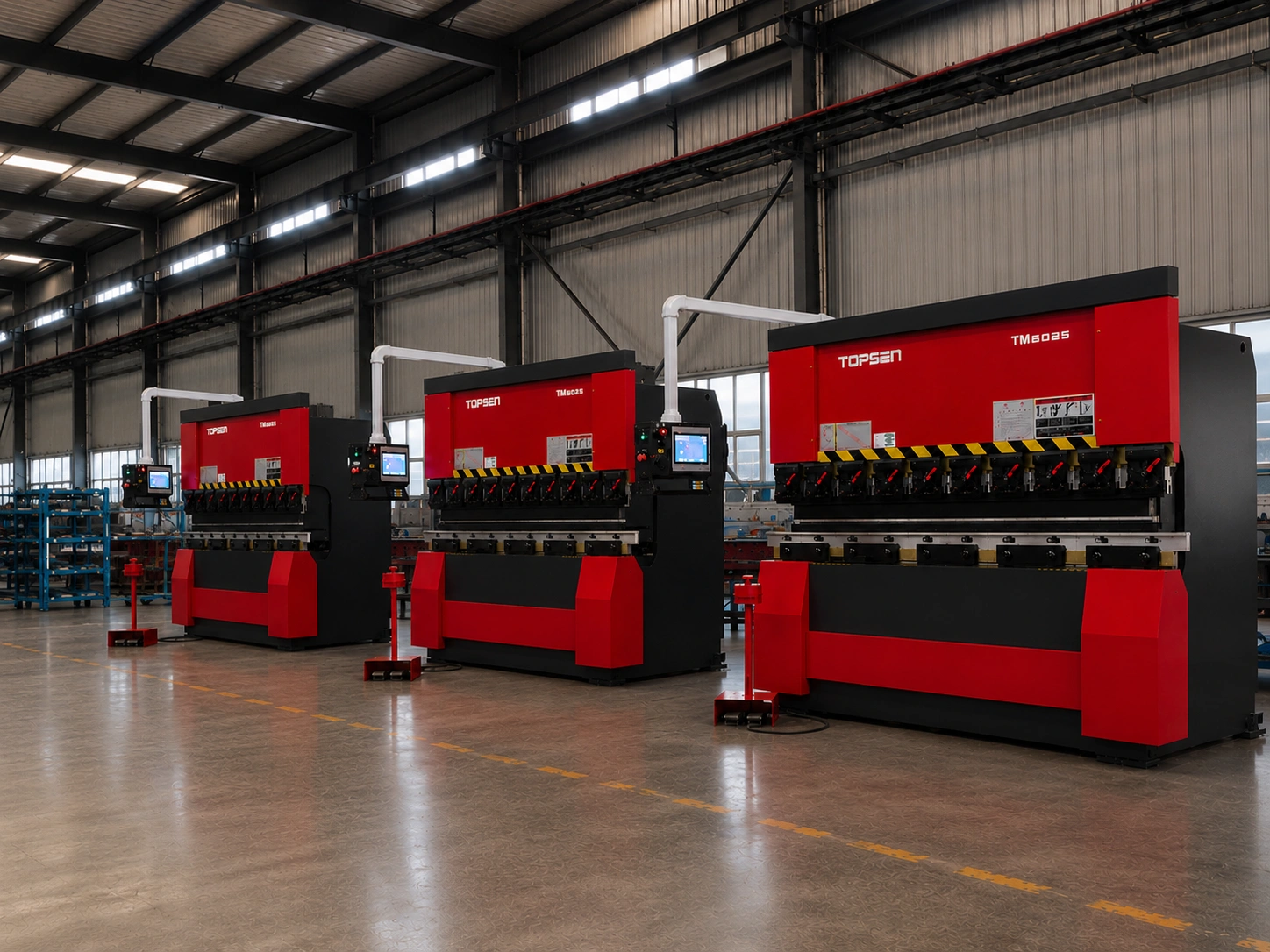
CNC bending cost is set mainly by the number of bends and the handling around them. Each bend needs a tooling setup, a back-gauge position, a stroke and a handling move; press brake time and tooling changes — not material — dominate a bend-heavy part.
Does sheet metal cost scale with bends or part size?
A large, flat panel with two bends is a cheap part. A small bracket with eight bends is an expensive one, even though it weighs less. Press brake time is consumed by the sequence of operations — position the blank against the back gauge, stroke, handle, rotate, repeat — and every bend adds to that sequence.
On top of the per-bend time sits the setup: tooling selection, mounting, programme load and first-off verification. Setup is a fixed cost per tooling configuration, so a part needing three different punch/die sets pays for three setups.
What tolerances can press brake bending hold?
Our CNC press brake holds ram positioning to ±0.02 mm and repeats the backgauge to ≤0.02 mm across a 3,100 mm bending length. The achievable bend radius depends on the inside radius and flange length the tooling can support.
The practical limit is rarely the machine. It is whether the flange is long enough to sit on the die, whether the part can be positioned without the previous flange colliding with the tooling, and whether the tooling set covers the required bend length.
| Element | Driven by | Design lever |
|---|---|---|
| Bends per part | Feature count | Replace a folded flange with a welded or riveted stiffener where strength allows |
| Bend length | Longest bend on the part | Split very long bends where the tooling cannot cover them in one hit |
| Tooling changes | Different radii, angles or flange lengths on one part | Standardise on one inside radius per part |
| Handling | Part size and weight, bend sequence | Sequence the bends so the part can be held without collision |
| Setup | Number of distinct tooling configurations | Batch similar parts; keep flange lengths off the "awkward" list |
| Tolerance | Angle and feature-position callouts | ISO 2768-m unless a feature is functional |
What actually consumes press brake time
Which flange rules decide bending cost?
The single biggest cause of an unexpectedly expensive bent part is a flange that is too short for the tooling. Every V-die needs a minimum flange length to support the part during the stroke — typically several times the material thickness and proportional to the die opening. A flange shorter than that cannot be formed on that tooling, so either the tooling changes (setup cost), the flange is formed in a different direction, or the part is re-designed.
Holes near a bend behave the same way. A hole closer to the outside of a bend closes up and distorts as the material stretches, unless a relief is added — and a relief is another contour, another operation, another cost.
- Keep flanges long enough for the tooling; short flanges are the classic hidden cost.
- Use one inside radius across the part rather than a different radius at every bend.
- Place holes at least 2.5 × thickness plus the inside radius away from a bend line, or add a relief slot.
- Avoid bends whose sequence makes the part impossible to hold — model the sequence, do not just model the result.
- Choose a bend radius at or above the minimum for the material and temper; under-radius bends crack.
Where does bending beat other forming processes?
Above the tooling break-even, stamping usually beats bending for high volumes of an unchanging part. Below it, bending is almost always cheaper because there is no die to amortise. For everything in between — tens to a few thousand pieces, or any part still changing — bending is the flexible route, and the design effort spent removing bends pays back at every quantity.
Frequently asked questions
Is bending priced per bend?
Effectively yes. The quote is built from machine time, and machine time tracks the number of forming operations, their length and the handling between them. A per-bend rate is a reasonable shorthand for estimating, but tooling changes and handling dominate on awkward parts.
What is the minimum flange length?
It depends on the V-die opening, which in turn depends on material thickness. A practical rule is several times the thickness, and the safe answer for a specific part is a DFM check rather than a table — the tooling actually used decides it.
Can you bend a part with a different radius at every bend?
Technically yes, commercially it is expensive. Each distinct radius can require a different tooling set and therefore a separate setup. Standardising on one radius per part frequently removes a setup without changing function.
How close can a hole be to a bend?
Keep it at least 2.5 × thickness plus the inside radius from the bend line on the outside of the bend. Closer than that, the hole distorts because the material around it is being stretched. Where the position is fixed by function, add a relief.
Does a tighter bend angle tolerance cost more?
It costs more to verify and produces more scrap if the process cannot hold it. A CNC press brake positioned to ±0.02 mm leaves comfortable margin on a ±0.5° callout. Asking for tighter than the process can repeat does not buy accuracy, it buys inspection.
Send the drawing, get a real answer
An engineer reviews your model for manufacturability and returns a costed quotation — with the DFM observations that would change the price.