Power Adapter & Charger Housing — Thermal Plastic-Free
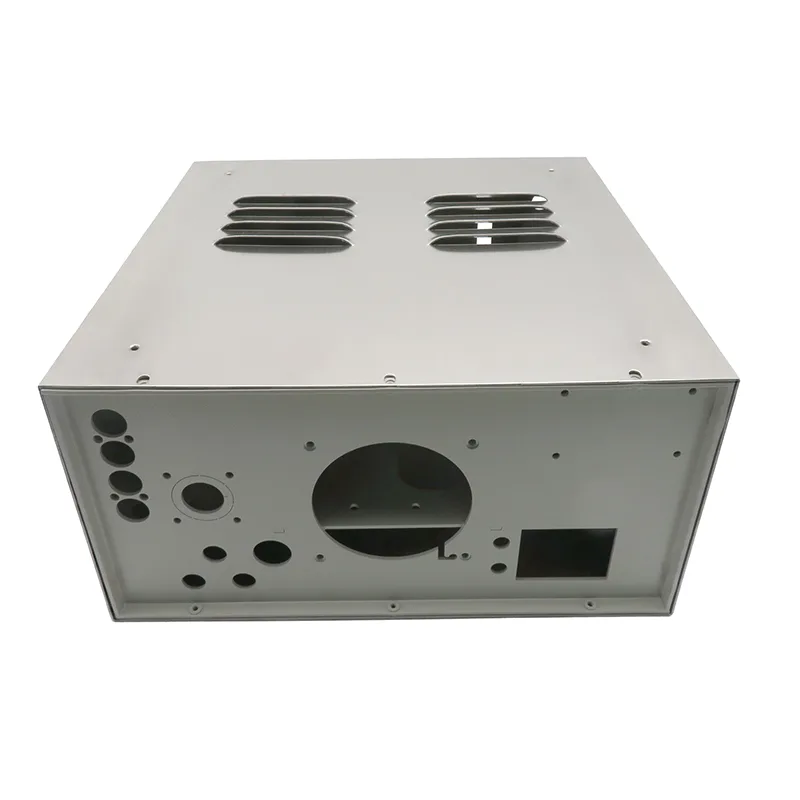
Metal housing for power adapters and chargers from 30 W to 240 W: folded steel or deep-drawn aluminium shell, pin and socket apertures to the plug standard of the destination market, and a thermal interface to the internal heatsink so the case itself becomes part of the cooling path. Made by WERIX Metal from AL6063 0.8mm to a tolerance of ±0.1mm, finished with anodizing + laser engraving. Typical order volume is from 1000 to 100000+. Free DFM quote within 24 hours.
Engineering drawing available on request
Send your target specifications — we reply with a drawing and a DFM quote within 24 hours.
Power Adapter & Charger Housing — Thermal Plastic-Free
Metal housing for power adapters and chargers from 30 W to 240 W: folded steel or deep-drawn aluminium shell, pin and socket apertures to the plug standard of the destination market, and a thermal interface to the internal heatsink so the case itself becomes part of the cooling path.
| Part number | P-065 |
|---|---|
| Product type | Charger Housing |
| Industry | Consumer Electronics |
| Material | AL6063 0.8mm |
| Tolerance | ±0.1mm |
| Surface Finish | anodizing + laser engraving |
| Manufacturing processes | extrusion profiling · CNC machining |
| MOQ / Volume | from 1000 to 100000+ |
Power Adapter & Charger Housing — Thermal Plastic-Free: manufacturing notes
This part — power adapter & charger housing — thermal plastic-free — is manufactured in our Dongguan plant. The notes below explain the manufacturing decisions behind the specification: why this material, why this forming sequence, and what the tolerance actually requires in production.
What ±0.1mm actually requires on the shop floor
The drawing calls for ±0.1mm. On a part like this that is a process decision, not an inspection decision: it fixes which machine holds the critical features, how the part is fixtured for each operation, and whether a formed feature can be checked after coating or has to be measured before it. We confirm the first article against the drawing and record the values, so the tolerance is demonstrated rather than assumed. If a dimension in your drawing is tighter than this part needs, it is usually worth relaxing it — over-toleranced features are one of the quietest cost drivers in a sheet metal quote.
Finishing: anodising
anodizing + laser engraving. Anodising converts the aluminium surface into a hard oxide layer instead of adding a film, so it does not chip and flake the way a coating can. It is the reason aluminium parts often ship anodised rather than painted, and the layer thickness is chosen for the service — decorative, wear-resistant or hard-anodised for moving surfaces.
Frequently asked questions
- What is the minimum order quantity for power adapter & charger housing — thermal plastic-free?
- The order range for this part is from 1000 to 100000+. Below the low end of that range the tooling and setup are spread over too few pieces to be economic, so if you are prototyping we would normally build the first units from the same process route and quote the production quantity separately.
- Can the material be changed to reduce cost or weight?
- Yes — material substitution is one of the first things we raise in a DFM review, because it affects bend radii, welding process and coating system at the same time. Send the drawing and the service environment and we will set out the options.
- What finishing options are available for this part?
- The current finish specification is anodizing + laser engraving. Powder coating, anodising, zinc or nickel plating, brushing and blasting are all available in-house, so the finish can be changed without changing supplier — and where the part will be seen, we match colour to the RAL or Pantone reference on your drawing.
- How long does production take, and what do you need from us to quote?
- Prototypes are typically 3–7 business days and production runs 7–15 days once the drawing is released and the finish is confirmed. To quote we need the drawing or CAD file (STEP, DXF, DWG, IGES or PDF), the material and finish, the quantity and the destination — and any tolerance or inspection requirement that is not already on the drawing. You get a DFM review with the quotation, not after it.
Sheet metal engineering guides
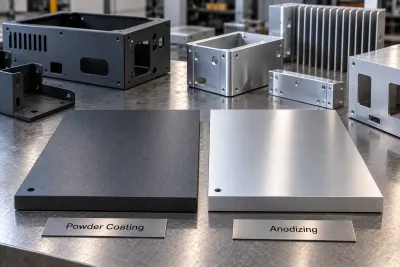 Powder Coating vs Anodizing: How to ChoosePowder wins on colour and substrate range; anodizing wins on wear and thinness. Five rules that decide it, with the cost drivers behind each.Read More
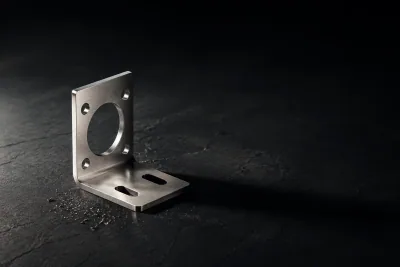 8 Proven Ways to Cut Sheet Metal Costs Without Sacrificing QualityFrom bend radius optimization to material nesting — eight actionable design and sourcing strategies that reduce cost while maintaining part performance.Read More