Table of Contents
What changed?
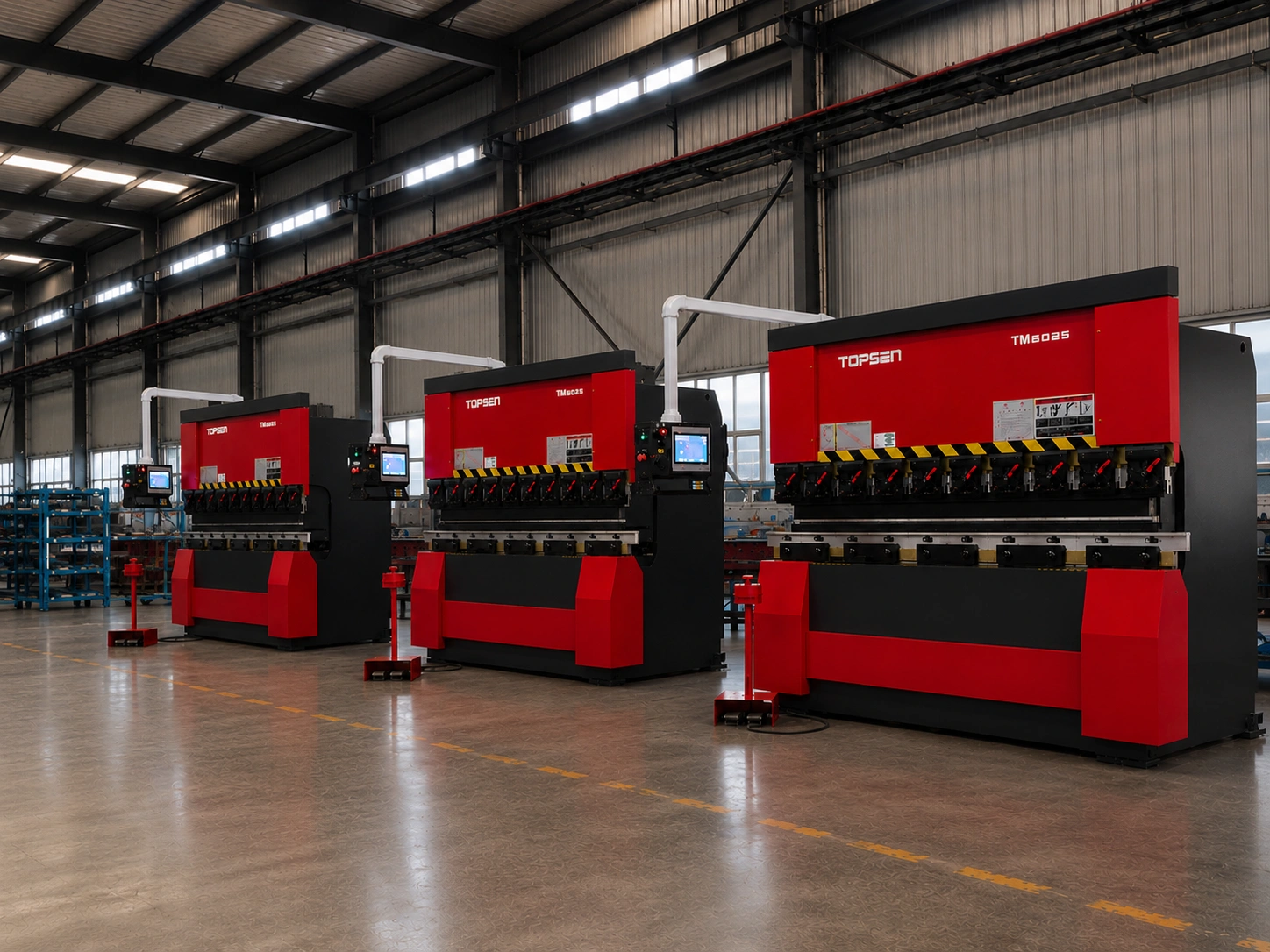
We have invested in new CNC press brakes at our Dongguan factory — part of WERIX's ongoing commitment to expanding production capacity and raising precision standards for our global customers.
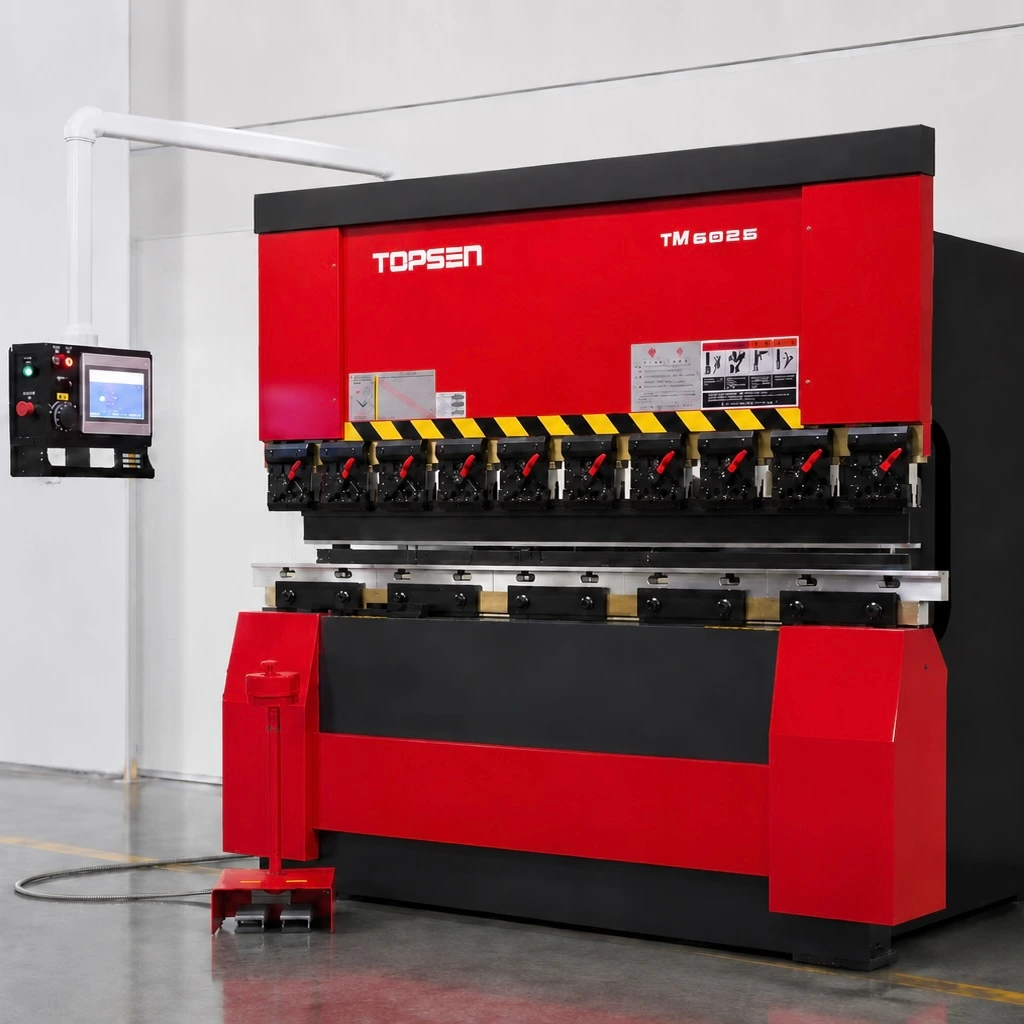
Our bending cell runs a TOPSEN TR/TM 10030 — 100 t nominal force, 3,100 mm bending length, ±0.02 mm ram positioning and ≤0.02 mm backgauge repeatability.Quick answer: Three new CNC press brakes now run at the WERIX factory in Dongguan with a 3,100 mm bending bed and ±0.02 mm ram positioning accuracy. The investment raises repeatability on long parts, shortens setup times and expands precision bending capacity for steel, stainless steel and aluminium sheet up to about 5 mm.
This investment was driven by what our overseas clients have been asking for: tighter angle tolerances on parts up to 3,100 mm, faster turnaround, and the confidence that comes from working with a source factory that continuously reinvests in its capabilities.
The new machines deliver ±0.02 mm ram positioning accuracy — across a 3,100 mm bending length with CNC backgauge control. For projects that call for precise bends on parts up to 2.2 meters, we can now handle that entirely in-house, with the same quality management, same engineering team, and same single-source accountability you expect from WERIX.
Why does precision bending matter?
In sheet metal fabrication, ram positioning accuracy directly affects fit-up, assembly time, and rejection rate. A ±0.02 mm deviation might pass dimensional inspection on a single part — but across a production run of hundreds, it compounds into visible inconsistency and costly rework.
Here is how our bending capabilities now compare:
| Capability | Previous setup | Current TOPSEN CNC |
|---|---|---|
| Bending Length | Up to 3,100 mm | Up to 3,100 mm |
| Ram Positioning | ±0.02 mm | ±0.02 mm |
| Backgauge Axes | 4-axis CNC | CNC |
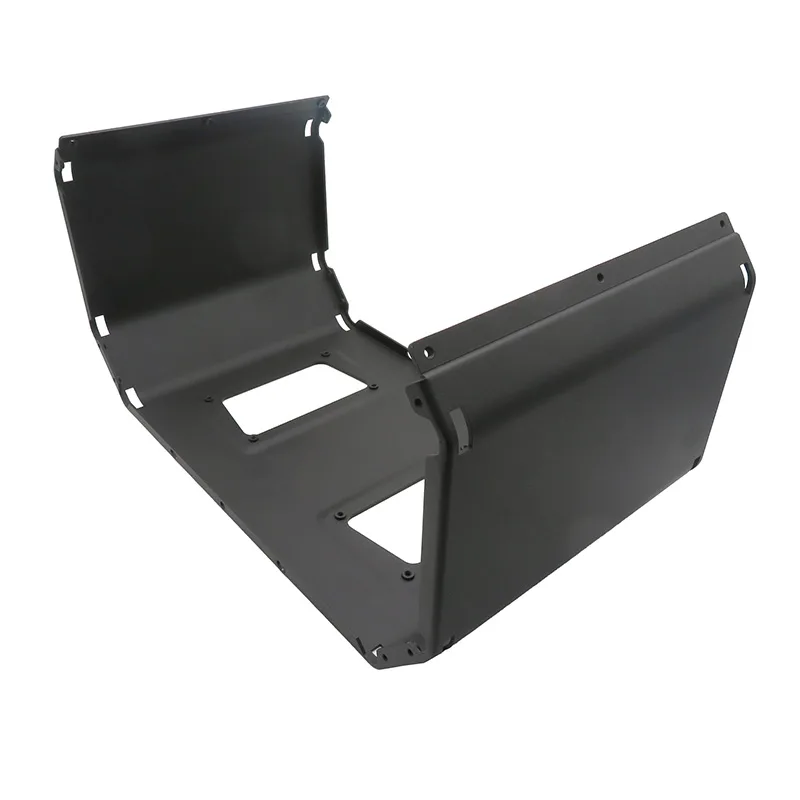
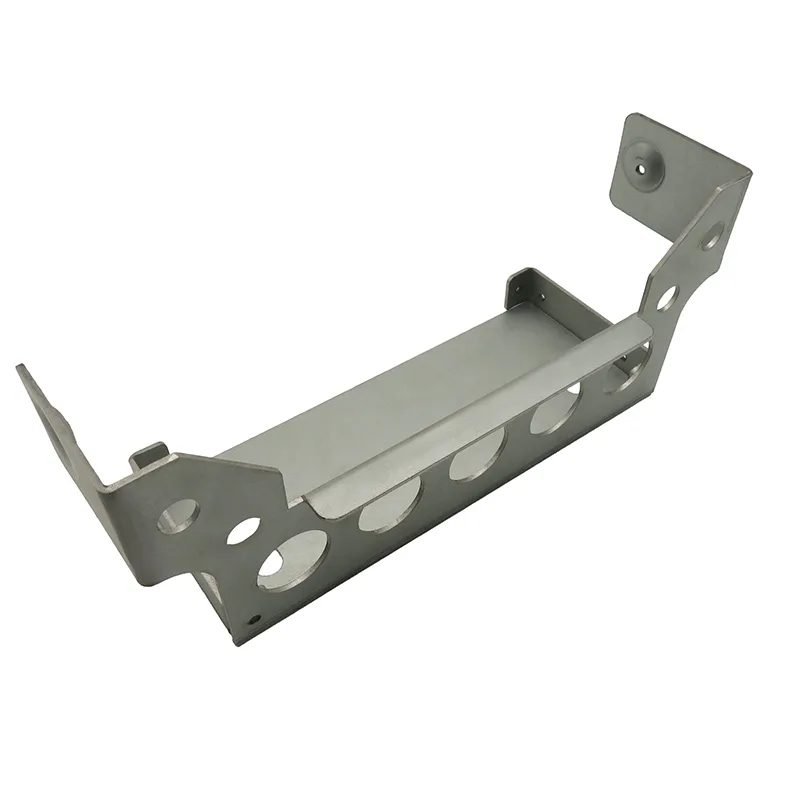
For longer parts up to 3,100 mm, the TOPSEN is our workhorse. For shorter parts that demand tighter tolerances — enclosures, brackets, panels with critical fit-up — the new press brakes deliver measurably better first-pass yield.
This dual-platform approach lets us match the right machine to each project, optimizing for either reach or precision without compromise.
The two platforms are complementary, not competitive. For longer parts up to 3,100 mm, the TOPSEN is our workhorse. For shorter parts that demand tighter tolerances — enclosures, brackets, panels with critical fit-up — the new press brakes deliver measurably better first-pass yield. This dual-platform approach lets us match the right machine to each project, optimizing for either reach or precision without compromise.
How We Ensure Consistent Results
Precision bending is not just about the machine — it is about the system behind it. Here is how we maintain ±0.02 mm accuracy across production runs:
- CNC backgauge positioning — repeatable setup across batches, eliminating manual alignment variation between parts
- Real-time position feedback — compensates for material springback variation (which changes with thickness, grade, and heat treatment) to maintain target angles throughout a production run
- Mechanical crowning system — distributes uniform pressure across the full bed width, preventing angle deviation between center and edge positions
For our customers, the practical result is simple: fewer rejects, less rework, and more predictable delivery schedules. Over a production run of hundreds or thousands of parts, that improvement in first-pass yield translates directly into lower per-part cost — without any change to your design.
For our customers, the practical result is simple: fewer rejects, less rework, and more predictable delivery schedules. Over a production run of hundreds or thousands of parts, that improvement in first-pass yield translates directly into lower per-part cost — without any change to your design.
Capacity and Throughput
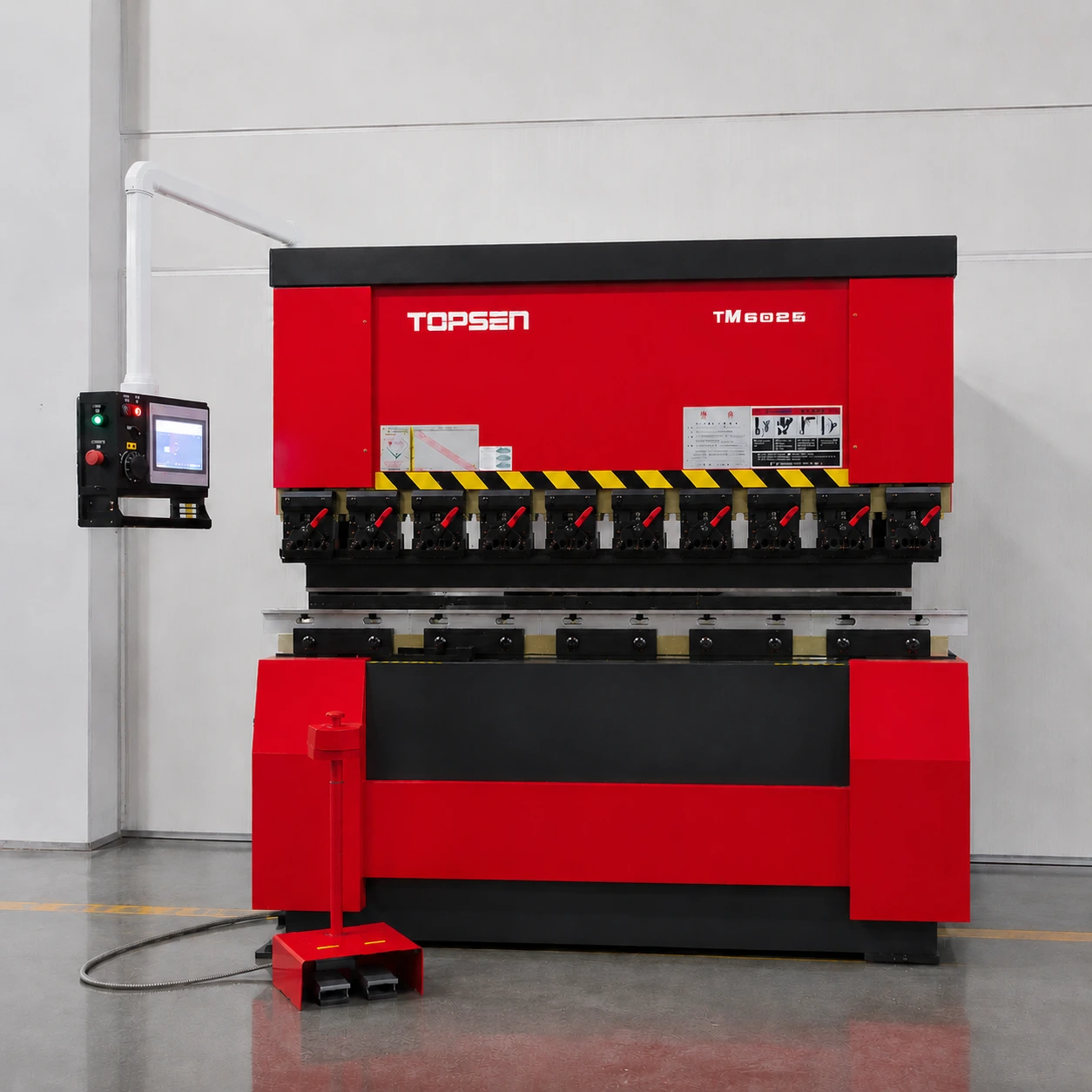
This investment in additional press brakes directly addresses the production bottlenecks that affect lead time in sheet metal fabrication. In our experience, the bending station is where orders wait — a single press brake shared across dozens of active projects creates queuing delays that ripple through the entire schedule.
By investing ahead of demand, we have significantly expanded our bending workshop capacity, which means:
- Higher throughput — dedicated machines for high-priority production runs without disrupting other orders
- Better efficiency — prototype and low-volume responsiveness maintained alongside mass production commitments
- Reliable delivery — supporting our 98% on-time delivery rate as order volume from overseas clients continues to grow
For our customers, this translates into shorter lead times and more predictable production schedules — especially during peak seasons. Investing in capacity before demand peaks, rather than after, is how we keep delivery commitments reliable.
For our customers, this translates into shorter lead times and more predictable production schedules — especially during peak seasons. Investing in capacity before demand peaks, rather than after, is how we keep delivery commitments reliable.
One Factory, Every Process
The real value of this investment is not just better bending — it is better bending integrated into a complete one-stop production chain, all under one roof. That is the core of what WERIX offers our overseas customers: every sub-process from laser cutting to final assembly, managed by one team, with one quality standard, and one delivery commitment.
Consider a typical project: laser cutting → CNC bending → welding → powder coating → assembly with hardware inserts. When bending is in-house, there is no inter-factory shipping, no quality handoff between vendors, no subcontractor delays.
With expanded press brake capacity, bending no longer becomes the bottleneck that holds up the entire order. Each step feeds directly into the next — and a single engineering team owns quality from first cut to final inspection.
This is what "one source factory, one order" means in practice: consistent quality, efficient production, and a single point of accountability for your entire order.
Upload your STEP, IGES, or DXF file through our quotation page. Our engineering team will review the bending sequence, confirm material feasibility, and provide a quote with DFM feedback within 24 hours — no signup required, no MOQ for sheet metal parts.
If your current supplier rejects parts on bend angle, send us the drawing and the tolerance band. Upload your CAD and we will confirm feasibility on the new machines within 24 hours, or read about low-volume production from 50 pieces.
FAQ
Written by
Senior Process Engineer
Tom has spent more than a decade on the shop floor turning drawings into parts that run right the first time. He leads DFM reviews at WERIX Metal, sets the bending and tooling strategy for every new project, and writes the guides engineers actually reach for when they are sizing a part late at night.
View profileParts we make for this topic
Ready to Start Your Project?
Get DFM feedback and a quote within 24 hours. No minimum order quantity.