
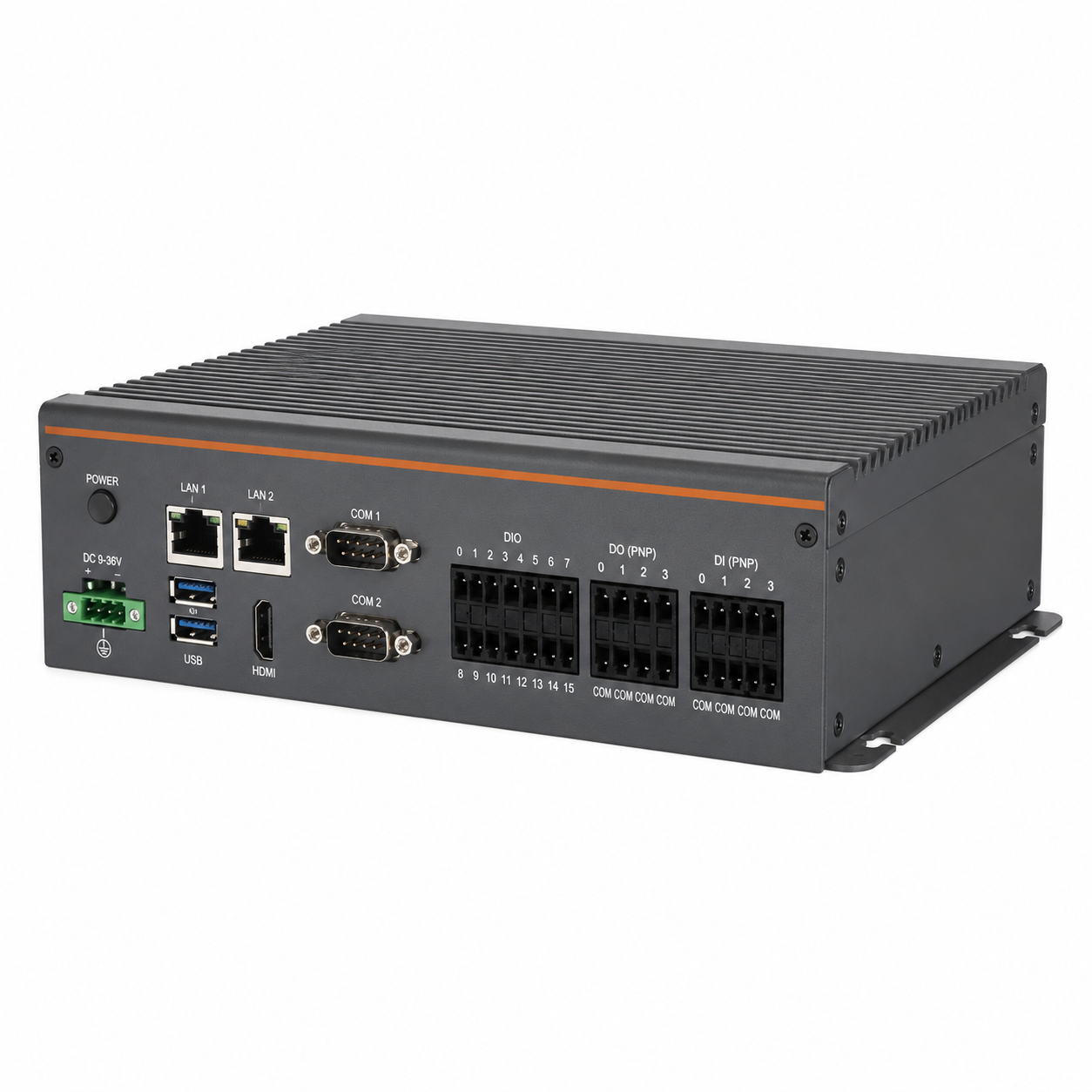
What a PLC panel has to provide
- A back plate drilled and tapped to the device layout, with cable ducts and wiring space that actually exists.
- DIN rail positions referenced to a datum the process can hold, not to a corner that accumulates error.
- Cut-outs for HMI, indicators, breakers and glands, dimensioned to the device drawings and clear of formed edges.
- Thermal provision for drives and power supplies, which is normally a vent or a filter rather than a bigger box.
- Door hardware, an earth strap land and enough rigidity that a tall door still closes squarely.
Separating the shell from the layout
Keeping the plate as its own part number is the single most useful decision in this family. It makes a late change a plate, it makes two cabinets built a year apart identical in shell, and it lets the drilling be scheduled separately if the layout is not final.
| Part | Depends on the I/O schedule? | Cost of a late change |
|---|---|---|
| Body and frame | No — internal volume and environment | High: welded, coated, hardware fitted |
| Door and hinges | Partly — mounted devices and swing | Medium: reinforcement and cut-outs |
| Mounting plate | Yes, entirely | Low: a flat plate, drilled and tapped |
| Gland plate | Yes — the cable schedule | Low, and it can ship loose |
| Cut-outs and apertures | Yes | Medium: door rework if late |
| Ventilation and filter | Partly — the heat load | Medium: cut-outs and a filter frame |
VFDs, heat and what actually matters
Anything with a drive in it makes heat, and a sealed cabinet makes that heat a problem. Venting changes the ingress rating, and a filter introduces a consumable that has to be reachable. The honest conversation is about which of the three the installation can accept — heat, dust or service access — because a cabinet cannot have all three in full.
The mechanical consequence is usually small: a louvred or filtered opening, a fan plate, and a design that keeps the filter replaceable without opening the live compartment. That is a sheet metal decision and it is much cheaper when it is made with the cabinet rather than after it.
- Dimension cut-outs and rail positions from one datum the shop can measure.
- Check device clearances on all four sides of every cut-out, not just the aperture size.
- Plan the wiring space — ducts and bend radii consume volume that CAD hides when the panel is empty.
- Decide the venting and filtering strategy with the thermal requirement, not after the layout.