
Sheet Metal Fabrication Pricing: How Quotes Work
Cost is what it takes to make the part. Pricing is how that number is presented, split and guaranteed. Buyers who conflate the two end up comparing a price that excludes finishing against one that includes it, and concluding the wrong supplier is cheaper. This page is the commercial structure behind every quotation we issue.
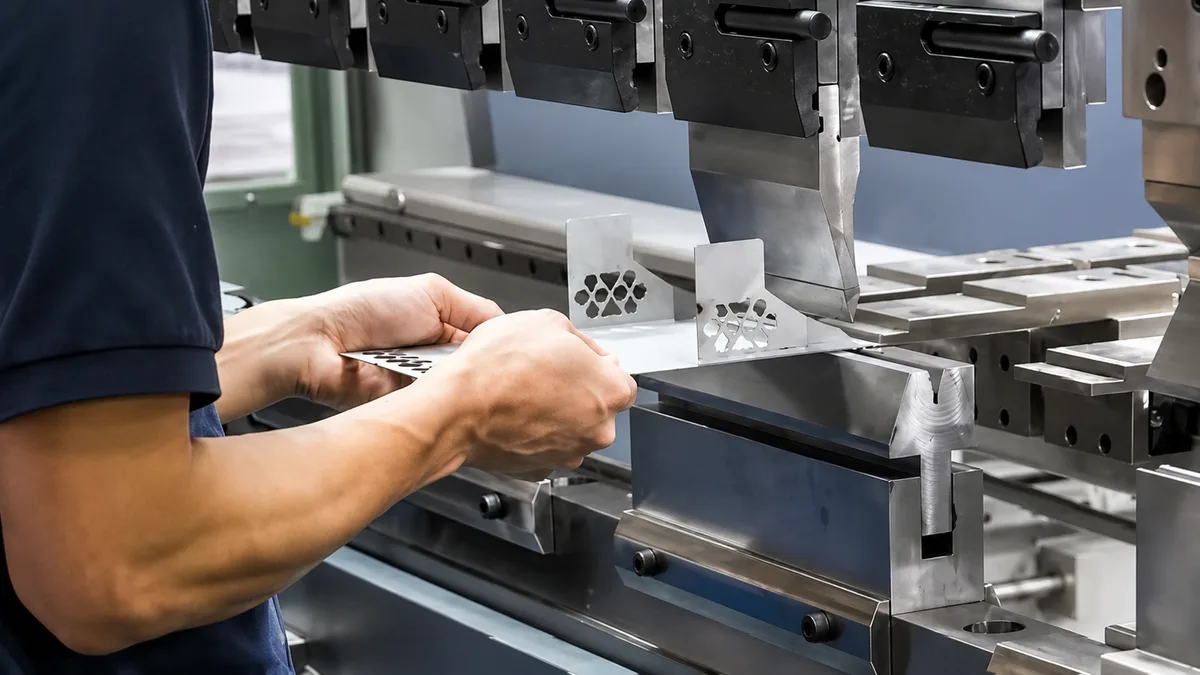
Sheet metal pricing is the commercial structure wrapped around the cost: a one-off element, a per-part element, quantity breaks, finishing and tooling minimums, and a validity window tied to material indices. Two quotes for the same part usually differ in what they include and what they assume, not in the metal.
Cost and price answer different questions
The cost of a part is an internal engineering fact: this much material, this many minutes on this machine, this much finishing. Pricing is a commercial decision layered on top — how the one-off work is recovered, how quantity is banded, how long the number holds, and what happens if the material index moves before the order is placed.
A supplier can have an identical cost base and a very different price for the same enquiry, because one amortises the die over the first order and the other amortises it over three years. Neither is dishonest. They are different commercial offers, and they are only comparable once both are written down in the same format.
The four elements of a sheet metal price
- One-off cost
- Charged once per order or per revision · Tooling, programming, fixtures, first-article inspection, artwork
- Unit price
- Multiplies with quantity · Material mass, machine time, finishing area, hardware count
- Quantity bands
- Steps as fixed cost is amortised · Batch size, nest utilisation, whether setup is shared across orders
- Recurring charges
- Appear on every order, not once · Finish batch minimums, minimum order value, packaging design, inspection level
Quantity breaks are arithmetic, not a discount
When a quote shows 100 pieces at one rate and 1,000 at a lower rate, that gap is not a concession. It is the same fixed cost divided by a larger number. Programming, machine setup, first-article approval and finishing batch preparation do not repeat per part, so unit price falls steeply at first and then flattens once the fixed element is spread thin.
This has a practical consequence worth testing on your next order: if demand is foreseeable, asking for 200 pieces once can be cheaper in total than 100 now and 100 in six months, because the second order carries its own setup and its own material-price exposure.
Why a quoted price has an expiry date
Steel, aluminium and copper indices move independently of manufacturing labour, and a price that holds for ninety days has to absorb that risk somewhere. We publish a validity window rather than hiding the exposure, so you can see whether a quote is stale before you compare it against a fresh one.
The window matters most on alloy-heavy parts. On a copper busbar or a thick stainless bracket, the material line can dominate the quotation, and a two-month-old number is not a number — it is a historical record.
What a complete quotation should itemise
- Material grade, thickness and the assumption used where the drawing is silent.Whether tooling or NRE is included, and whether it is charged once or per order.The finishing process, colour reference and the film or coating thickness assumed.The tolerance standard applied — ISO 2768-m unless the drawing calls something tighter.
- The inspection level: what is measured, whether a first article report is issued, and whether material certificates are included.Packaging, Incoterm and lead time, so the comparison is against a landed number rather than a factory-gate one.The validity window and the currency of the rate.
How to compare two quotes without being misled
Put both against the same specification before looking at the totals. The cheapest number is frequently the one that assumed no first-article inspection, a standard colour rather than the specified RAL, or a looser tolerance standard than the drawing states. Those assumptions do not disappear at delivery; they return as a concession request or a rework charge.
The honest comparison is a landed cost on a written specification, with the one-off element separated from the unit price and the validity window matched. That is why our quotation itemises rather than presenting a single figure — a single figure is the easiest thing to hide an assumption inside.
Frequently asked questions
Why can two suppliers quote the same part so differently?
Usually because the quotes are not for the same thing. Check the finishing process, the tolerance standard, the inspection level and whether tooling is included or amortised. Once both are on an identical specification, the gap narrows sharply — and what remains is a genuine difference in process route or overhead.
Is a lower price at higher volume always a discount?
No, it is usually arithmetic. Fixed costs — programming, setup, first article, finish batch preparation — divide by a larger quantity. We show the fixed element separately so you can see whether the reduction comes from amortisation or from a change in the specification.
How long does a sheet metal quotation stay valid?
Long enough to make a decision, not long enough to cover a steel index cycle. The window is stated on the quotation. On material-heavy parts we will requote rather than let an expired number stand, because the old number no longer reflects what the mill will charge.
Do you charge for the quotation or the DFM review?
No. Sending a drawing or a model for a quote costs nothing, and the manufacturability review that comes back with it is part of the quotation rather than a separate service. What we will not do is quote from a description without the geometry and a quantity.
Can you quote in my currency?
Yes, and the currency is stated on the quotation along with the validity window, because an unconverted rate and a converted one behave differently when exchange rates move. Tell us which currency you need the landed figure in and we will be explicit about which elements are fixed and which follow the rate.
Send the drawing, get a real answer
An engineer reviews your model for manufacturability and returns a costed quotation — with the DFM observations that would change the price.