
Laser Cutting Cost: Cutting Time, Material and Setup
Fibre laser cutting looks like a simple service — you send a DXF, you get a cut part — but the price depends on how long the machine spends on your nest. Once you know what consumes that time, most of the levers are design decisions you control.
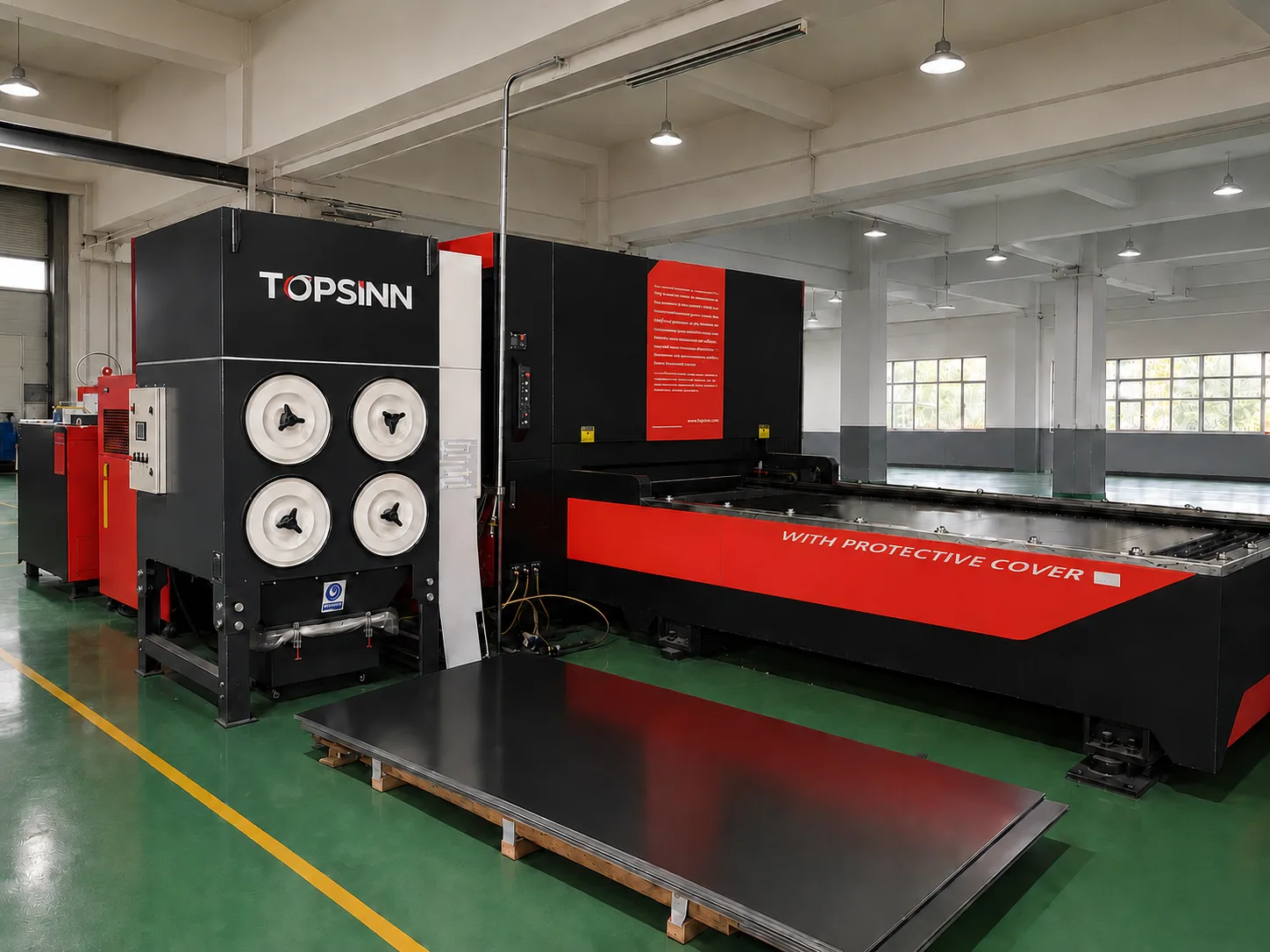
Laser cutting cost is driven by cutting time, not by part area. Time comes from total cut length, material and thickness, pierce count and nesting utilisation, plus a fixed programming and setup element. Thick material and high hole counts raise it fastest.
Why does laser cutting cost come down to machine time?
A laser is billed by the hour it occupies, and the hours are consumed by kilometres of contour, not by square metres of part. A 500 × 500 mm panel with a plain outline and a 500 × 500 mm panel pierced with 300 holes have the same footprint and wildly different prices.
Two consequences follow. First, adding features costs money even when they remove no material — every hole is a contour to trace and a pierce to perform. Second, the material is charged separately from the cutting, which is why a quote itemises the two.
Which cost factors matter most for laser cutting?
| Factor | Effect | Lever |
|---|---|---|
| Total cut length | Dominant — roughly proportional to cutting time | Remove unnecessary contours; simplify decorative profiles |
| Material and thickness | Thicker material cuts slower and needs more assist gas | Use the thinnest section that meets the duty, not the thinnest available |
| Pierce count | Each pierce costs time and consumes nozzle life | Consolidate small holes; slots instead of hole arrays where design allows |
| Nesting utilisation | Shared sheet cost across the nest | Design parts that tessellate; order like-thickness parts together |
| Setup and programming | Fixed element, amortised over quantity | Batch work; avoid many tiny orders of the same part |
| Tolerances | Tighter than process capability means scrap, not just inspection | Keep to the process window; specify tighter only where functional |
Laser cutting cost factors
What tolerances can laser cutting hold?
Our fibre laser cutting holds ±0.1 mm on cut profiles within the normal material window and cuts mild steel and aluminium up to around 5 mm, with stainless typically run thinner. Inside that window the process is repeatable and the price is predictable.
The price jumps when a drawing asks for something the process cannot deliver as cut. A sharp internal corner, a hole narrower than the kerf, or a slot with no pierce room all force a second operation — usually a drill or a mill — and that is where a laser-cut part quietly becomes an expensive part.
Which design choices cut laser cutting cost?
- Give every internal corner a radius of at least half the material thickness; a round tool cannot cut a square corner.
- Keep hole diameters at or above roughly the material thickness — smaller holes are better punched or drilled.
- Replace a long row of small holes with a slot and a mesh insert where the function permits.
- Standardise thicknesses across a project so parts share a nest and a setup.
- Dimension the outline once and let the laser hold it; repeated tight callouts across many contours add inspection time.
Laser, punch or stamping?
Laser wins on complex contours, one-off parts and anything that changes between revisions. Turret punching wins where the same pattern repeats thousands of times. Stamping wins once a die can be amortised. The right question is never "which is better" but "at what volume does the next process become cheaper" — and that break-even is a calculation we will happily run on your part.
Frequently asked questions
Is laser cutting priced by area or by length?
By length, effectively: the machine is charged by time and time is consumed by contour length and pierces. Area matters only through the material consumed, which is charged separately from the cutting.
Does a thicker sheet cost proportionally more to cut?
No — it costs more than proportionally. Cutting speed falls with thickness while power, assist gas consumption and pierce time rise, so doubling thickness increases cutting cost by considerably more than double.
Can you cut a sharp internal corner?
Not as cut. A laser kerf is roughly 0.1–0.5 mm wide and the beam is round, so every internal corner carries a radius of at least about half the kerf. Designing a slightly larger radius costs nothing; forcing a sharp corner adds a secondary operation.
Why is my part cheaper in a larger batch?
Because programming, setup and material handling are fixed costs. Spreading them across more pieces lowers the unit price, and the nest can often be packed more efficiently for a larger run.
Does the finish change the cutting price?
Not directly — the cut is the cut. But a part destined for powder coating or plating is usually deburred and handled differently, which appears as a separate finishing line on the quote rather than a cutting charge.
Send the drawing, get a real answer
An engineer reviews your model for manufacturability and returns a costed quotation — with the DFM observations that would change the price.