
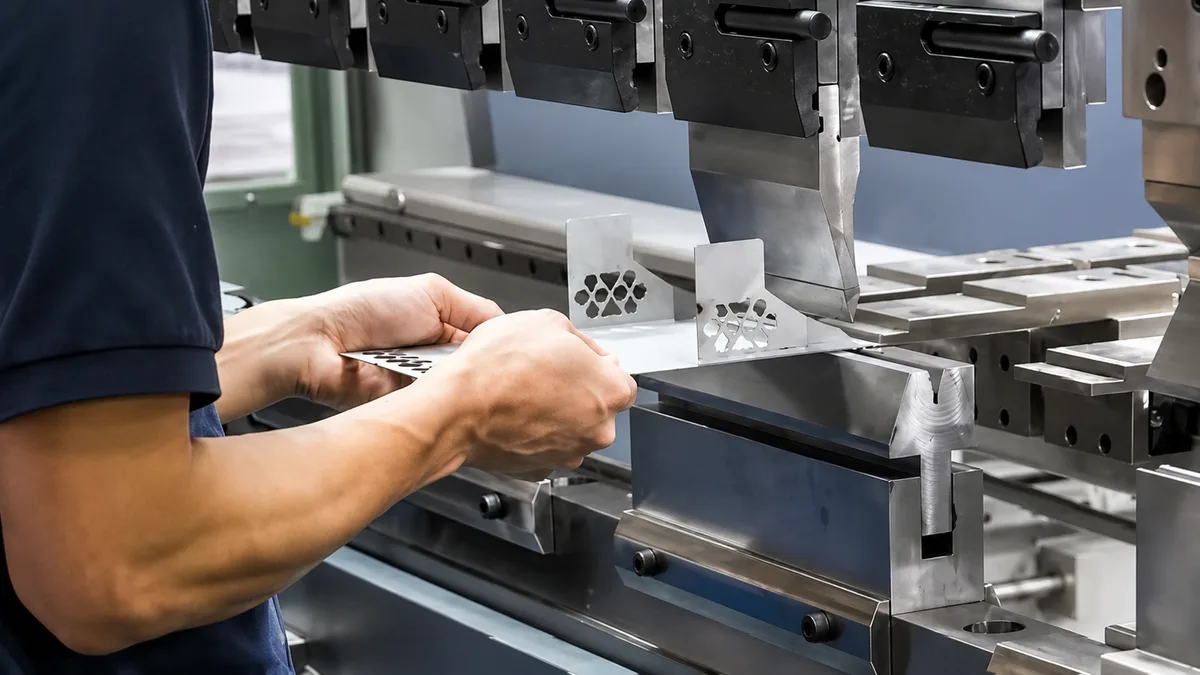
What Press Brake means
A press brake forms sheet metal by clamping it between a matching punch and V-die and pressing down to the required depth. Modern CNC brakes control ram depth, back-gauge position and crowning, which is what turns a single machine into a repeatable process: the same programme bends the same angles on part 1 and part 500.
Why it matters on the shop floor
Two numbers matter to a designer. Tonnage — the force available, which limits how thick and how long a bend can be — and bed length, which limits bend length. A 3,100 mm brake cannot form a 3,500 mm flange, and no tonnage fixes that. This is why bending constraints show up in DFM reviews as machine questions, not metallurgical ones.
What to remember
- Air bending, bottoming and coining are the three modes; most modern work is air bending.
- Bend length and tonnage are the two machine limits a DFM review checks first.
- CNC back-gauging is what makes bend-to-bend accuracy repeatable, not the press itself.