TOOLING — Engineering From the Print

In-House Die Design

Die design turns a part print into a buildable tool: 3D die model, station-by-station strip layout, form and springback simulation, and the detailed shop drawings our toolroom builds from. Designing and building under one roof compresses the design-simulate-build-trial loop to days rather than the weeks a hand-off to an outside shop costs.
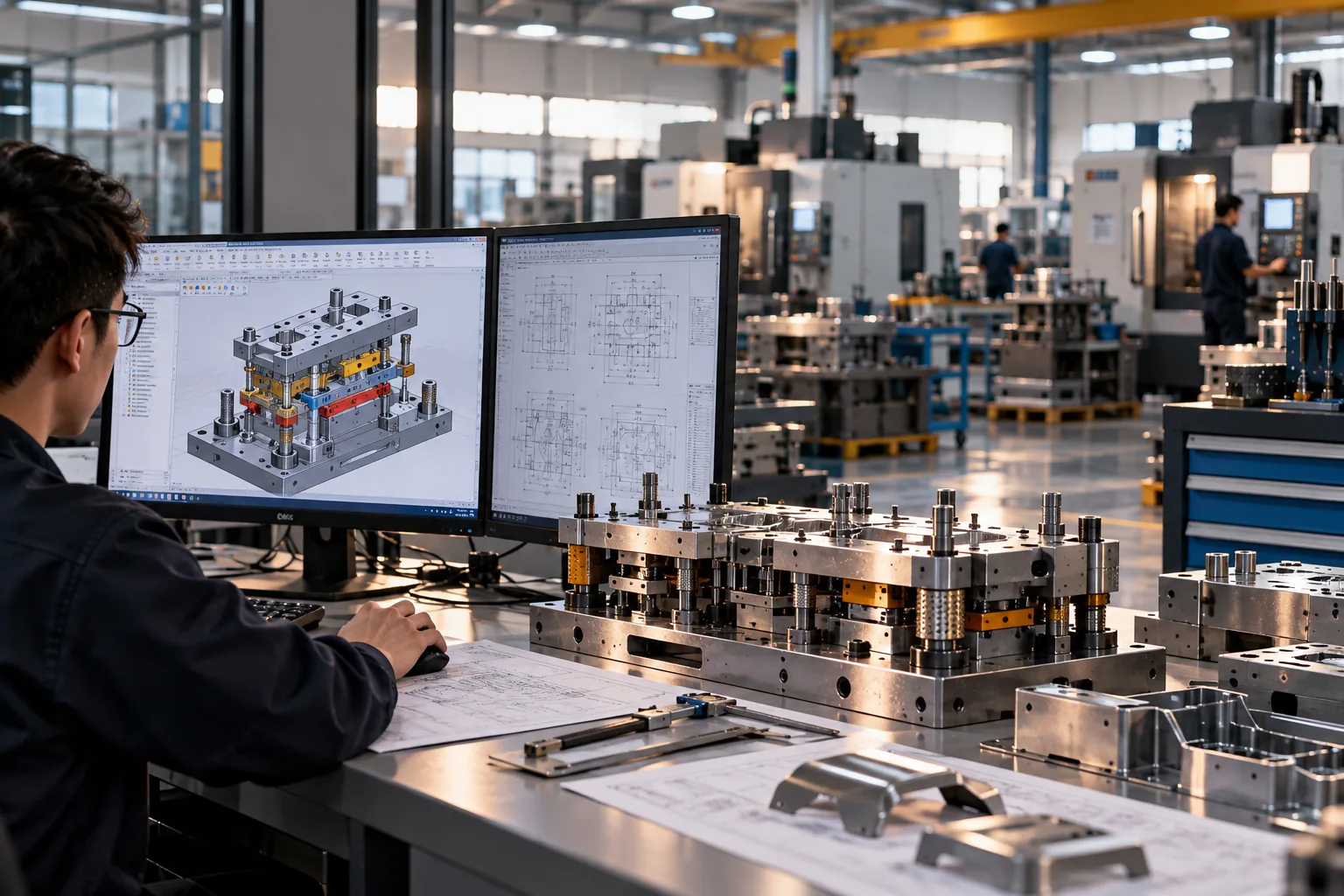
In-house die design workstation with CAD strip layout and 3D die model at WERIX Metal
Overview

Die design is the in-house engineering of a stamping die from the part print — 3D modelling, strip-layout and form simulation, DFM review and the detailed tooling drawings our shop builds from. Designing and building under one roof means the engineer who lays out the strip is the one who walks to the press for the trial, so changes are resolved in hours, not weeks.
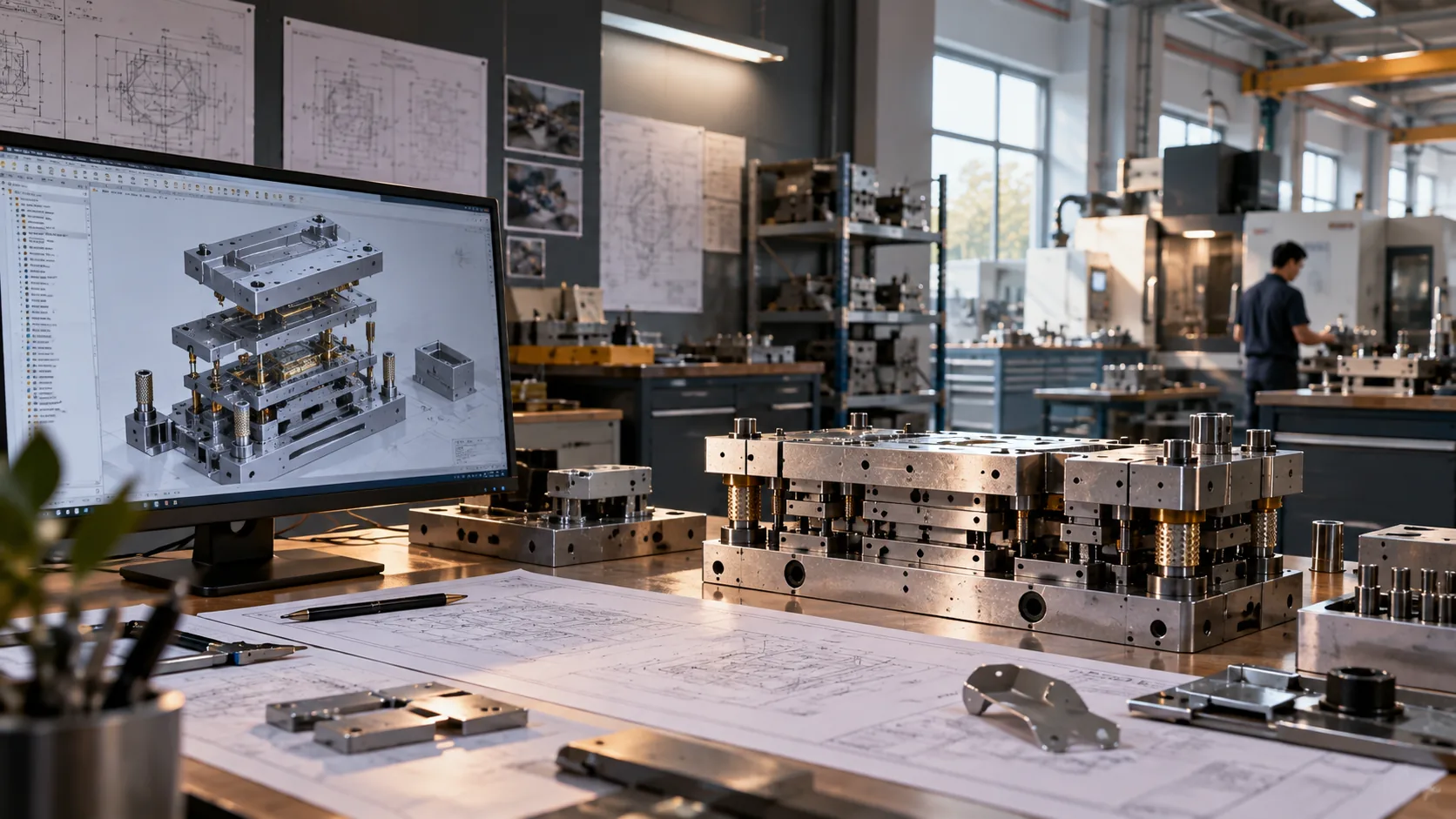
In-house die design workstation with CAD strip layout and 3D die model at WERIX Metal
Die design workstation — CAD strip layout and 3D die modelling
Die design and simulation bay showing form and springback analysis at WERIX Metal
Simulation bay — form and springback analysis before steel is cut

What does a die design package include?

A complete package has the 3D die model, the strip layout showing every station, the form and springback simulation, the bill of tooling materials, and the detailed shop drawings for plates, punches, bushings and guides. We also deliver the DFM notes that drove the design — the radii, clearances and tolerances we recommend — so the build and the quote share one source of truth.

How does simulation reduce risk before steel is cut?

We run the strip through form and springback simulation before any steel is machined, so splits, wrinkles and springback are predicted on screen and designed out. That step is what lets a first-trial die land close to target instead of needing several re-cut loops, and it is why we can quote a die with confidence rather than padding the lead time for unknowns.

How long does it take to design a progressive die?

Concept and strip layout for a typical progressive die are turned around in under 48 hours once we have the part print and material; the full detailed design follows in parallel with material procurement. Because design and build share the same roof, the drawing never waits in a subcontractor queue — which is where most die programmes lose their weeks.

Die design deliverables and turnaround

DeliverableTypical turnaroundPurpose
Concept + strip layout< 48 hours from printValidates feasibility and cost early
Form / springback simulationBefore steel is cutDesigns out splits and wrinkles
Detailed shop drawingsParallel with procurementDrives the build with one source of truth
DFM notesWith the layoutDocuments the recommended radii and clearances
Press trial + first-articleAfter buildConfirms the design on real parts

Common questions about In-House Die Design

Can you design a die from a 3D model only?

Usually yes. We generate the flat pattern with the correct bend allowance and K-factor for the material, lay out the strip and simulate the form from the solid model. Where the print is ambiguous we flag the open questions during DFM review rather than guessing, so the quote and the first trial agree.

Do you design dies we will build or run elsewhere?

Yes. The design package is yours to take to any shop, and many customers use our design service without placing production with us. Where we both design and build, the package simply flows straight into our toolroom with no hand-off loss.

How do you keep the design manufacturable?

The designer and the toolmaker sit in the same building and review the strip together before steel is cut, so every feature is checked against what the shop can actually hold. That loop — design, simulate, build, trial — is compressed to days instead of the weeks a hand-off to an outside shop would cost.

Specifications

Concept Turnaround< 48 hours from print
Deliverables3D model, strip layout, drawings
Risk ReductionForm and springback simulation
Package OwnershipYours to take to any shop

Capabilities

CAD strip layout and 3D die model
Simulation designs out splits and wrinkles
Detailed shop drawings drive the build
Design and build under one roof

Ready to get started?

Upload your design for a quote with DFM analysis — our engineers respond within 24 hours.

ISO 9001 · Quality Assurance

Checked at every stage

Four-step quality control from raw material to shipment. Precision inspection at every stage. FAI reports provided on request.

WERIX Metal is certified to the ISO 9001 quality management standard.

3,000+ m²
manufacturing space
11+
years
5,000+
clients served
24 h
quote reply
01

Incoming Material

Each batch of raw sheet metal checked for thickness, grade, and surface finish before production begins.

02

In-Process Check

First-article inspection and random sampling at every workstation: laser, bend, weld, stamp.

03

Final Inspection

Dimensions checked against customer drawings. Precision instruments used for tight-tolerance parts.

04

Shipment Audit

Packaging, labeling, and surface protection inspected before dispatch. Each batch traced.

Frequently asked questions

What sheet metal capabilities does WERIX offer?

WERIX runs 17 processes across our own floor and our finishing partners: fiber laser cutting (±0.1mm), CNC bending (±0.5°), TIG/MIG/spot/laser welding, progressive die stamping (±0.01mm), deep drawing and assembly in-house, plus powder coating, anodizing and plating at long-standing licensed partner plants to our specification. Full process list on the capabilities overview.

Does WERIX handle both sheet metal fabrication and metal stamping?

Yes. WERIX is one of few factories offering both sheet metal fabrication (laser cut + bend) and metal stamping (progressive die, transfer die) under one roof with an in-house die workshop.

What tolerances can WERIX achieve?

Laser cutting: ±0.1mm. CNC bending: ±0.5° (±0.1° on new machines). Stamping: ±0.01mm with progressive dies. Welds for food-grade surfaces are produced to AWS D18.1 practice.

Can WERIX produce both a prototype and the production run?

Yes. Prototypes are laser cut and bent with no tooling cost, then the same part moves to turret punching or progressive die stamping once volume justifies the die. One factory, one quality system and one engineering contact cover every stage.

What is the maximum sheet metal size and thickness you can process?

Fiber laser cutting handles sheet up to 5 mm in production and 25 mm at reduced speed; CNC bending supports part lengths up to 2,200 mm with ±0.1° angle accuracy; turret punching covers sheet up to 6 mm. Tell us the part envelope and we will confirm machine fit.

Do you offer surface finishing and assembly in the same order?

Yes, on one purchase order. Hardware insertion, welding, gasket fitting and functional testing are done in-house; powder coating, anodizing, plating, brushing, sandblasting, silk printing and laser engraving are carried out by long-standing licensed partner plants to our specification and inspected by us. You deal with one supplier instead of five.

Is WERIX ISO 9001 certified?

Yes. WERIX Metal is ISO 9001 certified. The quality management system covers incoming material inspection, in-process control at every workstation, final inspection against your drawing and the shipment audit.

Which welding processes does WERIX offer?

WERIX offers TIG, MIG, spot and laser welding, all performed in-house on the same floor as cutting and bending. Spot and laser welding suit thin-gauge enclosures; TIG gives clean cosmetic seams on visible brackets. See the laser welding and TIG welding process pages for tolerances and typical parts.

Do you build and maintain stamping dies in-house?

Yes. Our in-house die design and die maintenance workshop designs, builds and services progressive, transfer and compound dies, so tooling changes never wait on a third party and the die stays matched to our own presses.

What is the largest sheet size you can laser cut?

Production fiber laser cutting handles sheet up to 5 mm thick and 25 mm at reduced speed, on beds sized for full-size sheet. For thicker plate or longer parts, CNC punching and press-brake bending cover the envelope - tell us the part dimensions and we will confirm machine fit on our capabilities overview.

Can WERIX deep draw parts?

Yes. Deep drawing produces seamless cylindrical and box-shaped shells from a flat blank in one progressive sequence, ideal for shielded cans, housings and covers where a welded seam would leak or rust. Send the drawing and we will assess draw ratio and required stations.

When should I choose laser cutting instead of CNC punching?

Use laser cutting for low-volume runs, complex profiles and parts with few repeated features — there is no tooling, so a 1-piece prototype and a 500-piece batch share the same setup. Move to CNC turret punching once the design is stable and the sheet has many identical holes, louvers, tabs or forms, because the punch hits far faster per feature at volume. The crossover is usually in the low thousands of pieces; see our laser vs punch guide for the full decision matrix.

What is the difference between laser cutting and CNC punching?

Laser cutting is a non-contact beam that cuts any 2D profile with no tooling and a 0.1 mm edge; CNC turret punching strikes shaped tools into the sheet, so it is faster for repeated holes and forms but limited to tool geometry. Laser suits prototypes and complex shapes, punching suits repetitive high-volume features. Both feed the same press-brake bending cell, so the part is finished on one floor.

Sheet metal fabrication or CNC machining — which for my bracket?

Choose sheet metal when the part is a thin-walled enclosure, panel, bracket or chassis from 0.3–6 mm stock — it is faster and cheaper to cut and bend than to mill a solid block, and far lighter. Choose CNC machining when you need thick sections, tight 3D tolerances or features sheet metal cannot form. Many parts use both: a machined insert in a fabricated housing. Our sheet metal vs CNC guide walks through the cost and tolerance trade-offs.

Laser cutting, CNC punching or stamping — which process for my part?

Start with fiber laser cutting for prototypes and low volumes, complex profiles or few repeated features — no tooling, ±0.1 mm edge. Move to CNC turret punching once the sheet has many identical holes, louvers or forms and the design is stable, because the punch hits far faster per feature. Move to progressive-die stamping above a few thousand parts a year, where ±0.01 mm repeatability and the lowest unit cost justify the die. All three feed the same press-brake cell, so the part is finished on one floor. See the laser vs punch guide for the crossover numbers.