
Application

Telecom Enclosure Manufacturer: Outdoor to Rack

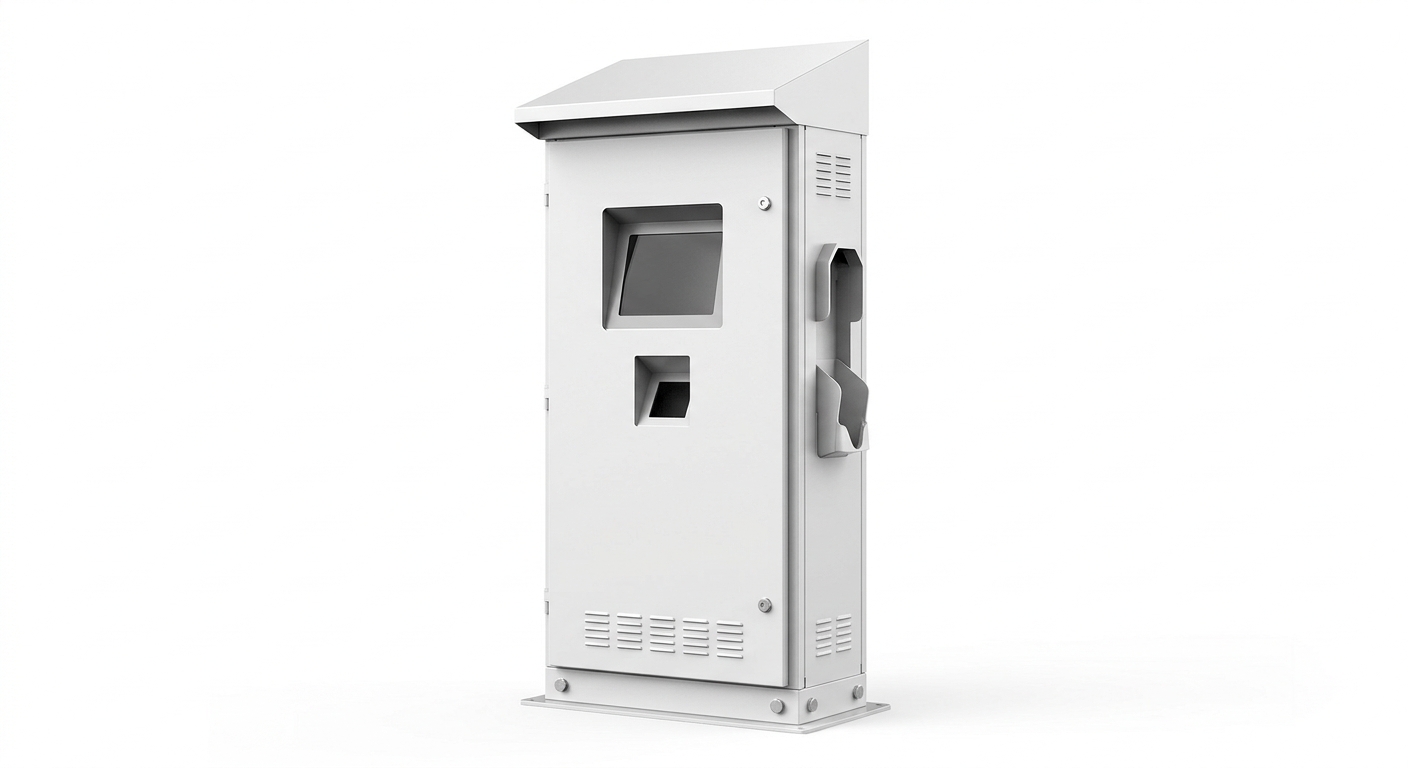
Telecom cabinets sit in the worst place a sheet metal part can sit: outdoors, unattended, bolted to something that moves in the wind, with live equipment inside. Everything about the design follows from that.

Reviewed by Tom, Senior Process Engineer·Dongguan source factory · 11+ years in precision sheet metal
telecom cabinet outdoor — telecom enclosure manufacturer
Short answer

A telecom enclosure is an outdoor electrical enclosure with three extra demands: it must survive wind and weather while passively cooled, it must keep water out of a cable entry that has to let cables in, and it must be secure enough to be left on a pole.

The constraint set, in order

RequirementDesign consequence
Weather protectionContinuous gasket groove, sloping top, no horizontal seam on the weather side
Passive coolingLouvred inlet low, filtered outlet high, generous open area with insect mesh
Wind and pole loadMounting bracket and local stiffening, not overall sheet thickness
SecurityLock and hinge reinforcement; the door is the weak point, not the panel
Earthing and bondingMasked studs and lands; galvanised or bare stainless surfaces
Cable entryGland plate or sealed entry, bedded against bare metal, with a drip loop
Fibre managementBend radius respected inside the cabinet; no sharp edge anywhere a cable touches
Telecom enclosure requirements and where they land in the design

Sealing is a path, not a surface

A gasket has to run continuously around the aperture with no interruption. Every weld that crosses that path, every corner that changes direction across a hinge cut-out, and every flange that is not flat breaks the seal. The usual answer is to form the groove as one continuous feature in the moving part and move any welded joint behind the seal land, where a bead does not matter.

The cable entry is the second half of the same problem. It has to let a cable through and keep water out, so the gland seats against bare metal with a properly formed face and the cabinet is designed with somewhere for water to go if it does get in.

Material and finish for an unattended outdoor part

Galvanised steel with a textured powder coat handles most street-level installations: the zinc protects cut edges and the coat protects the appearance. Coastal and chemically aggressive sites push the specification to 304 or 316 stainless, where the premium buys service life rather than appearance.

Whatever the substrate, the interior of a steel cabinet is normally coated too, because a plant-room-free outdoor cabinet rusts from the inside as well as the outside. That means internal masking and internal access for the coating — which is a design decision about door size and removeable panels.

  • Keep the assembly order in mind: anything welded inside is welded before the box closes.
  • Give the filter on the outlet a replacement path — a clogged filter that cannot be changed degrades the thermal design permanently.
  • Reinforce around the lock, not just the hinge; forced entry usually starts at the lock.
  • Allow for lifting and pole-mounting during installation, which loads the cabinet in ways its service life never will.

Frequently asked questions

Can you build an outdoor cabinet to a specific IP rating?

We can seal the sheet metal work — welded seams, a continuous gasket groove and masked sealing faces. Whether the assembled cabinet achieves a rating depends on the gasket, the hardware and the cable entry as much as the enclosure, so the requirement and the test method are agreed before production rather than assumed.

Galvanised or stainless for a pole-mounted cabinet?

Galvanised with a textured powder coat for ordinary outdoor sites. Stainless where the environment is coastal, chemical or where a long service interval makes recoating impractical — that is where the material premium pays for itself.

How is the cabinet cooled without a fan?

By managing the airflow path: a louvred inlet low on one face, a filtered outlet high on the opposite one, sized to the thermal requirement. Louvres resist direct water ingress better than plain perforation at some cost in airflow, so the open area is agreed with whoever owns the thermal model.

What fails first on an outdoor cabinet?

In our experience, the cable entry and the bottom face — water collects there and the entry is where the design is weakest. Setting the gland against bare metal and forming somewhere for water to drain before it reaches the seal addresses both.

Do you supply with the equipment fitted?

We fit mechanical hardware — gaskets, hinges, locks, earth studs, mounting rails, cable management — and can build to a supplied equipment layout. Third-party electronics are normally installed at your end, with the mounting prepared and verified.

Send the drawing, get a real answer

An engineer reviews your model for manufacturability and returns a costed quotation — with the DFM observations that would change the price.