
Sheet Metal Lead Time: What Actually Adds Days
When a part is late, the cause is almost never the laser. It is a sheet that had to be ordered in, a finishing batch that runs twice a week, or a dimension report nobody scheduled. Knowing which step is on the critical path is what makes a schedule negotiable.
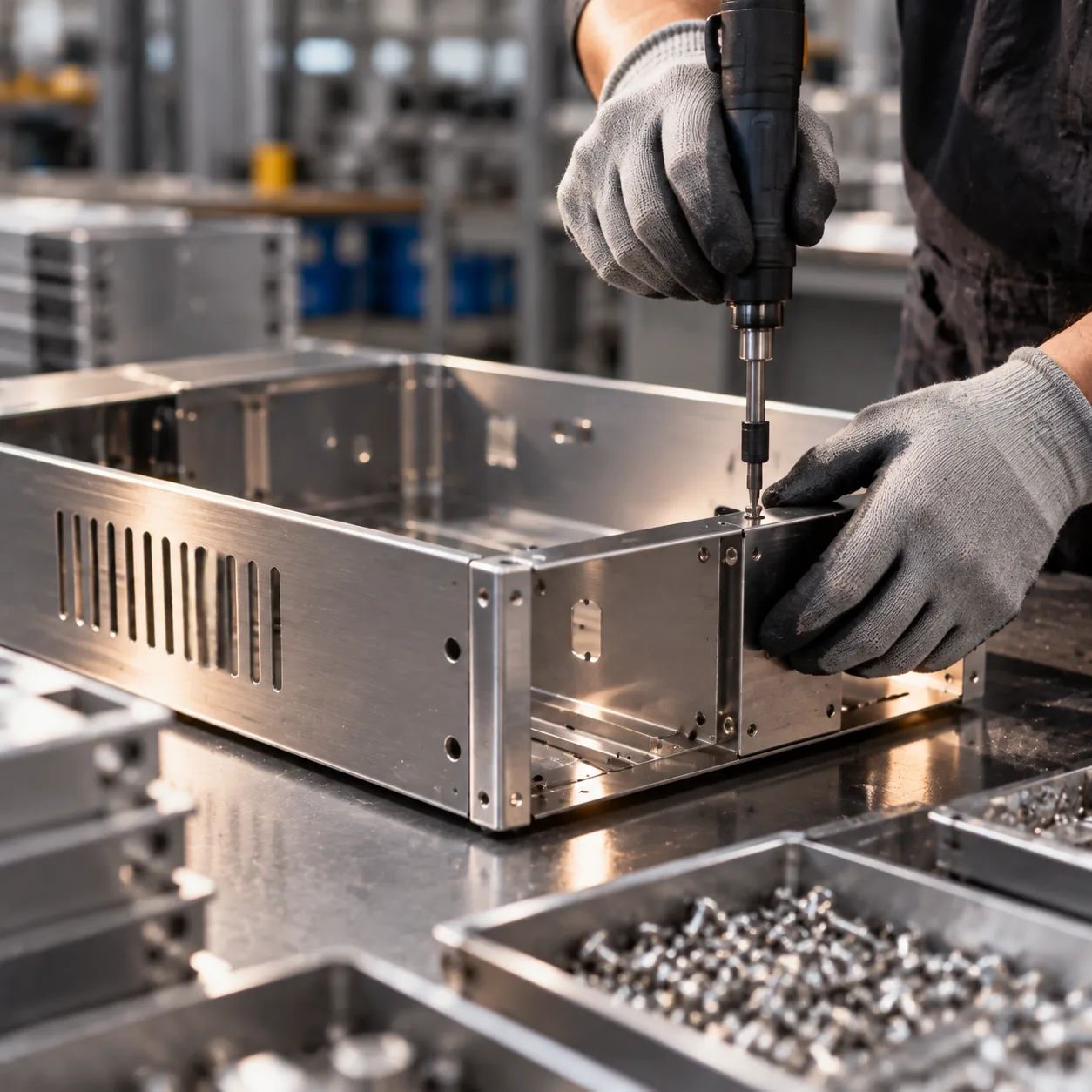
Lead time is not one number, it is a critical path. Material availability, finishing batches and inspection reporting are the steps that actually add days to a sheet metal order; cutting and forming are usually fast. Shortening the path means changing what happens on it, not asking for a rush.
7 rows of reference data below — the summary above is the short answer, the tables are what you quote from.
The steps that consume days
Programming and cutting a simple part is a matter of hours once material is on the floor. Forming is quick too, provided the tooling is already set. The days accumulate at the two ends: getting the right material in, and getting the part through finishing and inspection at the other.
Finishing is the most common surprise. Powder coating, anodising and plating are batch processes with their own schedules, and a small order waits for a batch slot rather than the other way round. A dedicated colour or a non-standard process makes that worse, because the batch has to be built around your parts alone.
| Step | Typical weight on the schedule | What compresses it |
|---|---|---|
| Material availability | High — the usual cause of a slipped start | Standard grades and thicknesses held in stock; ordering early |
| Programming and cutting | Low once material is in | Complete drawing package at RFQ stage |
| Forming | Low to moderate | Standardising radii so tooling is already set |
| Welding and dressing | Moderate on complex assemblies | Designing for torch access; agreeing whether welds are dressed |
| Finishing | High — batch schedules, not machine time | Standard colours; combining parts into one finishing run |
| Inspection and documentation | Moderate, and entirely predictable | Agreeing the inspection plan before the order, not after |
| Freight | Variable, and the part you cannot compress | Sea versus air decision made at design stage, not at dispatch |
What actually sits on the critical path
What genuinely accelerates an order
- A complete drawing package at enquiry. Missing a finish or a tolerance costs a day you cannot get back.
- Standard material from stock instead of a special grade that has to be sourced.
- One finish and one colour for the whole project, so all the parts share a batch.
- An agreed inspection plan, so nothing waits on a report that was never specified.
- Parallel work where the geometry allows: cut and form everything first, then finish in one pass.
What does not work
Marking every order urgent does not accelerate anything; it removes the ability to re-sequence, because if everything is priority nothing is. The real question is always which order gives way, and that is a commercial conversation rather than a scheduling instruction.
The other common attempt — compressing finishing by sending parts to a different coater — usually costs more in colour matching and rework than it saves in days, particularly on a visible coated part.
Frequently asked questions
How long does a sheet metal order take?
It depends on the part, the material and the finish, so we confirm a schedule per order rather than quoting a blanket number. What we will always tell you is which step is longest on your specific order, because that is the one worth managing.
What is the fastest route to a first article?
A complete package, a standard material, no finishing, and no inspection report beyond a dimensional check of the features that matter. Each of those removes a step from the critical path. Where finishing is unavoidable it is usually the longest item, so a bare part is materially faster.
Why does finishing take so long on a small order?
Because it is a batch process. A small quantity waits for a batch slot, and a colour that is not in routine use has to be built around your parts alone. A standard RAL colour and a part that can share a batch with other work both shorten it, often by more than a rush request would.
Can you expedite an order?
Sometimes, and honestly: it depends on what else is on the floor and which steps are on your critical path. Cutting in front of a scheduled job moves the delay to somebody else rather than removing it. The conversations that actually save days are about material, finish and inspection — before the order is placed.
How accurate is a quoted lead time?
It is a commitment we make against a defined drawing package, and it changes if the package changes. A late engineering revision, a substituted material or an added inspection requirement will move the date, so we re-confirm the schedule whenever the input changes rather than absorbing it silently.
Send the drawing, get a real answer
An engineer reviews your model for manufacturability and returns a costed quotation — with the DFM observations that would change the price.