
What Blank means
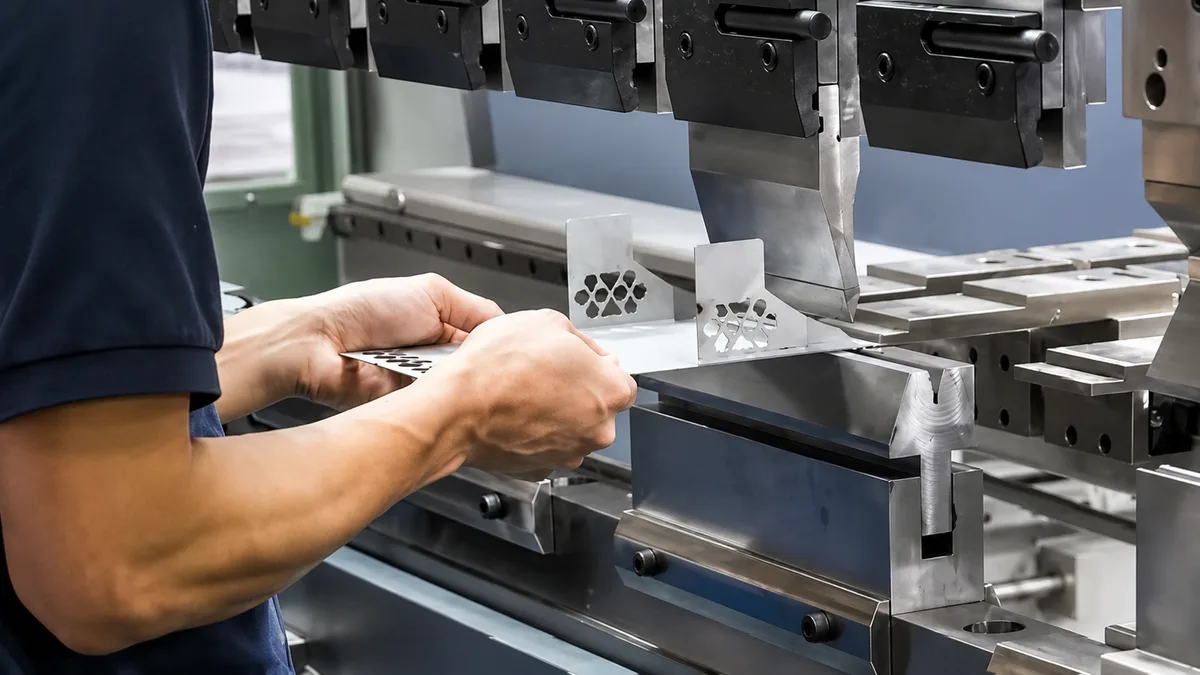
A blank is the flat piece of sheet metal that a part is made from: cut to the shape the forming operations need, before any bend, draw or form touches it. In fabrication the blank comes from laser or shearing; in stamping it is either blanked in a dedicated station or fed directly as coil into a progressive die.
Why it matters on the shop floor
Blank size is not the finished part size. Forming moves material — a bend consumes bend allowance, a draw pulls material in — so the blank is the calculated starting shape, and getting it right is the difference between a part that trims clean and one that fights every downstream operation. On tight-tolerance stamped parts, blank development is genuinely iterative: trial, measure, correct.
What to remember
- Blank ≠ flat pattern of a bent part only — drawn parts need a developed blank too, and that one is usually estimated first and corrected in tryout.
- Blank edge quality from laser vs blanked edges differs; stamping blanks carry a breakage band.
- Material utilisation is decided at the blanking stage — it is where the nest is designed.