目錄
Overview
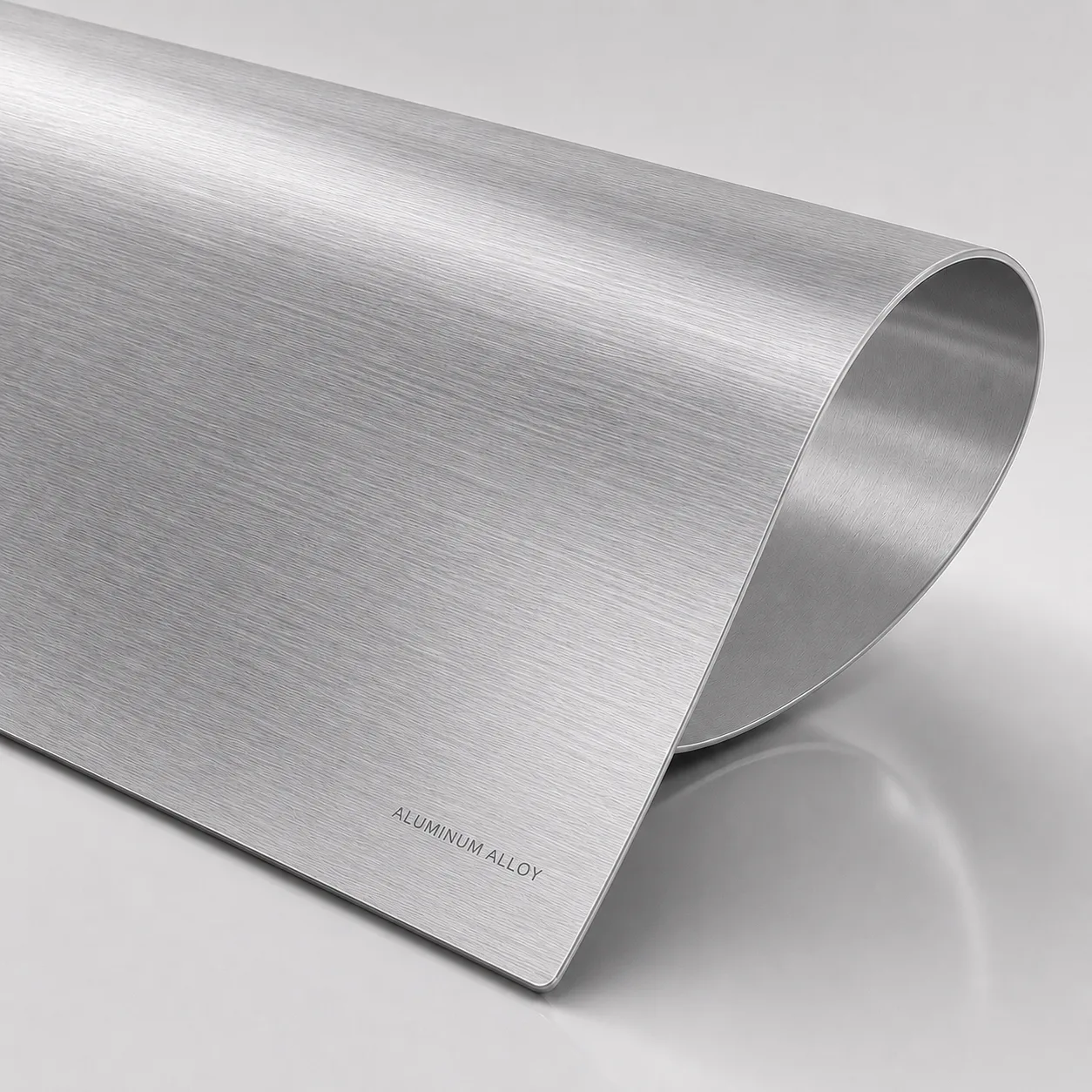
When engineers specify a corrosion-resistant sheet metal material, the choice almost always comes down to 304 stainless steel or 5052 aluminum. These two alloys dominate the enclosure, bracket, and panel market across electronics, food processing, medical, marine, and industrial applications. They overlap in corrosion resistance and formability, but diverge sharply in weight, cost, strength-to-weight ratio, and surface treatment options.
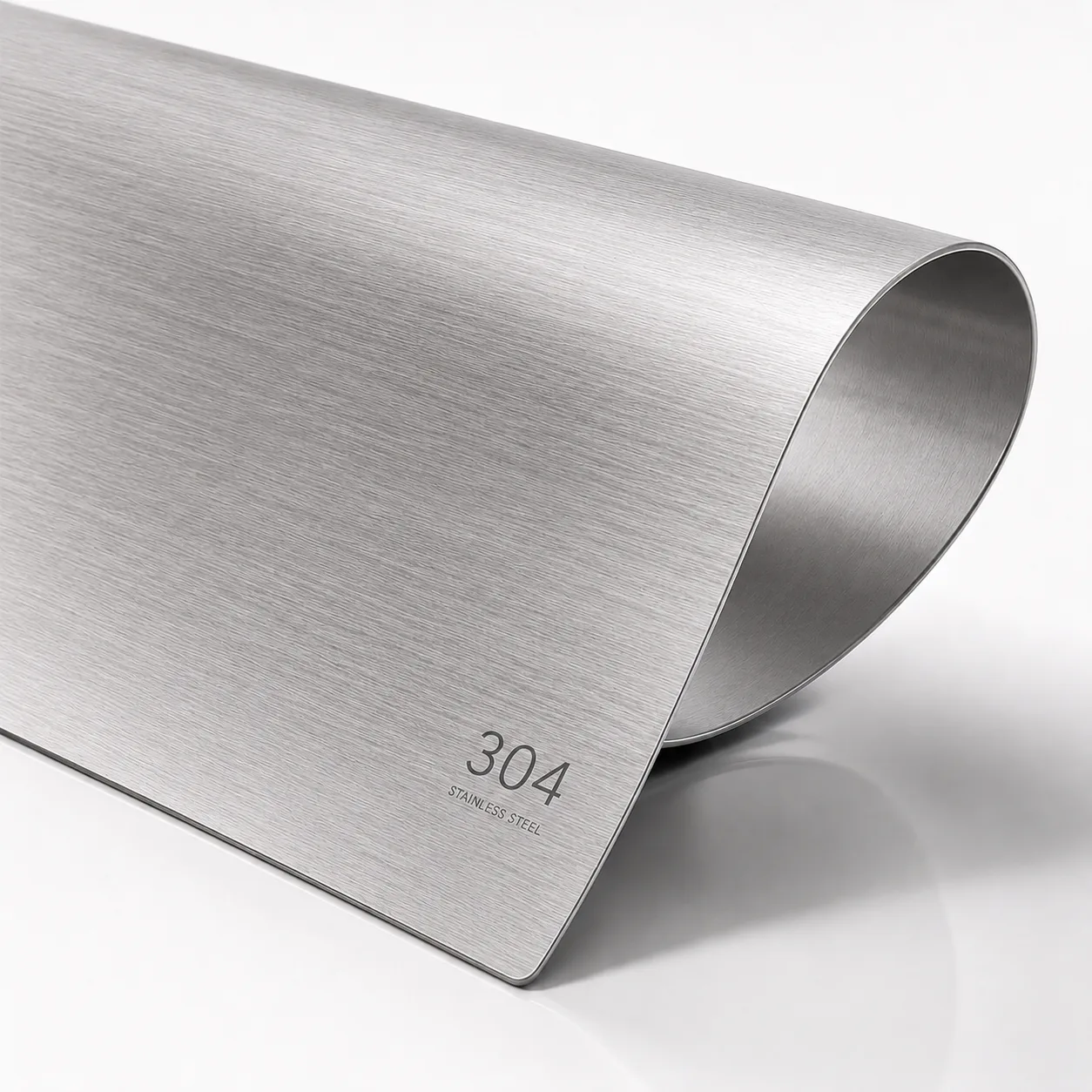
This guide compares both materials across every fabrication and performance metric that matters — with specific numbers, not generalities — so you can make the right call at the design stage.
Material Properties Comparison
The mechanical properties of 304 stainless and 5052 aluminum differ fundamentally because one is a steel alloy (density 7.93 g/cm³) and the other is an aluminum alloy (density 2.68 g/cm³). 304 stainless has nearly double the tensile strength of 5052-H32, but weighs approximately 3× more per unit area at the same thickness.
| Property | 304 Stainless (annealed) | 5052-H32 Aluminum | Ratio (304 / 5052) |
|---|---|---|---|
| Density | 7.93 g/cm³ | 2.68 g/cm³ | 2.96× heavier |
| Tensile strength (UTS) | 515–620 MPa | 228–275 MPa | 2.0–2.5× stronger |
| Yield strength (0.2%) | 205–310 MPa | 195–215 MPa | 1.0–1.4× (very close) |
| Elongation at break | 40–60% | 10–12% | 304 is far more ductile |
| Hardness (Brinell) | 170–220 HB | 60–75 HB | 304 is 2.5–3× harder |
| Melting point | 1,400–1,450 °C | 607–650 °C | 304 handles higher temperatures |
| Thermal conductivity | 16.2 W/m·K | 138 W/m·K | 5052 conducts 8.5× more heat |
| Electrical resistivity | 72 µΩ·cm | 4.9 µΩ·cm | 304 is 15× more resistive |
| Magnetic? | Non-magnetic (annealed) | Non-magnetic | Both non-magnetic when annealed |
Cost Comparison: Material and Fabrication
Cost is often the deciding factor. 304 stainless steel costs 2.5–4× more than 5052 aluminum per kilogram, but because aluminum is 3× lighter, the cost per unit area at the same thickness is closer — typically 1.5–2.5× more for stainless. However, fabrication costs also differ.
| Cost Factor | 304 Stainless | 5052 Aluminum | Notes |
|---|---|---|---|
| Raw material (per kg) | $3.50–$5.50 | $2.50–$4.00 | Stainless 1.5–2× per kg |
| Raw material (per m², 1.5 mm) | $45–$65 | $12–$18 | Stainless 3–4× per area due to density |
| Laser cutting speed | 8–15 m/min (1.5 mm) | 20–30 m/min (1.5 mm) | Aluminum cuts 2–3× faster |
| Bend tonnage (per meter, 1.5 mm) | 45–60 tons | 20–30 tons | Stainless requires 2× the tonnage |
| Tooling wear rate | Higher — harder on tooling | Lower — aluminum is soft | Die resharpening 1.5–2× higher for SS |
| Powder coating (per part) | $2–$5 | $2–$5 | Comparable |
| Anodizing | Not applicable | $3–$8 | 5052 anodizes well; 304 does not |
Total Cost Comparison: 1.5 mm, 300 × 200 mm Panel
For a typical 300 × 200 mm enclosure panel at 1.5 mm, powder-coated, in a batch of 200 pieces: 304 stainless costs approximately $18–$28 per part; 5052 aluminum costs approximately $8–$14 per part. The 5052 option saves 40–55% on total per-part cost.
Corrosion Resistance Comparison
Both 304 stainless and 5052 aluminum offer good corrosion resistance, but they fail in different environments. 304 stainless relies on a chromium oxide passive layer (10.5% minimum Cr) that resists atmospheric corrosion, freshwater, and most organic chemicals. It is vulnerable to chloride-induced pitting — especially in warm, humid, chloride-rich environments.
5052 aluminum relies on a naturally forming aluminum oxide layer that provides good atmospheric and freshwater corrosion resistance. It performs well in marine environments ("marine-grade" aluminum). However, aluminum is vulnerable to galvanic corrosion when in contact with dissimilar metals (copper, steel) in the presence of an electrolyte.
| Environment | 304 Stainless | 5052 Aluminum | Notes |
|---|---|---|---|
| Atmospheric (indoor) | Excellent | Excellent | Both perform well indefinitely |
| Atmospheric (outdoor, non-marine) | Excellent | Very good | Both resist general corrosion |
| Marine / saltwater splash | Good — risk of pitting | Excellent — marine grade | 5052 preferred; use 316 SS for critical marine |
| Food processing | Excellent | Good | 304 is the food-grade standard |
| Chemical processing | Good — depends on chemical | Fair | Specify 316 for aggressive chemicals |
| Galvanic risk (copper/steel contact) | Low — noble metal | High — anodic metal | 5052 corrodes rapidly in galvanic pairs |
5052 aluminum relies on a naturally forming aluminum oxide layer that provides good atmospheric and freshwater corrosion resistance. It performs well in marine environments (5052 is classified as "marine-grade" aluminum) because aluminum oxide is stable in saltwater. However, aluminum is vulnerable to galvanic corrosion when in contact with dissimilar metals (copper, steel, carbon fiber) in the presence of an electrolyte. In these situations, isolating the aluminum with a barrier (paint, anodize, insulating washer) is essential.
Weldability Comparison
304 stainless steel is readily weldable by TIG, MIG, and laser welding. The austenitic structure does not require preheating, and weld joints achieve 80–95% of base metal strength. The main concern is sensitization — heating the 450–850 °C range depletes chromium from grain boundaries. Using low-carbon grades (304L) or stabilized grades (321) mitigates this.
5052 aluminum is also readily weldable by TIG (AC) and MIG (pulse or AC). The H32 temper is partially lost in the HAZ — local yield strength drops 30–50%. For enclosures and non-structural panels, this softening is functionally irrelevant.
| Welding Parameter | 304 Stainless | 5052 Aluminum |
|---|---|---|
| Recommended process | TIG (DC), MIG (DC), laser | TIG (AC), MIG (pulse/AC) |
| Preheat required? | No | No |
| Filler wire | ER308L or ER309L | ER5356 or ER4043 |
| Shielding gas | Ar or Ar + 2% CO₂ | Ar (100% argon) |
| HAZ strength retention | 85–95% of base metal | 50–70% of base metal |
| Distortion risk | Moderate — lower thermal conductivity | Higher — high thermal conductivity |
5052 aluminum is also readily weldable by TIG (AC) and MIG (pulse or AC) welding. The H32 temper is partially lost in the HAZ — the heat-affected zone softens to near-annealed condition, reducing local yield strength by 30–50%. For structural applications where HAZ strength matters, consider using 5083 or 6061 (which can be post-weld heat treated). For enclosures and non-structural panels, the HAZ softening is functionally irrelevant.
Laser Cutting and Bending Characteristics
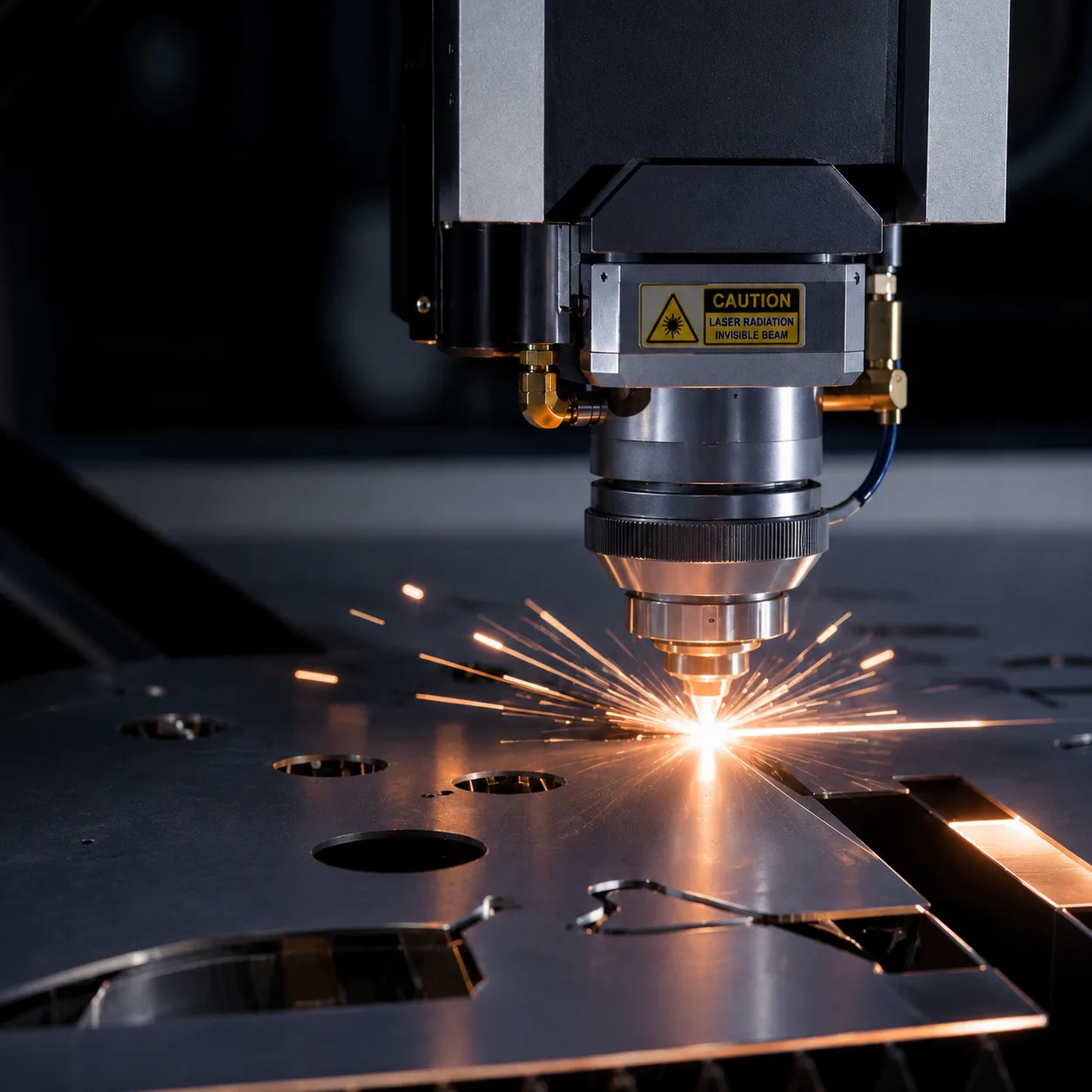
Both materials cut well on modern fiber lasers, but with very different parameters. 304 stainless absorbs the 1064 nm fiber laser wavelength efficiently and cuts cleanly with nitrogen assist gas at 10–20 bar. At 1.5 mm thickness, a 4 kW fiber laser cuts 304 at 12–18 m/min.
5052 aluminum is highly reflective at 1064 nm and requires at least 2 kW of fiber laser power. At 1.5 mm thickness, a 4 kW fiber laser cuts 5052 at 25–35 m/min — roughly 2× faster than 304 stainless. The primary risk is back-reflection damage to the laser source.
| Cutting / Bending Parameter | 304 Stainless (1.5 mm) | 5052 Aluminum (1.5 mm) |
|---|---|---|
| Laser power (recommended) | 2–4 kW fiber | 2–4 kW fiber (minimum 2 kW) |
| Cutting speed (4 kW) | 12–18 m/min | 25–35 m/min |
| Assist gas | N₂ at 10–20 bar | N₂ at 10–15 bar |
| Reflectivity risk | Low | Moderate — sensor required |
| Minimum bend radius | 0.5T (annealed) / 1T–2T (hard) | 1T (H32) |
| Bend tonnage (per meter) | 45–60 tons | 20–30 tons |
| Springback compensation | 1°–2° overbend | 1°–3° overbend |
5052 aluminum is highly reflective at 1064 nm and requires at least 2 kW of fiber laser power to initiate and sustain a stable cut. At 1.5 mm thickness, a 4 kW fiber laser cuts 5052 at 25–35 m/min — roughly 2× faster than 304 stainless. The primary risk with aluminum laser cutting is back-reflection damage to the laser source — modern machines include back-reflection sensors that shut down the beam if reflectivity spikes.
Surface Finish Compatibility
Surface finish options differ significantly between these two alloys. 304 stainless accepts brushing (No. 4 finish), mirror polishing, bead blasting, and powder coating — but does not anodize because the chromium oxide passive layer interferes with the anodic process.
5052 aluminum is one of the best sheet metals for anodizing — it produces a consistent, hard, clear (or dyed) anodic layer with excellent color uniformity. Anodizing is the premium finish for aluminum enclosures because it is integral to the metal, scratch-resistant, and available in a wide range of colors.
| Finish | 304 Stainless | 5052 Aluminum | Notes |
|---|---|---|---|
| Powder coating | Excellent adhesion | Excellent adhesion | Both require surface prep |
| Anodizing (Type II) | Not applicable | Excellent — consistent color | 5052 is one of the best alloys for anodizing |
| Hard anodize (Type III) | Not applicable | Very good — 25–50 µm | For wear resistance on aluminum |
| Brushing (No. 4 finish) | Excellent | Good — scratches easier | Stainless brushing is more durable |
| Mirror polishing | Excellent | Good — soft surface dulls quickly | Stainless mirror is more durable |
| Bead blasting | Excellent | Excellent | Follow with anodize (Al) or passivation (SS) |
Anodizing Is the Deciding Factor
If your product requires anodizing — for durability, color, or cosmetic reasons — 5052 aluminum is the clear choice because 304 stainless cannot be anodized. Anodized 5052 produces a hard, scratch-resistant, color-stable finish integral to the metal surface. This is why most consumer electronics enclosures use anodized aluminum.
5052 aluminum is one of the best sheet metals for anodizing — the alloy produces a consistent, hard, clear (or dyed) anodic layer with excellent color uniformity. Anodizing is the premium finish for aluminum enclosures in electronics, medical, and consumer products because it is integral to the metal (not a coating on top), scratch-resistant, and available in a wide range of colors. 5052 also accepts powder coating, brushing, bead blasting, and chemical conversion coating.
Typical Applications
Both alloys serve distinct application niches based on their property profiles.
- 304 stainless — food processing equipment: mixing tanks, conveyor guards, prep tables — where hygiene and chemical cleaning resistance are required
- 304 stainless — medical device enclosures: non-magnetic, easy to sterilize, meets FDA and biocompatibility standards
- 304 stainless — industrial equipment housings: heavy-duty panels that resist abrasion, impact, and high-temperature environments
- 5052 aluminum — electronics enclosures: lightweight, anodizable, excellent EMI shielding with conductive gaskets
- 5052 aluminum — outdoor / marine equipment: antenna housings, instrument panels, boat fittings — marine-grade at 1/3 the weight
- 5052 aluminum — transportation: weight reduction is the primary driver — 5052 saves 60–65% versus stainless at equal thickness
- 5052 aluminum — HVAC and architectural panels: easy to form, anodize, or powder coat for building applications
Decision Matrix: When to Use Which
The matrix below summarizes the key decision factors. In general: choose 304 stainless when strength, hardness, temperature resistance, or food/medical compliance is the priority. Choose 5052 aluminum when weight, cost, anodizing, or thermal/electrical conductivity is the priority.
| Decision Factor | Choose 304 Stainless | Choose 5052 Aluminum |
|---|---|---|
| Primary requirement | Strength, hardness, hygiene | Lightweight, cost, anodizing |
| Weight constraint | Not critical | Critical — every gram counts |
| Budget | Higher budget acceptable | Cost-sensitive project |
| Surface finish | Brushed, mirror, or powder coat | Anodized or powder coated |
| Operating temperature | Above 150 °C or fluctuating | Below 100 °C |
| Food / medical compliance | Required — 304 is the standard | Not required |
| Marine environment | Good (316 preferred) | Excellent — marine-grade alloy |
| Galvanic isolation | Low risk — noble metal | Must isolate from dissimilar metals |
When In Doubt, Compare at the Same Thickness
Many engineers compare these materials on a per-kilogram basis and conclude stainless is "only" 1.5–2× more expensive. But because stainless is 3× denser, the per-sheet-area cost difference is 3–4×. For a 300 × 200 mm panel at 1.5 mm: 304 stainless costs $8–$12 in raw material; 5052 aluminum costs $2–$3.50. Always compare on a per-part, finished-cost basis.
常見問題
作者
準備好開始你嘅項目了嗎?
24小時內獲得面向製造設計反饋同報價。無最低訂購量。