Table of Contents
Two Models, One Market
The online manufacturing landscape has two distinct business models competing for the same customer. Broker-marketplace platforms aggregate a network of machine shops and take a margin on every order. Source factories run their own equipment, employ their own operators, and sell direct. The difference goes beyond the interface — it affects pricing, lead time, quality control, communication, and what happens when something goes wrong.
How Broker Platforms Operate
Broker platforms use software to match your order with a vetted third-party shop from their network. The platform handles quoting, order management, and payment; the actual manufacturing happens at a facility you have no direct relationship with. This model offers convenience and broad process coverage — a single account can access CNC machining, 3D printing, injection molding, and sheet metal. But the trade-offs come with the model:
- Platform margin: marketplace platforms add their operating margin on top of the manufacturing cost
- Communication goes through the platform's project management layer — not directly to the production floor
- When orders are routed to different shops between runs, batch-to-batch consistency may vary
- DFM feedback is typically automated; detailed engineering review may depend on the plan tier
- Assemblies requiring multiple sub-processes may involve coordination across different network shops
How a Source Factory Operates
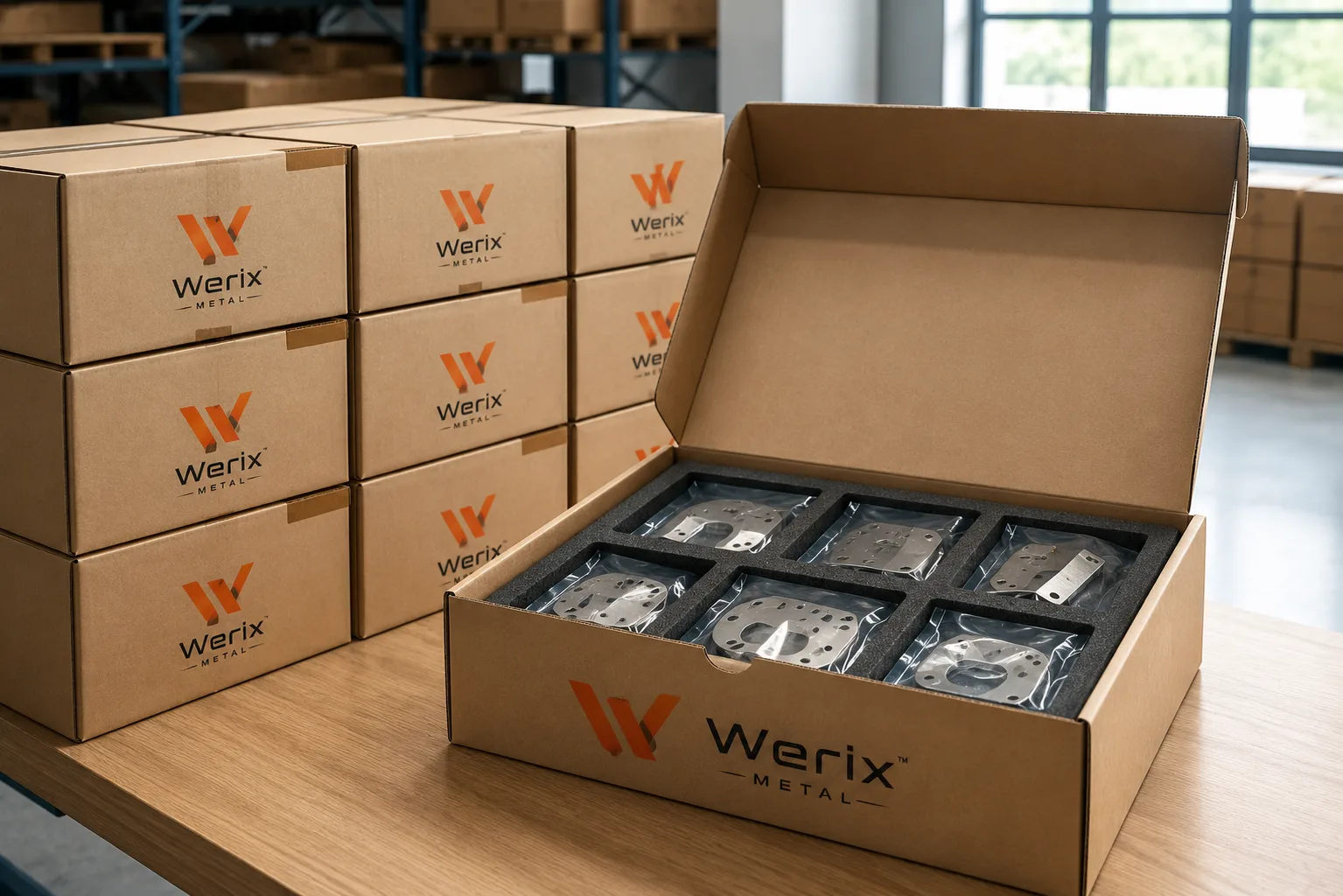
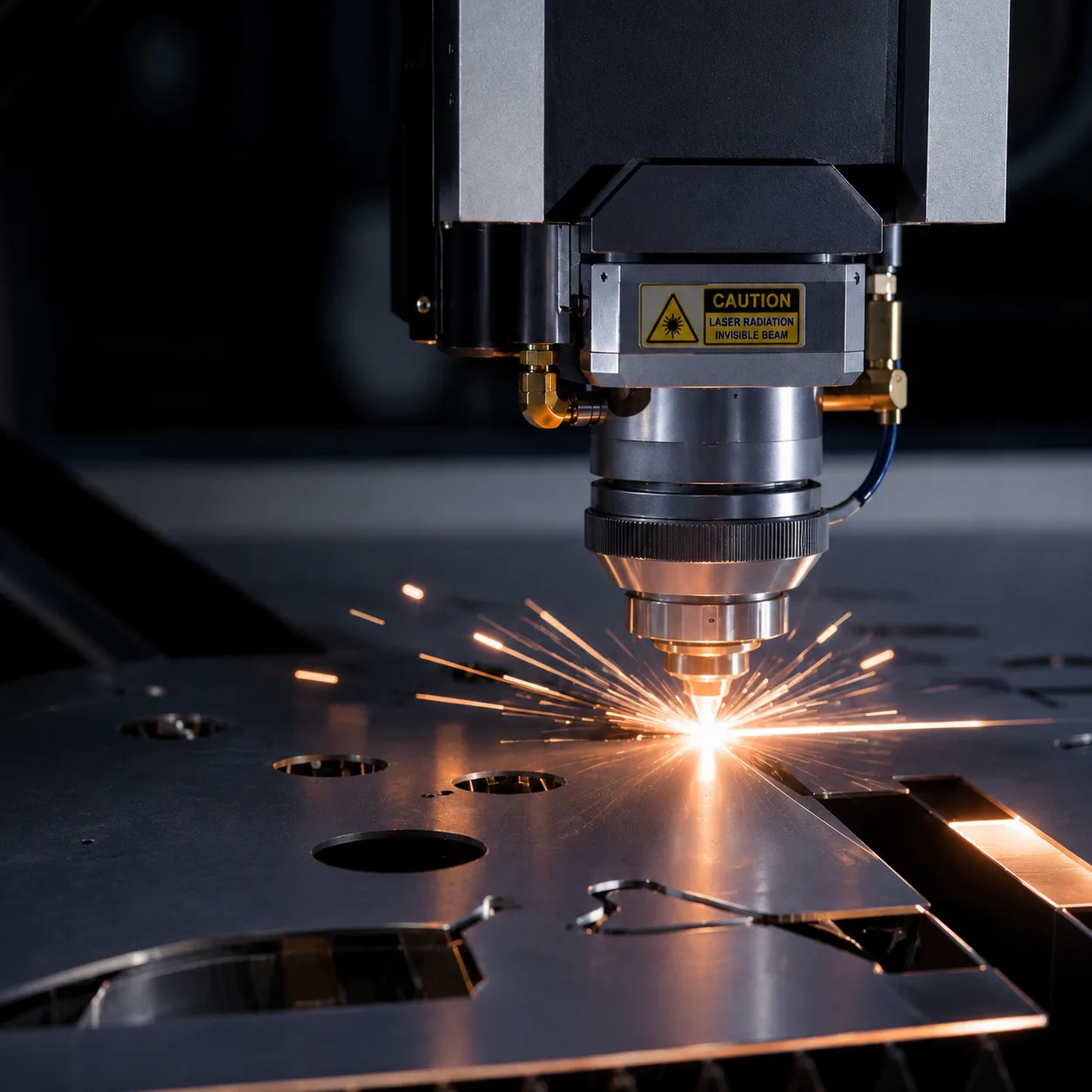
A source factory owns the equipment, employs the machinists, and controls every production stage. When you order sheet-metal parts from WERIX, your parts move between our own laser, punch, brake, weld, and finishing cells — all within 3,000 sqm under one roof. Your dedicated engineer walks the same floor where your parts are made. There is no middle layer, no routing to an unknown subcontractor, and no markup between you and the production line.
- Factory-direct pricing: no broker margin — you pay the production cost plus our operating margin
- Direct engineer access: your point of contact supervises production, not just relays messages
- Consistent quality: same machines, same operators, same QC process across every batch
- In-process accountability: if a bend is off-spec, we catch it on the floor — not after it ships
- Assembly consolidation: welding, fastener insertion, powder coating, and packing happen in sequence without external handoffs
In our experience, direct-factory pricing for sheet-metal parts runs 20–35% lower than broker-platform pricing for identical specifications. The gap widens on assemblies requiring multiple sub-processes, because every external handoff adds both margin and lead time.
Side-by-Side Comparison
The table below compares the two models across the dimensions that matter most to procurement teams.
| Dimension | Broker Platform | Source Factory (WERIX) |
|---|---|---|
| Pricing model | Platform operating margin added on top of manufacturing cost | Direct factory cost — no middle layer |
| Communication | Through platform project manager | Direct to production engineer |
| Quality control | QC at supplier level; platform oversight | QC at every stage — same facility, same team |
| Lead time | Depends on supplier availability and routing | Controlled schedule — quoted lead time is reliable |
| Assembly / multi-process | May involve multiple network suppliers | All sub-processes in-house under one roof |
| DFM feedback | Typically automated; depth varies by platform and plan | Dedicated engineer with marked-up DFM report |
| Reorder consistency | Supplier may vary between orders | Same machines, same operators, same fixtures |
| Minimum order | Often 1+ (prototype-oriented) | 1+ for sheet metal; no MOQ |
| Intellectual property | Files shared with matched supplier(s); NDA available | Your files stay in one facility under NDA |
When Each Model Works Best
Neither model is universally superior — the right choice depends on your priorities.
- Choose a broker platform when you need rare or exotic processes not available locally (e.g., DMLS metal printing, large-format CNC)
- Choose a broker platform for one-off prototypes where price sensitivity is low and broad process access matters more than unit cost
- Choose a source factory when you care about unit cost, especially on production volumes above 100 pieces
- Choose a source factory for assemblies requiring multiple sub-processes — fewer vendors means fewer problems
- Choose a source factory when communication speed and engineering depth matter — direct engineer access beats platform messaging
- Choose a source factory when IP protection is a concern — your design stays in one facility
FAQ
Written by
Tom
Senior Process Engineer
Experienced manufacturing engineer specializing in sheet metal fabrication, CNC machining, and surface finishing. Writes practical guides to help engineers make informed sourcing decisions.
Ready to Start Your Project?
Get DFM feedback and a quote within 24 hours. No minimum order quantity.